

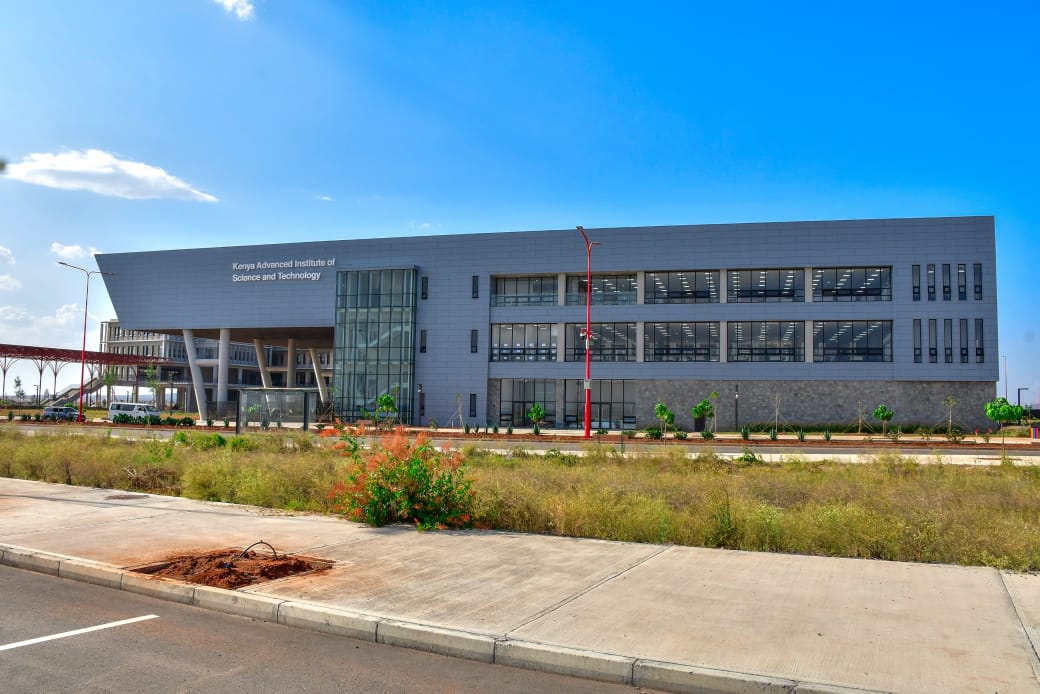
 The first STEM postgraduate University, the Kenya Advanced Institute of Science and Technology (Kenya-AIST) /HANDOUT
The Charter Award Ceremony for the Kenya Advanced Institute of Science and Technology (Kenya AIST) was successfully held on Thursday, May 14, at State House, Nairobi.
Hosted by President William Ruto, the event was graced by Woo Won-shik, the Speaker of the National Assembly of the Republic of Korea, high-ranking officials and stakeholders from both countries.
I was delighted to attend this meaningful ceremony, following my attendance at the Kenya-AIST campus handover ceremony at Konza in April 2025.
As a symbol of friendship between Korea and Kenya and as one of the flagship cooperation projects between the two countries, Kenya AIST is expected to serve as a bridge for further development of bilateral relations in the years ahead.
The
relationship between Korea and Kenya has developed steadily since the
establishment of diplomatic relations in 1964. Kenya was the first country in
Sub-Saharan Africa to establish diplomatic relations with Korea, and President
William Ruto’s two visits to Korea (in November 2022 and June 2024) following
his inauguration in September 2022 have served as significant milestones in
advancing bilateral relations between our two countries.
Korea is currently implementing various official development aid (ODA) projects in Kenya across various fields, including education, healthcare, agriculture, infrastructure and climate resilience.
Korean companies are pursuing the construction of Intelligent Transport Systems (ITS) and Bus Rapid Transit (BRT) infrastructure in Nairobi, while large-scale projects such as the Digital Media City initiative are simultaneously underway in Konza Technopolis alongside Kenya AIST.
Constructed with an investment of approximately $100 million under the Export-Import Bank of Korea’s EDCF soft loan programme, Kenya AIST is the first overseas model of the Korea Advanced Institute of Science and Technology (KAIST), which has contributed significantly to Korea’s economic development.
Kenya AIST has established six departments: Mechanical and Nuclear Engineering, Electrical and Electronic Engineering, ICT Engineering, Chemical Engineering, Civil Engineering, and Agricultural and Biomedical Engineering.
The institute
is expected to contribute significantly to Kenya’s economic and social
development by producing outstanding scientists and engineers in the years to
come.
Korea actively pursued industrialisation in the 1960s, but faced many obstacles due to a shortage of scientific and technological talent needed for the industrialisation process. To address this challenge, the establishment of KAIST was proposed.
However, due to Korea’s difficult financial circumstances in the early 1970s, the institute could not be established solely through domestic resources. Fortunately, KAIST was established in 1971 with the support of USAID/ODA funding.
Science and technology are critical catalysts that determine a nation’s future. Korea invests approximately five per cent of its GDP annually in R&D, ranking second among OECD countries after Israel.
Korea’s annual R&D investment amounts to approximately $100 billion, ranking fifth in the world. Such investment has significantly strengthened Korea’s industrial competitiveness, and today Korea is a global leader in major fields such as semiconductors, electronics, AI, healthcare, national defence, shipbuilding, automobiles, nuclear energy and batteries.
Recently, Stanford University ranked Korea fourth in the world in AI competitiveness, and Newsweek included three Korean hospitals among the world’s top 10 cancer treatment hospitals. Korea ranks fifth globally in nuclear power generation and, based on its advanced nuclear technology, is exporting nuclear technology to countries such as the UAE and the Czech Republic.
Korea has transformed from one of the world’s poorest nations in the aftermath of World War II and the Korean War into one of the world’s top 10 economies today.
Through increased investment in education, science and technology, innovation, and infrastructure, combined with strong government leadership and the hard work and discipline of its people, Korea became the first country to transition from being an aid recipient to an aid donor under the OECD DAC framework in 2009.
Korea’s remarkable economic development over a short period has received widespread recognition around the world, and Korea hopes to actively share its development experience and know-how with its friendly partner, Kenya.
On several occasions, President William Ruto has emphasised that Kenya ought to benchmark the experiences of Asian Tiger economies, including Korea, in its journey towards becoming a First World economy within a generation.
Korea
and Kenya share many commonalities, including similar population sizes, shared
experiences of colonialism, democratic and market-oriented systems of
government, maritime characteristics, large diaspora communities and strong
family values.
I am confident that, based on these shared characteristics, Korea and Kenya will continue to deepen their partnership as trusted and reliable partners as they work towards building a prosperous future together.
To this end, I will spare no effort to ensure that forward-looking projects such as Kenya AIST continue to flourish in the years ahead.
Ambassador of the Republic of Korea to the Republic of Kenya
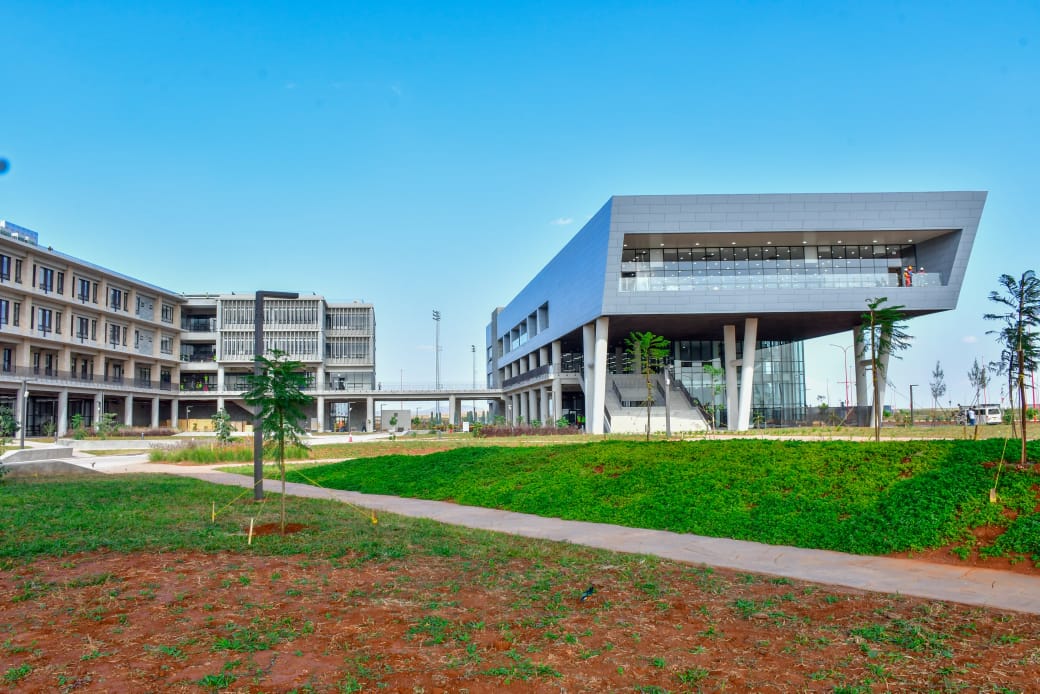 The first STEM postgraduate University, the Kenya Advanced Institute of Science and Technology (Kenya-AIST) /HANDOUT