


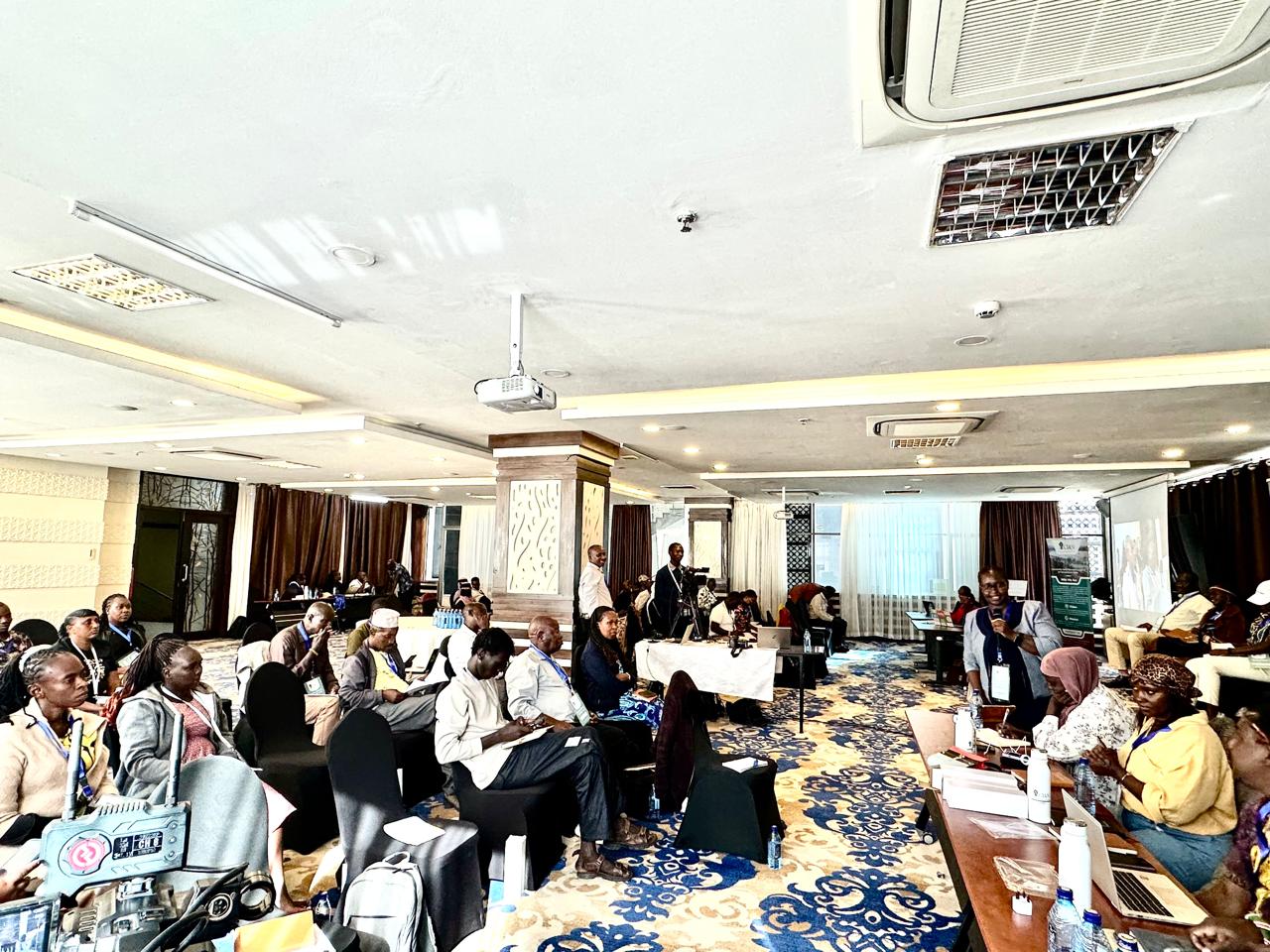
 Participants at CLAN Network AGM at Golden Tulip Hotel on May 25, 2026
Pastoralist and indigenous communities have warned that carbon markets are emerging as a new avenue for land dispossession, amid growing frustrations over delays in the registration of communal land.
Speaking during the CLAN! Network Kenya Annual General Meeting held on May 25–26, community representatives said their right to land ownership continues to face major obstacles despite years of advocacy and legal reforms.
CLAN Network is Kenya’s largest national
network of indigenous communities and local community-support organisations
dedicated to advancing community land registration and sustainable natural
resource management.
The organisation seeks to empower communities
to secure land rights, protect natural resources and build resilient
livelihoods through inclusive governance and climate action.
However, participants said efforts to register
communal land continue to face setbacks, now compounded by land purchases and
the expansion of carbon credit projects.
“We continue to suffer loss of land through
manipulation. I am particularly from Kajiado County, and I can tell you the
whole thing of willing buyer, willing seller is just crazy. How can you justify
this while you have more information than I do?” Anne Samante, the Head of
Programmes and Partnerships at Mainyoito Pastoralists Integrated Development
Organisation, said.
Samante, who also serves as the national
coordinator of the Indigenous Peoples National Steering Committee on Climate
Change, warned that carbon credits are becoming “a new way of land
dispossession”.
“Carbon credits are still fairly new to our communities. Secondly, carbon regulations have not taken into consideration indigenous communities. They need to be very well informed on this,” she said.
Eileen Wakesho, the director of the Land, Environment, and Climate programme at Namati, noted that land registration for the communities is important, but the groups must think about what happens after.
“Strengthening land governance is critical, as is inclusive governance. There is also the need to protect against elite capture and external exploitation,” Wakesho said.
She added that adjudication of community lands is the most expensive part of the registration process and is not financially sustainable to communities.
Participants said carbon credit projects are
increasingly targeting sub-Saharan Africa because of the vast tracts of
community land, particularly areas that remain unregistered.
They called for strict adherence to the
principle of Free, Prior and Informed Consent (FPIC) before any carbon projects
are undertaken on community land. They also demanded transparency on
benefit-sharing arrangements.
FPIC is a right recognised under the UN
Declaration on the Rights of Indigenous Peoples, allowing communities to give
or withhold consent to projects affecting their land, territories or natural
resources.
Women leaders attending the meeting also
raised concerns over exclusion from carbon credit decision-making processes,
saying benefit-sharing models often fail to adequately include women.
The communities further lamented persistent
bottlenecks in the registration of communal land despite the enactment of the
Community Land Act, 2016. The Act provides a legal framework for the
recognition, protection and registration of community land rights.
The law was intended to empower communities to
collectively own, govern and manage ancestral land under a more secure legal
framework.
However, programme data presented during the
meeting showed that progress towards actual ownership remains painfully slow
despite extensive awareness campaigns and consultations.
Although all 53 target communities completed
the initial consent process and 96 per cent underwent sensitisation, only nine
communities have been formally registered. Just two have completed survey and
adjudication processes, while only one community has received a title deed.
The figures, participants said, highlight deep
bureaucratic and administrative hurdles that continue to frustrate efforts to
secure communal land rights.
Among the key challenges cited were the gap
between customary and statutory land laws, the high cost of registration
processes and persistent boundary disputes.
Some disputes are currently being handled through Alternative Dispute Resolution mechanisms, while others have ended up in court.