

 Bayer Medical Governance and Excellence Lead for Sub-Saharan Africa, Jack Mwenda Kileba, speaking during an interview on the sidelines of a media
briefing on climate and health resilience at Serena Hotel, Nairobi, on June 3,
2026/CHRISTABEL ADHIAMBO
Bayer Medical Governance and Excellence Lead for Sub-Saharan Africa, Jack Mwenda Kileba, speaking during an interview on the sidelines of a media
briefing on climate and health resilience at Serena Hotel, Nairobi, on June 3,
2026/CHRISTABEL ADHIAMBOClimate change is increasingly influencing disease patterns in Kenya and across Africa, with health experts warning that rising temperatures, extreme weather events and environmental disruptions are contributing to a growing burden of chronic illnesses, maternal health complications and pressure on health systems.
Speaking during a media briefing on climate, health and Kenya's future healthcare resilience in Nairobi on Wednesday, Bayer Medical Governance and Excellence Lead for Sub-Saharan Africa Jack Mwenda Kileba said evidence is emerging that climate change is affecting health far beyond the traditional concerns of malaria, diarrhoeal diseases and malnutrition.
Kileba said changing weather patterns are exposing communities to new health risks, particularly among vulnerable groups such as women, pregnant mothers, low-income populations and people working outdoors.
"Science is becoming clear that as the climate changes, it has an impact on people," Kileba said.
"When certain populations are exposed to these extreme changes and when certain systems are exposed to these changes, then there are consequences."
The briefing brought together healthcare stakeholders, journalists and Bayer officials to discuss healthcare resilience, climate change and the future of healthcare systems in Kenya and the wider region.
Kileba said climate change manifests through rising temperatures, changing rainfall patterns, floods, droughts, fires and worsening air pollution, all of which affect human health directly and indirectly.
He said the effects are not evenly distributed.
"Depending on where you live geographically, you will be affected differently. Biological factors come into play as well. A pregnant woman and one who is not pregnant are affected differently," Kileba said.
He noted that women are among the groups disproportionately affected by climate-related health challenges.
According to Kileba, rising temperatures are associated with increasing cases of pregnancy-related complications, including preeclampsia and gestational diabetes.
He said climate-related heat exposure is also affecting unborn children through increased risks of stillbirths, preterm births and low birth weight.
"We are seeing rises in stillbirths, preterm births and low birth weight as impacts of climate change get realised," Kileba said.
"With a one-degree rise in temperature, you are seeing a four per cent increase in preterm births and during heatwaves, this can rise to 26 per cent."
His remarks come as Kenya continues to experience increasingly frequent droughts and floods linked to changing climate conditions.
The health impacts, however, are extending beyond infectious diseases into non-communicable diseases, which are already becoming a dominant health challenge in the country.
Data from the Kenya Vital Statistics Report shows non-communicable diseases accounted for 61.7 per cent of Kenya's disease burden in 2024, up from 52.4 per cent in 2023, while communicable diseases declined from 34.5 per cent to 26.9 per cent during the same period.
The Kenya STEPS Survey on non-communicable disease risk factors similarly notes that the country is undergoing an epidemiological transition from infectious diseases to chronic conditions, creating a double burden of disease.
Kileba said climate change could accelerate that transition.
He pointed to emerging evidence linking prolonged heat exposure to kidney disease among people who previously would not have been considered at risk.
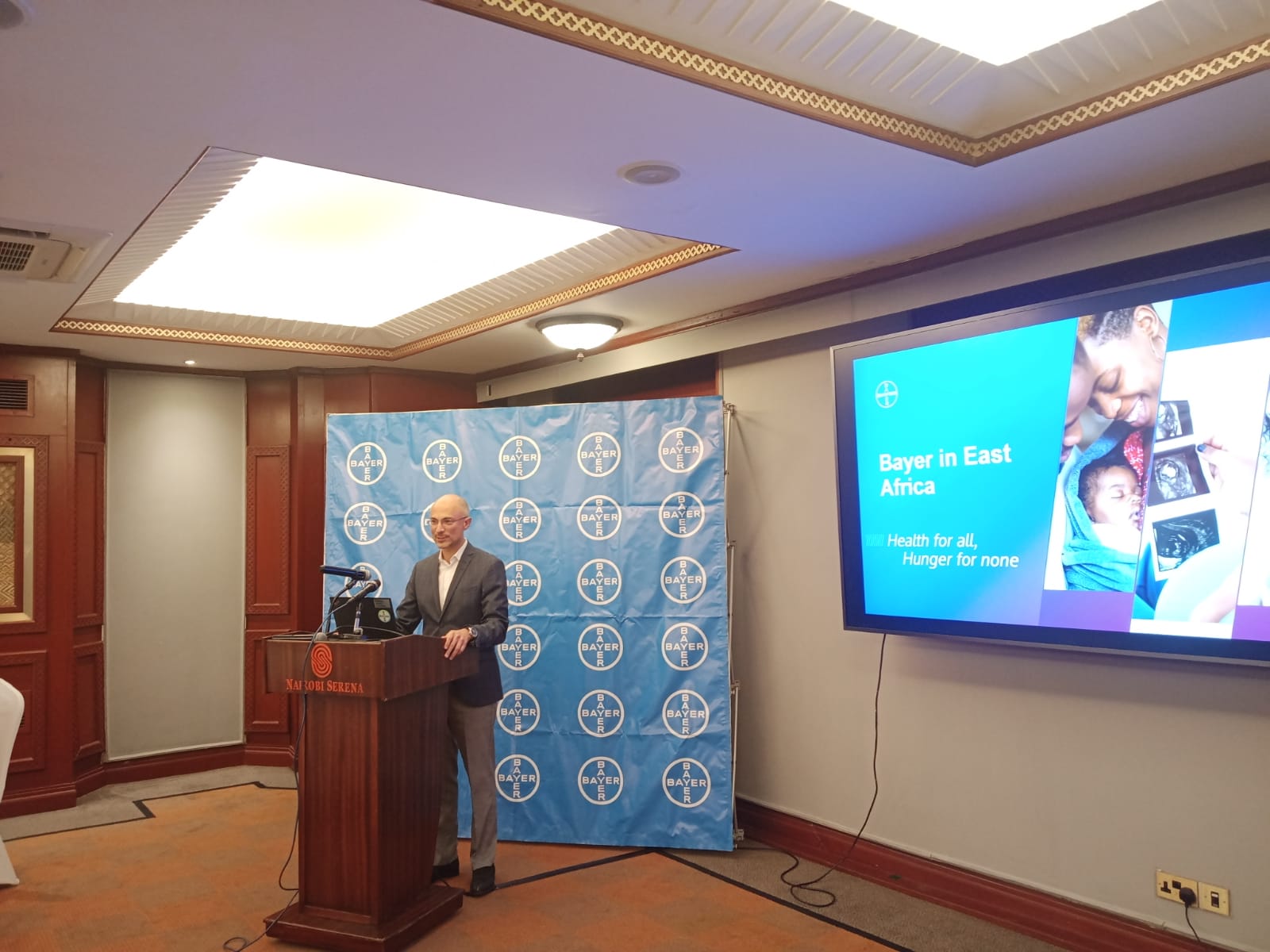 Bayer Pharmaceuticals Sub-Saharan Africa lead Jorge Levinson addresses
journalists during a media briefing on climate, health and healthcare
resilience at Serena Hotel, Nairobi, on June 3, 2026 /CHRISTABEL ADHIAMB0
Bayer Pharmaceuticals Sub-Saharan Africa lead Jorge Levinson addresses
journalists during a media briefing on climate, health and healthcare
resilience at Serena Hotel, Nairobi, on June 3, 2026 /CHRISTABEL ADHIAMB0Traditionally, chronic kidney disease has largely been associated with diabetes and hypertension.
However, Kileba said health experts are increasingly observing a different form of kidney disease among younger people exposed to high temperatures over long periods.
"As temperatures increase, we are seeing a different kind of chronic kidney disease emerging," he said.
"Traditionally, those who would get kidney disease were those who had hypertension or diabetes. But with heat exposure, we are seeing kidney disease affecting younger people, particularly those working outdoors, such as farmers."
He said the condition is now being referred to as chronic kidney disease of non-traditional origin.
Repeated exposure to high temperatures, he explained, can lead to dehydration and impaired kidney function, eventually resulting in permanent damage.
The impact of climate change on health systems themselves is also becoming more evident.
According to Kileba, floods, droughts and other climate-related disasters can damage health facilities, disrupt transport networks and interrupt the delivery of medicines and other medical supplies.
"If bridges are washed away, people who want to seek care may not access health facilities," he said.
"Healthcare workers themselves may not be able to get from home to work, and supplies may not reach where they are needed."
Such disruptions threaten continuity of care, especially for patients requiring regular treatment for chronic illnesses.
During the discussion, Bayer Sub-Saharan Africa Pharmaceuticals Lead Jorge Levinson said Kenya has made significant progress in addressing non-communicable diseases, reflecting a broader shift in health priorities.
Levinson said many African countries initially focused heavily on communicable diseases such as HIV, tuberculosis and malaria, but attention is increasingly turning to cardiovascular disease, diabetes, cancer and other chronic conditions.
"The healthcare sector is transitioning from communicable diseases to non-communicable diseases," Levinson said.
"Kenya is at the forefront in Africa in having moved from a 100 per cent focus on communicable diseases to non-communicable diseases."
He cited growing government attention to cardiovascular diseases, oncology, eye health and family planning as evidence of that shift.
Levinson also argued that climate-related health threats should not be viewed solely as a health sector challenge.
"You cannot see healthcare as an isolated issue to be addressed," he said.
"This has to be a governmental multidisciplinary topic because we talk about healthcare, but we also talk about finance and infrastructure."
According to him, building health resilience requires collaboration across multiple sectors, including transport, trade, education and finance.
The discussion also touched on healthcare access and pharmaceutical supply chains.
Levinson said Kenya's strategic location, infrastructure and skilled workforce position it as a potential regional healthcare hub serving more than 300 million people across East Africa.
He said Bayer currently distributes pharmaceutical products from Kenya to seven countries across Sub-Saharan Africa.
However, he cited lengthy regulatory and customs processes as some of the barriers slowing access to medicines.
"When we bring products to Kenya, it sometimes takes many days, weeks and months to get all the necessary permits and clearances," Levinson said.
"We need to be more efficient in those processes."
Bayer officials said regulatory reforms underway within Kenya's pharmaceutical sector could help improve access to medicines and support future investment.
Beyond healthcare delivery, Kileba stressed that public education would be critical in helping communities adapt to climate-related health risks.
He said many climate-linked illnesses can be prevented if people understand how to reduce their exposure.
For outdoor workers, this could include staying hydrated, taking breaks in shaded areas and avoiding prolonged exposure to extreme heat.
For pregnant women, it may involve adjusting clinic visits during periods of intense heat and recognising early warning signs of health complications.
"People need to be educated because many do not know these risks, yet some of these conditions are preventable," Kileba said.
He said strengthening health systems would require action on three fronts: advancing scientific research, building resilient healthcare services and increasing community awareness.
"We need to understand how these diseases are happening so that we can offer solutions," Kileba said.
"Healthcare delivery must remain resilient even during floods, droughts and heatwaves."
The discussion comes as climate change continues to feature prominently in global health debates.
Although Africa contributes only about four per cent of global greenhouse gas emissions, the continent is expected to bear a disproportionate share of climate-related health impacts, according to Kileba.
He noted that more than two billion people globally are already exposed to excessive heat and climate-related health deaths have risen by about 20 per cent, with the greatest impact falling on disadvantaged populations.
Kenya's own health profile is increasingly reflecting the growing challenge posed by chronic diseases.
According to data contained in the 2026 Economic Survey, respiratory illnesses remained the country's largest disease burden despite a decline in reported cases, while malaria cases increased sharply from 3.8 million in 2024 to 14.3 million in 2025.
As climate pressures intensify, health experts say
understanding the links between environmental change and disease will be
critical in protecting vulnerable populations and ensuring healthcare systems
remain functional during future shocks.