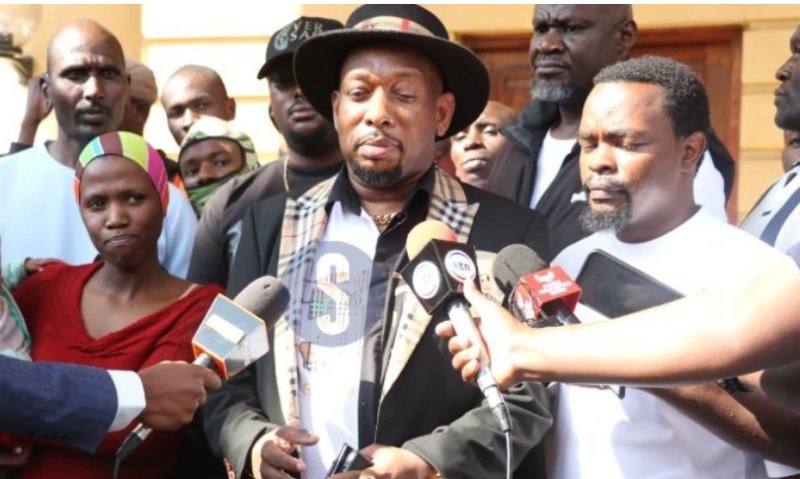


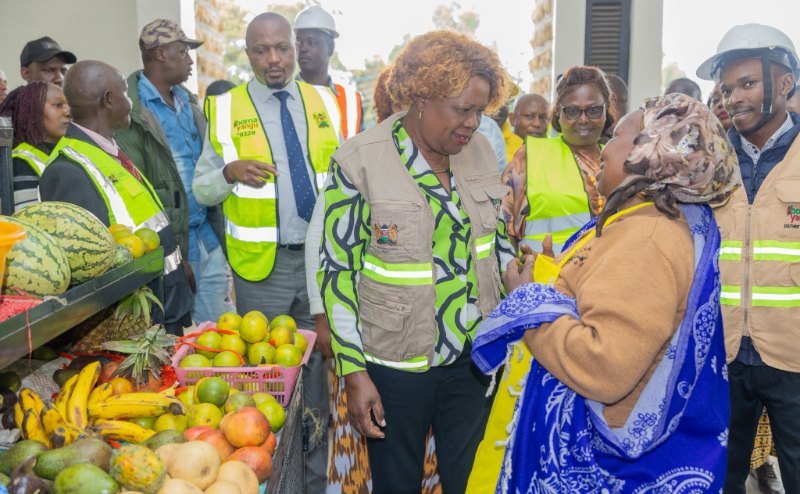
 Lands CS Alice Wahome during the launch of Mirangine modern market in Ol Kalou on June 22, 2026/ ALICE WAITHERA
Nyandarua residents have received a major boost following
plans by the government to establish the first university in the county.
Kenyans receiving free methadone treatment for heroin addiction say they can only afford to pay about Sh104 a month for the service, a new study has found.
The government spends over Sh4,000 per patient per month on treatment. Now that the United States, the programme's biggest funder, has cut most of its overseas health money, experts warn the free service is at serious risk.
Psychologist Tina Masai and her team of researchers spoke with 44 patients at Mathari National Teaching and Referral Hospital (MNTRH), Kenya's first and largest methadone clinic, in Nairobi.
The middle amount that patients said they could pay was just $0.8 (Sh104) per month if they came to the clinic every day. If treatment was brought near where they live, patients felt they could manage about $2.3 (Sh299) per month. Only two in every 100 patients said they could absorb the real government cost of $32 (Sh4,160) per month.
"The substantial gap between patient perceptions of affordability and service provision costs provides evidence that patient fees alone cannot sustain Methadone Maintenance Treatment (MMT) programmes," the team said.
Transport burden represents the most significant modifiable barrier, while community-based delivery models show promise for enhancing sustainability, they said.
“Findings support maintaining free or highly subsidised services combined with decentralised delivery approaches for sustainable MMT financing in resource-limited settings.”
Methadone is a medicine that helps people who are addicted to heroin and other powerful drugs to stop using them. It has been given free of charge at Kenya's public clinics since its rollout in December 2014 as part of the national response to the growing opioid crisis.
Despite its proven efficacy in reducing illicit opioid use, improving health outcomes, and enhancing social functioning and overall quality of life, stigma to the patient on MMT, sustainability, and scalability of MMT programmes face significant challenges.
The biggest problem for patients is not the cost of the medicine itself, but the money spent getting to the clinic every day. The study, published in the International Journal of Drug Policy, found transport costs were the single strongest reason patients felt they could not afford treatment, more powerful than income or history of drug use.
Women in the study were three times more willing to pay for treatment than men according the the study titled, “User perceptions of affordability of methadone maintenance treatment in Kenya: A mixed methods analysis.”
Kenya's clinics have stayed free mainly because of outside funding.
"This has created unique financing concerns for MMT in Kenya because MMT clinics are either in health centres, county or national referral hospitals. MMT clinics in Kenya are presently heavily donor-funded (largely through the US government through Pepfar and to a lesser scale Médecins sans Frontières) with no out-of-pocket expenses charges for receiving services," the researchers explained.
In January 2025, United States President Donald Trump froze most of America's overseas health funding, including PEPFAR. The Mathari MAT Clinic has since experienced service disruptions.
The study authors say keeping treatment free is the only way to stop patients from going back to drugs. "This study provides the first comprehensive analysis of user perceptions of the affordability of methadone maintenance treatment in Sub-Saharan Africa, revealing critical insights on the financing of addiction treatment in resource-limited settings. Using a socio-ecological framework, we identified a stark mismatch between perceived affordability and government service provision costs, providing definitive evidence that patient fees alone cannot sustain MMT programs in Kenya," they said.
The researchers called on Kenya and other countries to find new and lasting ways to pay for the treatment.
"With significant shifts in the donor funding landscape, countries like Kenya that offer MMT need to transition to sustainable funding models. Studies in other low and middle-income countries such as Vietnam and high-income countries such as Canada, US and Malaysia have demonstrated implementation of out-of-pocket costs for MMT based on various treatment models such as clinic-based systems, community-based treatment and take-home dosing," they wrote.
Kenya has more than 10 public methadone clinics. About 27,000 people inject drugs in the country, and more than one in ten of them is living with HIV, according to the Ministry of Health.
Experts say the government must move fast to secure lasting funding before even more patients lose access to a treatment that can save their lives.
Methadone is a liquid medicine that doctors give to people who are hooked on heroin or other hard drugs. Every day, a patient comes to the clinic and drinks a small cup of methadone under the watch of a nurse. The medicine works by calming the brain's craving for heroin without giving the person a dangerous high. It also stops the painful body aches, sweating and shaking that happen when someone tries to quit hard drugs suddenly. Over time, with the help of counselling, many patients can rebuild their lives, find work and stay away from drugs for good.