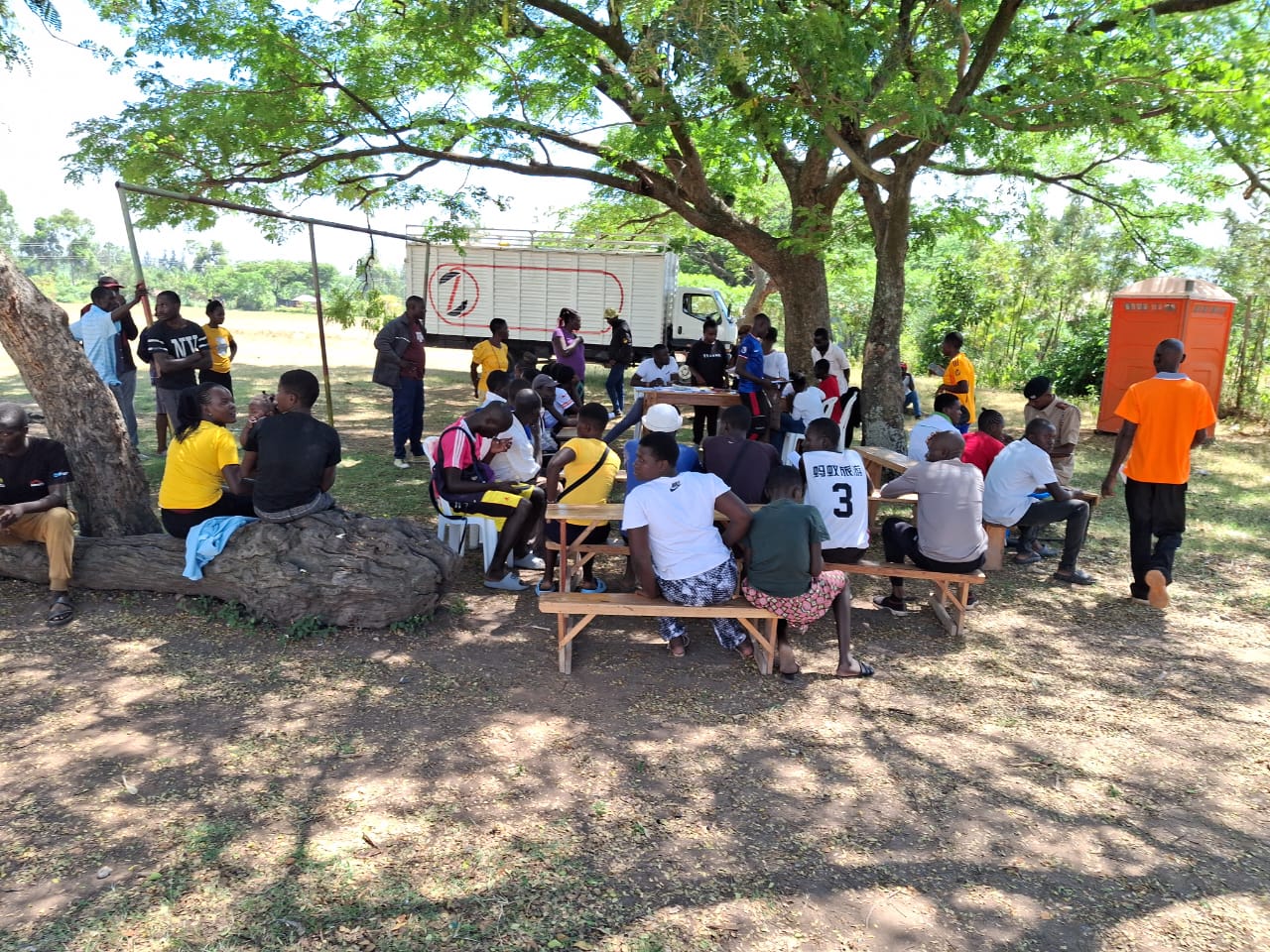




A new wave of national identity card registrations has swept across the larger Nyanza region after the government decentralised the process to the village level, drawing thousands of young adults eager to secure the crucial document ahead of the 2027 General Election.
The initiative, spearheaded by Principal Secretary for Interior Dr Raymond Omollo, has been met with enthusiasm in Kisumu, Siaya, Homa Bay, Nyamira, Migori, and Kisii counties, where long queues have become a common sight outside chiefs’ offices and assistant chiefs’ compounds.
For many youths, the ease of access to ID services marks a significant departure from years of complaints about long travel distances, bureaucratic delays, and, at times, intimidating interactions in sub-county offices.
The shift appears to have energised first-time applicants, many of whom view the document as their gateway to employment, services, and political participation.
In Kisumu County, 18-year-old John Otieno said he rushed to apply for his first ID shortly after learning that officers would be stationed closer to his house. Standing in line at Kondele roundabout, Otieno described the process as timely and crucial.
“I had just turned 18 in February, so when I heard they were bringing the registration to this point, I knew it was my chance,” he said.
He added that he is looking forward to registering as a voter when the Independent Electoral and Boundaries Commission opens its next listing drive.
“I want to vote, and for me, I will vote for President Ruto because I have seen what the affordable housing programme is doing,” he said.
Otieno said he recently worked as a casual labourer at the Lumumba affordable housing project in Kisumu, where he says construction is ongoing.
“I’m earning something from the site. It has helped me, and that’s why I believe in the programme,” he added.
Across sub-counties in the greater Nyanza region, similar stories were echoed.
Long queues, sometimes stretching outside markets, chiefs’ offices, and makeshift tents, highlighted the determination of residents who had long postponed registration due to logistical challenges.
The rollout, many said, had removed a significant barrier for young adults, some of whom have reached their mid-20s without ever obtaining an ID.
At Aram market in Rarieda, Siaya County, 22-year-old Jane Anyango said the new arrangement was a relief.
“We used to walk long distances and face all kinds of frustrations in the bigger offices,” she said.
She credited the Interior Ministry’s reforms for the change, even though she said she had never personally met PS Omollo.
“If you see him, tell him I am grateful for his work. He has saved us from walking far to apply for IDs,” she said.
In parts of Gusii land, the response to the decentralised registration was equally enthusiastic.
At a registration point in Masaba, 25-year-old Susan Nyanchwa described the new arrangement as a long-awaited transformation.
“This is something we have never seen before. The application of IDs used to be centralised very far from the people,” she said.
She added, “That is why you see many of us who are already 25 still without IDs. Now we are finally getting them.”
Local administrators say the turnout reflects a demand and a renewed awareness of the importance of identification documents.
Chiefs and assistant chiefs across the region have been coordinating registration days, mobilising residents, and working with national government officers to ensure that the process runs smoothly.
While political interpretations vary, several residents interviewed across the region linked the exercise to broader national politics as the 2027 elections draw closer.
Some youths expressed hopes that easier access to IDs would encourage higher voter registration, giving them a stronger collective voice in national affairs.
Others pointed to government programmes they felt were having a visible impact in their communities.
Observers note that the Nyanza region, traditionally viewed as a stronghold of former opposition leader Raila Odinga, has recently shown mixed signals in political alignment, though concrete electoral outcomes will only be clear once campaigns intensify and voter registration numbers are finalized.
For now, the focus remains on documentation.
With chiefs’ offices continuing to record heavy daily turnouts, officials say the exercise is expected to continue until all eligible applicants are served.
The renewed momentum, they add, could reduce the number of young adults excluded from employment opportunities, government services, and future elections due to lack of identification.