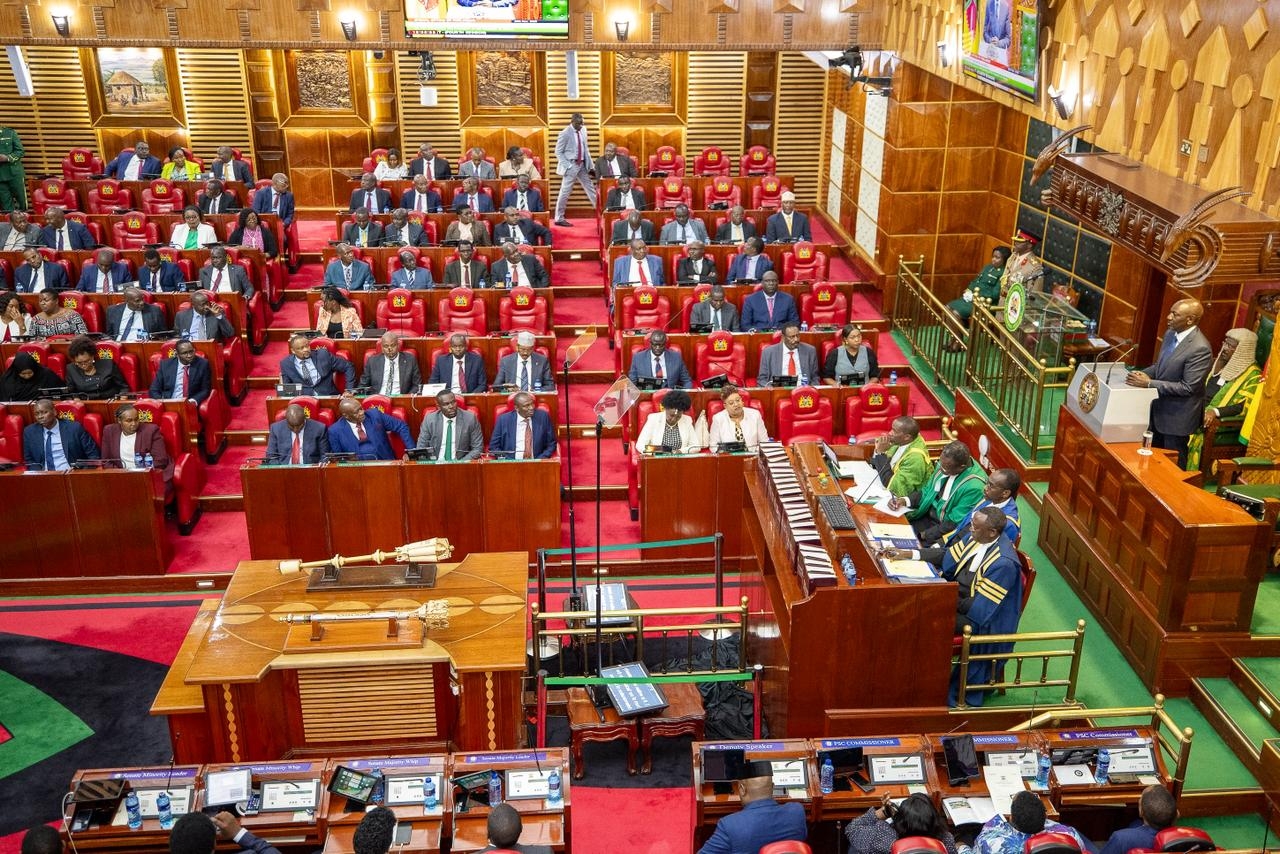


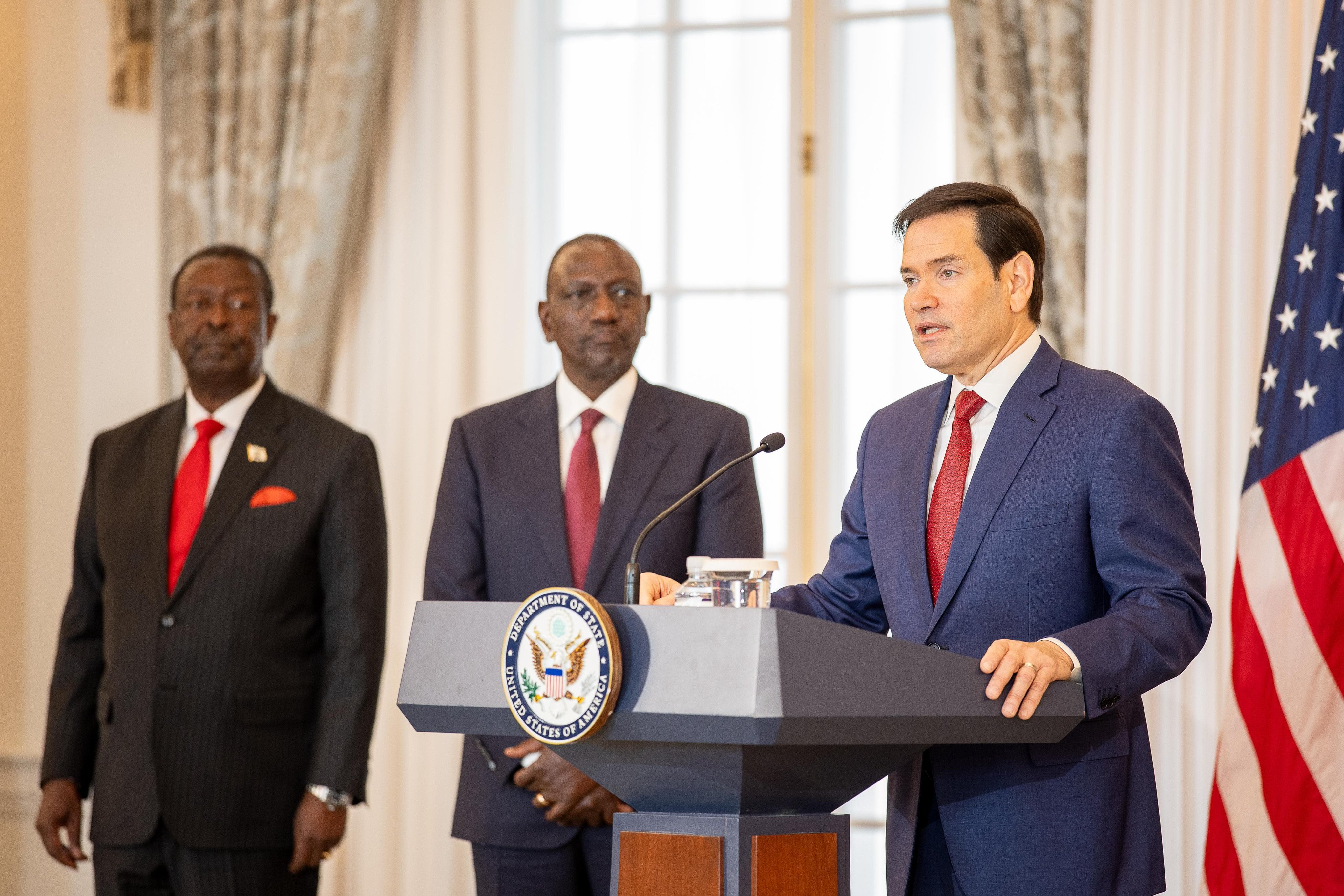
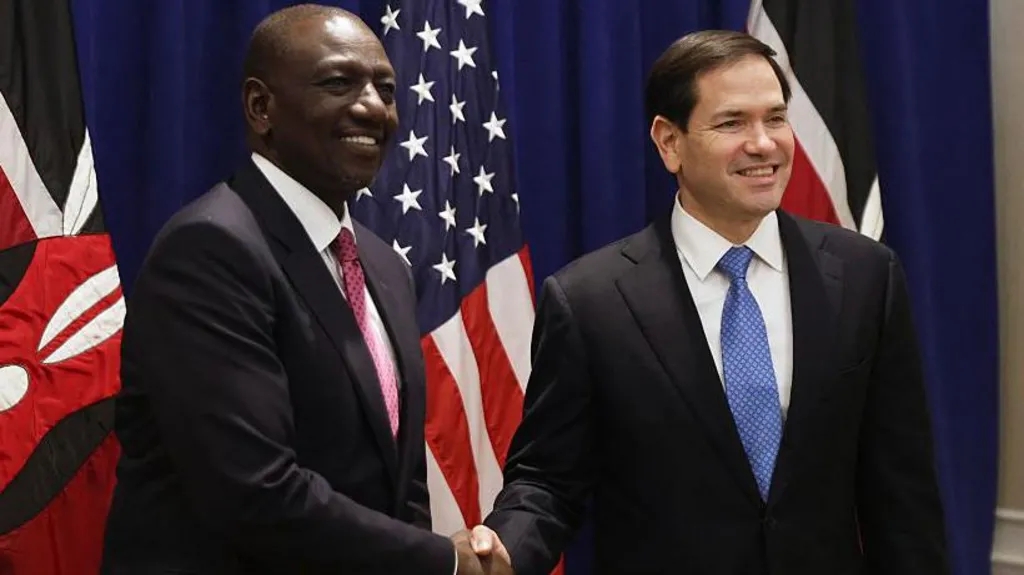
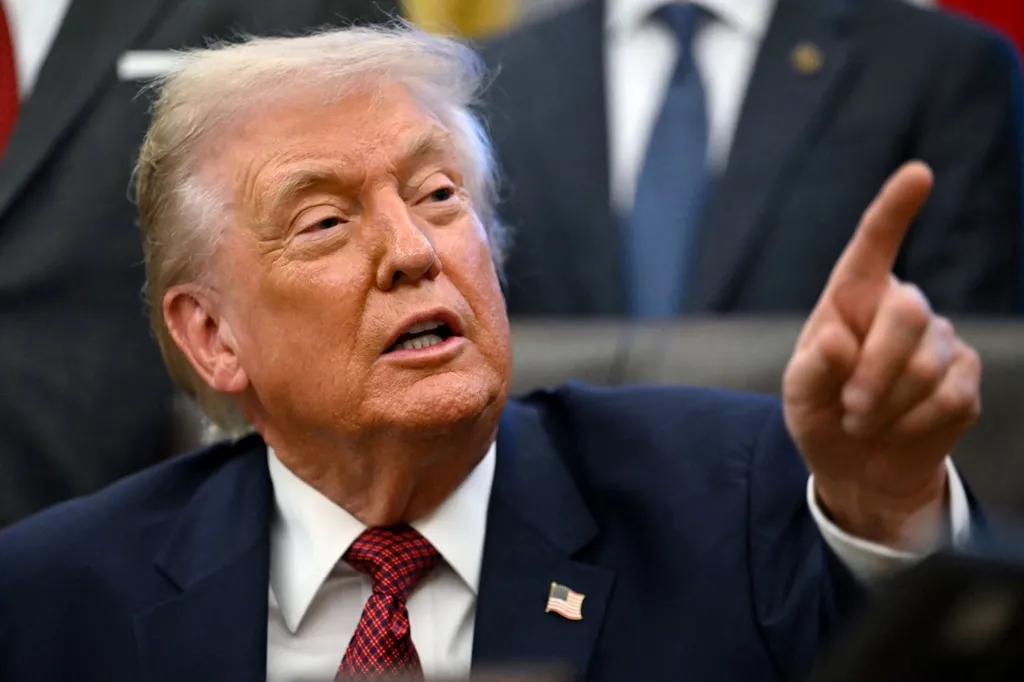
 US Secretary of State Marc Rubio speaks during the signing of the Sh208 billion Health partnership./PCS
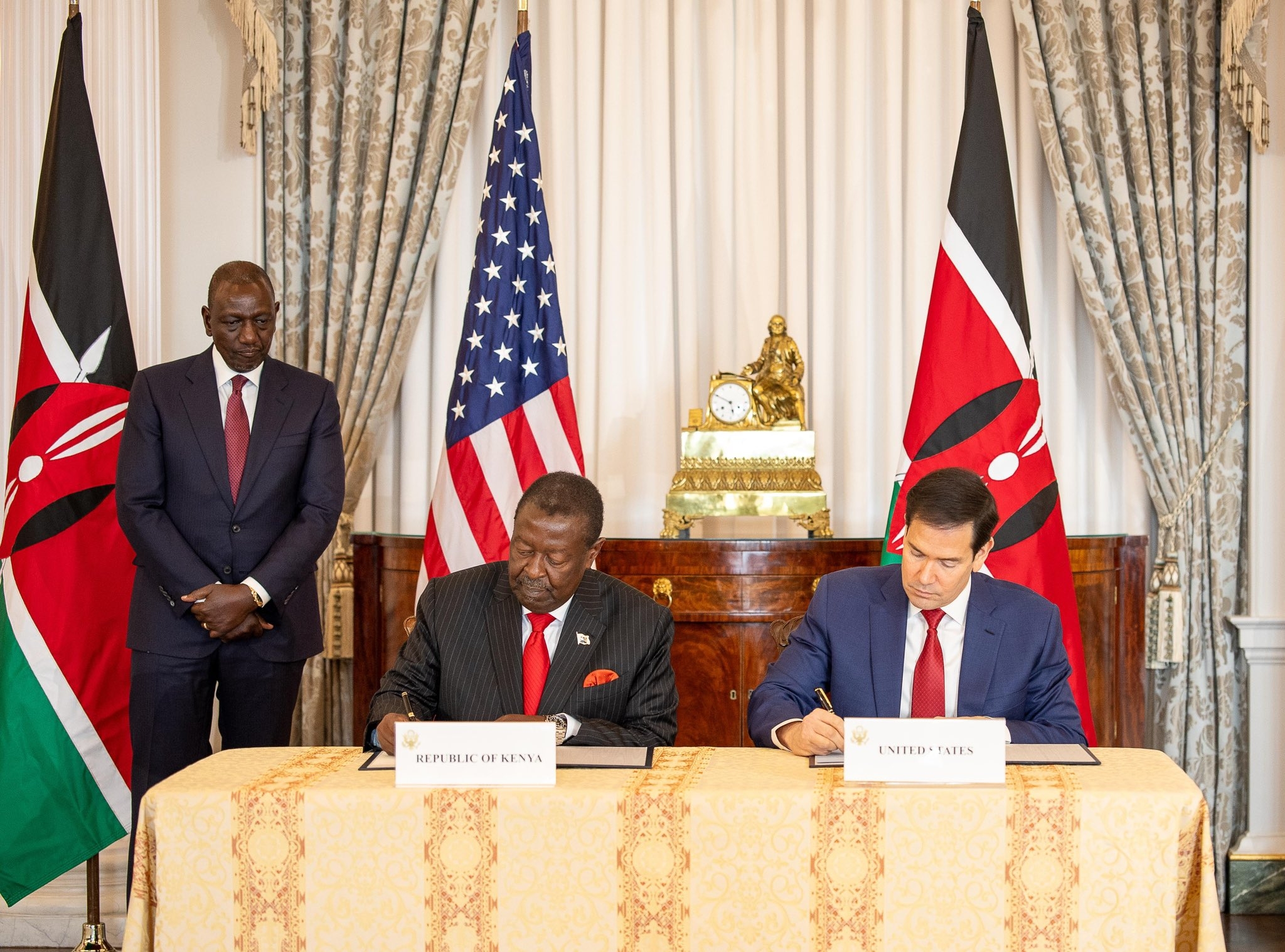
Kenya and the United States on Thursday signed a five-year agreement that will replace the health funding previously channelled through the defunct USAID.
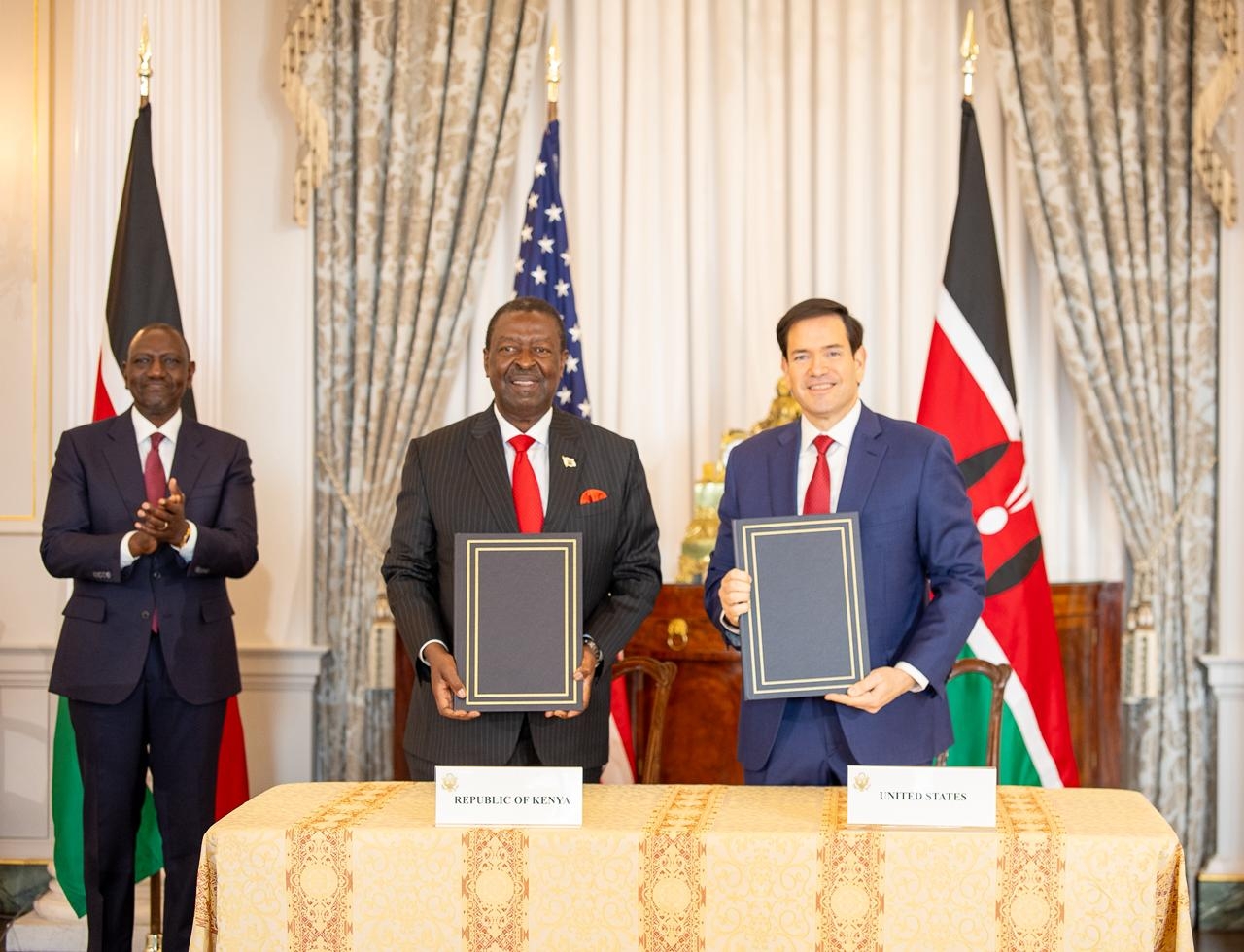
The deal, signed by US Secretary of State Marco Rubio and Prime Cabinet Secretary Musalia Mudavadi, commits the United States to provide up to $1.6 billion (Sh207 billion) over five years.
In return, Kenya must raise about $850 million in domestic resources over the same period.
Kenya will receive a large portion of the Sh207 billion grant first, but the amount will reduce each year until 2031, when Kenya should fully finance its HIV treatment, prevention and other health services.
This grant replaces all Pepfar (US President's Emergency Plan for Aids Relief) funding to Kenya and all the other health financing that came to Kenya each year through USAID.
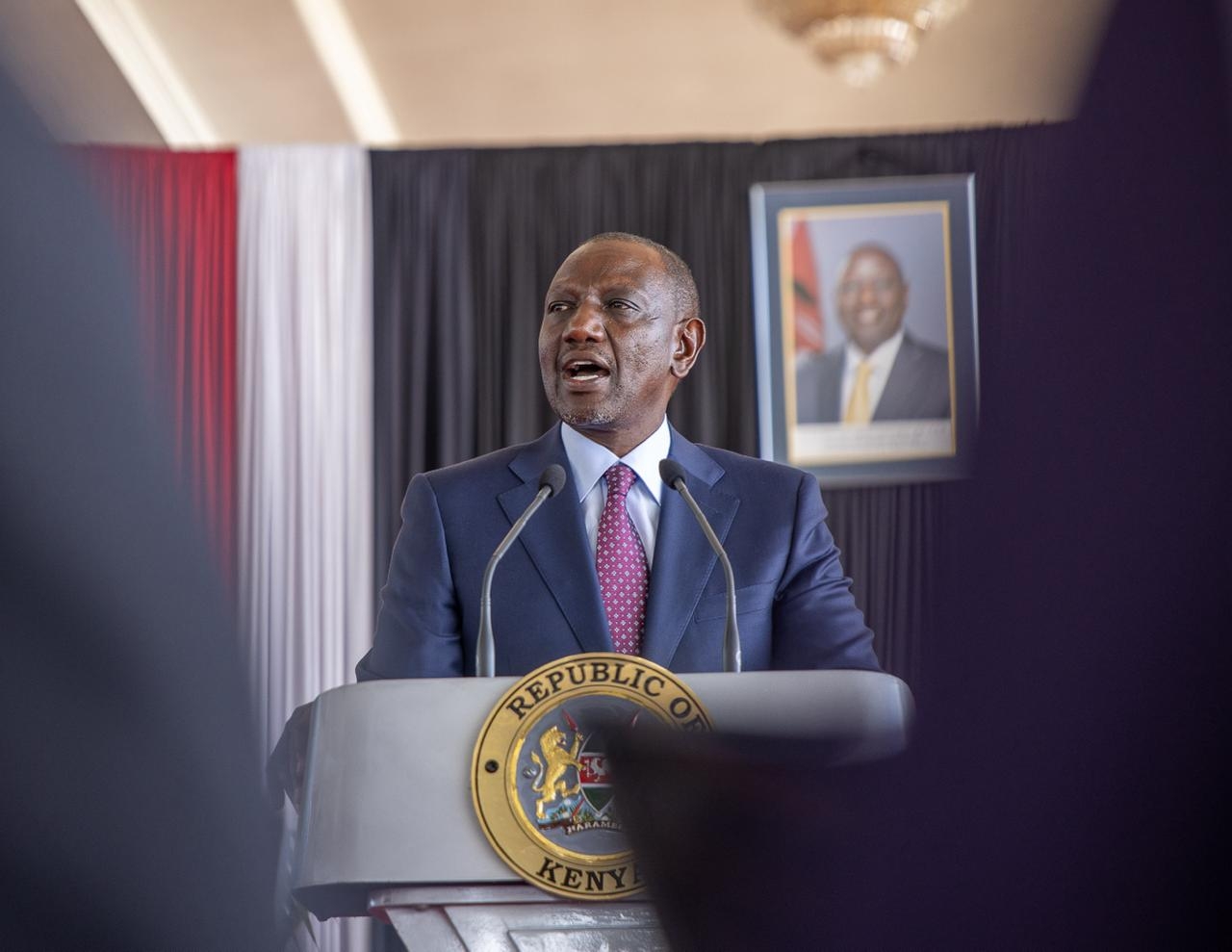
President Ruto promised that “every shilling and every dollar will be spent efficiently, effectively and accountably.”
“The framework we sign today adds momentum to my administration’s universal health coverage that is focused on supply of modern equipment to our hospitals, efficient and timely delivery of health commodities to our facilities, enhancement of our health workforce and health insurance for all, leaving no Kenyan behind. This facility will also boost disease surveillance and emergency preparedness,” he said during the signing ceremony.
The agreement is part of the America First Global Health Strategy (AFGHS), and Kenya was only the first of 50 countries expected to sign by the end of December.
The US is slowly reducing its health funding through AFGHS and wants countries like Kenya to take over most of the costs. The US will still help, but with smaller and more targeted support.
Rubio said they will help countries build their own health systems over the next five years and stop being too reliant on donations.
“That money is not just going to be spent to provide medicine and care; it’s going to be spent to improve the domestic infrastructure, health care infrastructure, so that in five or six or seven or eight years countries will say we no longer need this much assistance,” he said.
The funding will be spread over five years from April 2026.
UNaids welcomed the agreement, calling it a major shift in global health cooperation.
The agency said, “It builds on decades of shared commitment between the US and Kenya through the US President's Emergency Plan for Aids Relief (Pepfar) and represents a renewed demonstration of shared solidarity, co-investment, self-reliant systems and resolve to save lives, reduce new HIV infections and advance progress towards ending Aids in Kenya,” UNaids said in a statement.
The US deal marks the end of Pepfar as the main external funder of the national HIV programme. Pepfar has been the backbone of Kenya’s response for two decades, supporting antiretroviral treatment for more than 1.3 million people and financing critical health workers, commodities and community programmes.
In the most recent cycle, Pepfar provided approximately Sh43 billion, roughly US$322 million, in a single year. It also supported tens of thousands of health workers across all 47 counties and financed large segments of the supply chain, laboratory systems, prevention programmes and data infrastructure.
Those funds traditionally flowed through USAID and partner organisations, rather than directly through Kenya’s own systems.
The new agreement ends that model. Funding will now move more directly through government systems under a government-to-government framework.
UNaids described the pact as “a milestone in the future of global health cooperation, bringing renewed momentum to advance Kenya’s outstanding response to HIV and US leadership in the global HIV response.” It also highlighted that the agreement with Kenya is the first in a series of 50 similar bilateral arrangements the US intends to sign with other countries.
Kenya is now expected to assume growing responsibility— though not immediately — for drug procurement, salaries for health workers historically funded by Pepfar, data systems, outreach programmes and the supply chain that delivers lifesaving commodities.
This transition comes at a sensitive time. Several analyses over the past year have shown that Kenya’s HIV response remains heavily donor-dependent, with foreign funders supporting more than half of annual programme costs.
A government assessment earlier in 2024 estimated that Kenya needs an additional Sh128 billion each year to fully finance its HIV services without donors. The Pepfar and USAID phaseout therefore exposes Kenya to serious financial pressure unless domestic funding rises sharply.
President Ruto, during the signing ceremony, attempted to reassure both governments and the public. His promise was that “every shilling and every dollar will be spent efficiently, effectively and accountably.”
He added, “Let me say this for the record, that already we are mobilising our own domestic resources to the tune of $3 billion to support the health deployment of health infrastructure in Kenya.”



.jpg&w=3840&q=100)