


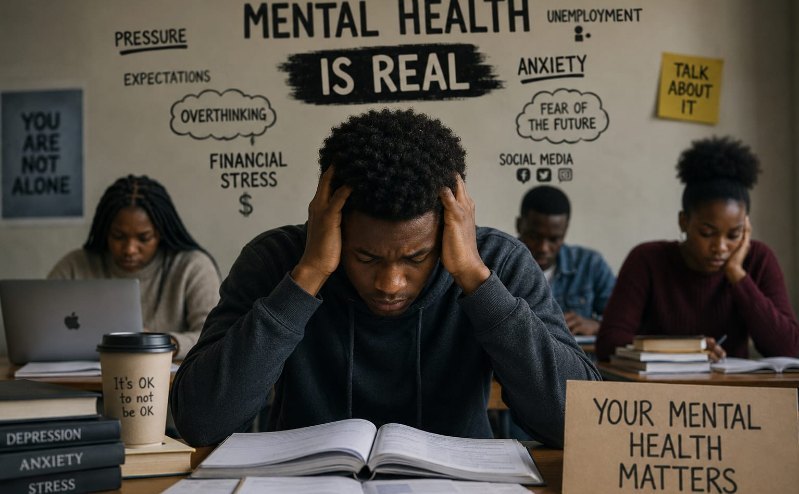
At least four Kenyans die by suicide every day, with men accounting for at least eight in every 10 deaths.
The figures point to a deepening mental health crisis that experts say is linked to school unrest, rising cases of violence, and a quiet breakdown in social and family support systems.
The Ministry of Health estimates that one in four Kenyans will experience a mental health condition in their lifetime.
Of all patients seeking care in hospitals, 25 per cent of outpatients and up to 40 per cent of inpatients present with mental health-related conditions.
Despite this burden, Kenya allocates just 0.01 per cent of the national health budget to mental health, far below global recommendations.
The World Health Organisation ranks Kenya among the top five African countries with the highest prevalence of depression.
Yet the country faces a severe shortage of professionals, with only about 150 psychiatrists serving a population of more than 50 million.
Health authorities estimate a gap of 1,400 psychiatrists, 7,000 psychiatric nurses and 3,000 psychologists to meet minimum standards. As a result, up to 75 per cent of those affected do not access professional care.
The crisis has become increasingly visible in schools, where experts say unrest is often driven not only by disciplinary issues but also by underlying psychological distress.
Weeks after the fire at Utumishi Girls Academy in Gilgil that claimed 16 lives, analysts argue that Kenya continues to overlook the mental health dimension of school instability.
Some educators say rigid systems and limited emotional support structures are contributing to tension in learning institutions. In some cases, students report feeling unheard or constrained in environments where discipline is enforced through fear rather than dialogue.
Garden Estate Secondary School principal Patrick Waweru Gakungu recounted an interaction with a student who approached him during school hours with a personal concern.
The learner, he said, was struggling to communicate a sensitive issue at home due to cultural expectations around masculinity.
The student, Gakungu explained, had difficulty telling his mother that he lacked basic necessities, having been advised by older male figures that such matters should not be discussed with women.
He used the moment to emphasise the importance of emotional openness.
“His mother should be the closest friend,” he said, adding that many young people face silent struggles that can escalate into deeper psychological challenges if ignored. His advice, he noted, was to address issues immediately rather than delay intervention.
Experts argue that such cases reflect broader institutional and societal pressures. They warn that environments lacking empathy and emotional support often produce learners who struggle with stress management and interpersonal relationships.
Psychologist Wanjiku Mwirigi says the burden is particularly heavy on boys and young men, who are often socialised to suppress emotional expression. She notes that cultural expectations discourage boys from showing vulnerability, while simultaneously normalising aggression.
"Boys don’t cry, don’t show emotions,” she said, describing what she termed a dangerous contradiction in social upbringing. According to her, emotional suppression does not eliminate distress but delays its expression, often in harmful ways.
The World Health Organisation estimates Kenya’s suicide rate at about 11 per 100,000 people, with men nearly three times more likely to die by suicide than women.
Police data indicates hundreds of suicide cases recorded in recent months, with men forming the majority.
Mwirigi links the crisis to weakening family structures and emotional detachment within households. She argues that modern economic pressures have reduced parental presence and weakened intergenerational support systems, leaving many young people without emotional guidance.
She further notes that a growing number of children are being raised in environments where fathers are emotionally or physically absent, contributing to identity struggles and emotional instability during adolescence.
Government officials acknowledge the scale of the challenge. Medical Services Principal Secretary Ouma Oluga says Kenya has prioritised mental health as a public health issue, with efforts underway to expand services, strengthen digital health systems and conduct a national mental health survey.
He adds that Kenya has also positioned itself as a regional hub for mental health training through continental initiatives aimed at improving capacity and awareness.
However, significant gaps remain. Only 14 counties have inpatient mental health units, while just over half have psychiatric services.
Mental health coverage in higher-level hospitals remains limited, and staffing shortages persist across the country.
Dr Mercy Karanja, head of the Division of Mental Health at the Ministry of Health, identifies underfunding, stigma and weak referral systems as key barriers to progress.
She notes that while training of mental health professionals has improved, service delivery remains uneven.
Experts are increasingly calling for a cultural shift in how mental health is understood. Psychologists argue that normalising therapy, especially for men, is essential in addressing stigma.
They also advocate for integrating mental wellness into schools, workplaces and community systems, alongside expanding access to counselling services.
Some educators suggest that physical activity can also play a preventive role in mental well-being, recommending stronger emphasis on sports and exercise in school timetables.
As Kenya marks Men’s Mental Health Awareness Month, experts say the message remains consistent: mental health is health, and seeking help should be treated as a sign of strength rather than weakness.
With suicide rates high and men disproportionately affected, the data points to deep-rooted social norms that discourage emotional expression, particularly among boys. The strain is amplified by a severe shortage of mental health professionals and minimal budget allocation, leaving most cases untreated. Schools are emerging as key pressure points, where academic systems intersect with family breakdown and cultural expectations. While government initiatives signal policy intent, real impact will depend on sustained funding, stigma reduction, and integrating mental health into everyday community and school life.