The government has admitted it has no clear figure on how
much it costs to educate a child through the country’s education system,
raising concerns among MPs over the credibility of education budgeting.
Education Cabinet Secretary Julius Ogamba told MPs on Wednesday
that his ministry is not aware of the cost of educating a child from Grade 1 to
university.
Speaking during the ongoing legislative retreat, the CS said
the ministry is still compiling comprehensive data to establish the actual cost
per learner across primary, secondary schools and universities.
The ongoing analysis, conducted through the Kenya Education
Management Information System (Kemis), will factor in all forms of support,
including capitation, bursaries from NG-CDF, NGAAF, counties and private
sponsors.
“No actual analysis has been done to determine the actual
cost. Through the Kemis system, we are assigning each learner a unique number,
so that any support provided can be tracked. This will help us understand the
cost,” Ogamba said.
“This analysis has never been done. We need a clear
picture.”
The revelation drew sharp reactions from MPs, who questioned
how the Treasury and the Education Ministry can prepare and defend multi-billion
shilling budgets without understanding unit costs.
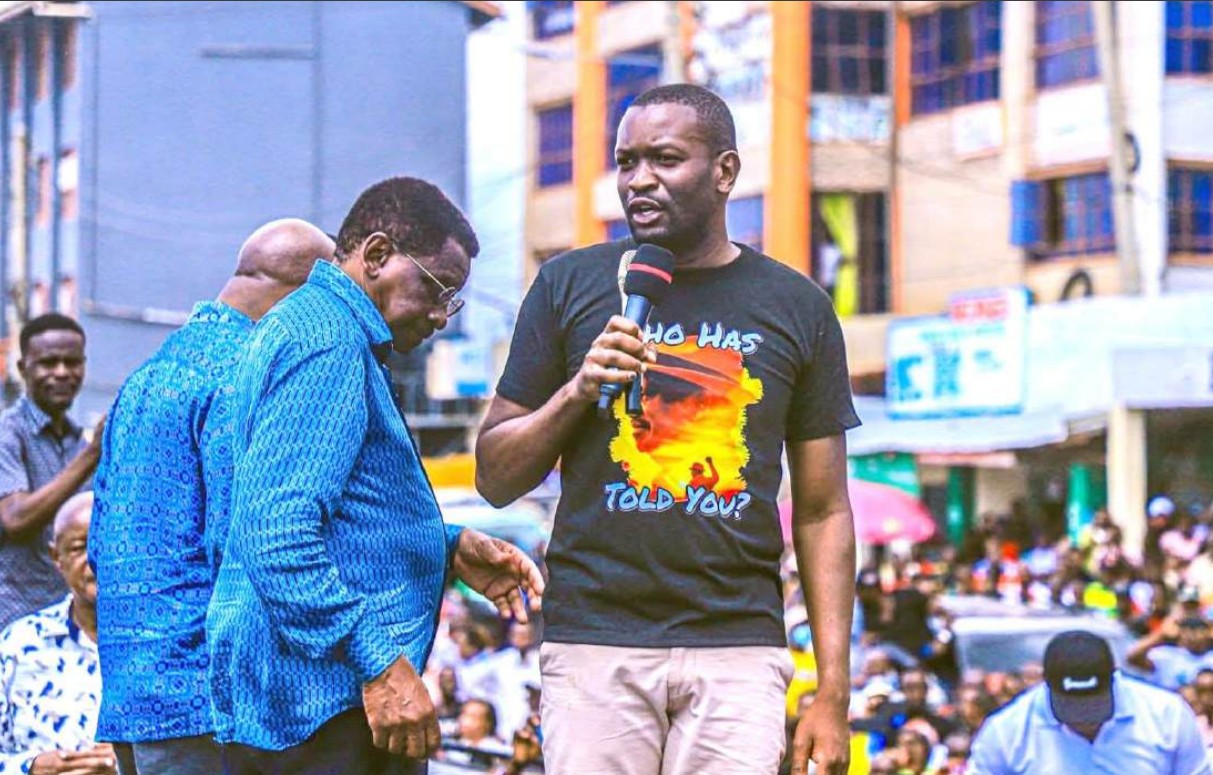
Ugenya MP David Ochieng’ warned the lack of accurate data
undermines planning, resource allocation and accountability in one of the
country’s most heavily funded sectors.
“The minister cannot tell us he doesn’t know. If we don’t
know how much it costs, how do you budget?” Ochieng’ asked.
“What is the cost of educating a child so Parliament can
budget for it? He cannot run away from this,” added Emuhaya MP Omboko Milemba.
The current capitation allocated to schools, the CS noted,
is based on a taskforce report established by President William Ruto. The
taskforce recommended capitation of Sh1,420 (primary), Sh15,042 (junior
secondary), and Sh22,244 (senior secondary).
For the 2025-26 financial year, Ogamba said the capitation
shortfall stands at Sh48.3 billion across all levels.
For primary schools, the requirement was Sh9.7 billion, but
only Sh7 billion was allocated, leaving a Sh2.7 billion deficit. Junior
secondary required Sh49.7 billion, with Sh28.9 billion allocated, creating a
gap of Sh20.8 billion. Senior secondary schools were allocated Sh51.8 billion
against a requirement of Sh76.7 billion, leaving a deficit of Sh24.8 billion.
“The total allocation for basic education is Sh136.1
billion, but only Sh87.8 billion was allocated, leaving a deficit of Sh48.3
billion,” the CS said.
The Ogamba also faced criticism over illegal levies being
charged in schools, which prevent some learners from attending. National
Assembly Majority Leader Kimani Ichung’wah accused senior ministry officials of
neglecting their duties as parents are forced to pay unlawful fees.
“You have the most clueless PS in the Ministry of Education.
He only sits in Nairobi and has no idea what happens on the ground. Get out of
your offices and deal with these problems,” the Kikuyu MP said.
Kaloleni MP Paul Katana said it is unfair for learners to be
sent home over remedial classes, lunch, or uniforms, contrary to ministry
guidelines.
In response, Ogamba confirmed that sending a child home over
remedial or lunch fees is illegal. However, he admitted the ministry’s hands
are tied, as only the Teachers Service Commission can discipline school heads
who flout the directive. He proposed amending the Basic Education Act to
empower the ministry to enforce compliance.
“Ministry policies on lunch, remedial classes, and uniforms
are irregular and illegal. The Basic Education Act does not provide penalties
for breaches, so we rely on TSC administrative action,” Ogamba said.
“We will ensure our officers on the ground enforce ministry
policy, and we are also amending the Basic Education Act.”
The CS added that Grade 10 transition had reached 96 per
cent by Tuesday, with a projection of 100 per cent by the weekend.
According to ministry data, the North Eastern region leads
the transition from junior to senior school at 99.31 per cent, followed by
Western (97.6 per cent), Central (97.9 per cent), Rift Valley (96.5 per cent),
Nairobi (95 per cent), Nyanza (94.6 per cent), Eastern (94.1 per cent), and
Coast (89.1 per cent).
INSTANT ANALYSIS
Ogamba admits the state does not know the cost of educating
a learner from primary to university. The charging of remedial and lunch levies
in schools is illegal. It is also unlawful for school heads to force parents to
buy uniforms from specific shops.