The country’s economy is at a defining moment as the government grapples with shrinking revenues, mounting public expectations and growing pressure to rein in spending.
In this exclusive interview with the Star, Treasury CS John Mbadi outlines the government's plan to cut expenditure instead of piling on more debt, explains the future of tax relief for low-income earners and details measures to curb wasteful public spending.
He also weighs in on why many Kenyans feel the economic squeeze despite signs of recovery and argues that President William Ruto's development record gives him a strong case for re-election in 2027.
What informs the government's preference for
domestic borrowing when financing the budget deficit?
It should be understood that Kenya is no longer a
low-income economy. Kenya has been a middle-income economy since 2013. Being in the
middle-income economy comes with certain restrictions in terms of accessing
concessional loans. Kenya is not qualified to take up concessional loans or get
concessional loans. We have limited space for concessional loans. It means for us to finance our budget fully, and bearing in mind the size of our economy and our governance structure as a country, puts
pressure on our fiscal space. Why? Because, in terms of collection of domestic
revenue, that is ordinary revenue and Appropriation in Aid, there is a limitation
because we have an informal factor that is almost 45 to 46 per cent. Kenyans
talk about broadening the tax base, and when you attempt to bring people who
are not paying taxes into the tax net so that they also pay taxes, then there
are a lot of issues, propaganda and resistance. The openings that
are available for us to meet our budget are likely to be commercial external
loans and domestic borrowings. Commercial external debt depends on the global
or international market and your credit rating. That
means the interest rates are not really low and, at the same time, such loans
are prone to foreign exchange risks. If the shilling depreciates, then the loan
portfolio, or the book value of the loan, automatically increases. In terms of
both the principal sum and interest payments, it becomes very expensive.
Domestic loans are better in that respect because they are not susceptible to
foreign exchange fluctuations.
What is the status of the current wage bill and
what is Treasury doing about it?
The national government wage bill has a percentage of
ordinary revenue in the region of about 35 per cent. It is still less than 30 per cent of the total budget. Looking at it that way, it is not too bad. It only
becomes too bad because we are spending so much on debt repayment. The problem
with the wage bill comes because of the two levels of government. You find the
Sh1 trillion is only for the national government. When you go to counties, they
spend another almost Sh200 billion. The duplication of roles between the two levels of government needs to be looked into and unnecessary hiring of staff should also be reviewed. What is again putting a lot of pressure on us is the question around Collective Bargaining Agreements (CBAs). We have been operating a pension system that was not sustainable. The
best way to deal with the wage bill, I think, is that we must now start
emphasising productivity in return for pay.
Treasury didn't propose any extra taxes in the last
two budget cycles. For how long are you going to do this and is it sustainable?
It is sustainable. In fact, increasing taxes does
not ordinarily lead to more tax collection. What usually leads to tax
collections is economic growth in a country. You know, when the economy grows, even with the same tax rates, you collect more because, first, people will be earning higher salaries, there will be more people getting employment, getting jobs and earning salaries, and those salaries will be taxed. Secondly, there will be more exports, more goods sold in the economy and more services provided, and out of that you will be getting more revenue. So
raising taxes is not a solution. In fact, it usually leads to less tax collection. We should be looking at growing the economy and making tax collection and tax administration more efficient. We should bring more people who are not paying taxes into the tax bracket without increasing tax rates. By charging the same rates, we will be able to collect more. That is the direction in which I am leading the National Treasury.
Despite economic indicators showing the country
is in good economic health, Kenyans are still complaining there is no
money in their pockets. How do you explain this?
Those indicators can be confirmed. Even
with the problems that we had in the Middle East, we never complained of
currency problems in the country. With the sale of Safaricom, we are going to
have almost $16 to 17 billion in our reserves, something that has
never been seen in this country. You
can see the shilling stabilised at Sh129 to Sh130. That could not have
happened if we had not put in place measures to make sure we have enough
reserves. Inflation has gone up, yes, because of the petroleum products, but
again, it would have been worse. There is this question and debate about people not seeing money in their pockets. Sometimes the
question I want to ask you is where is the objectivity? If you want to know whether
people are buying goods, you measure it through PMI (Purchasing Managers' Index). We are being assessed by the international body and our PMI has
been increasing up to the time of the war in Iran. There was a time when we
almost had negative PMI in 2024. But now, from 2025, it has been going up, meaning
people are buying more. So how can people buy more if there is no money in
their pockets? The reason why people feel they do not have money in their pockets is that there are so many people depending on a few because the unemployment rate is high in this country. That is a fact, and it is not unique to Kenya.
What is your take on the cost of living?
This thing about the cost of living being high — where is the evidence? The inflation has been growing at a very low
pace. In fact, sometimes we thought it may even affect the economic growth. You cannot compare the price of maize today to what it was in 2022, for example. It was higher then, yes, and that was four years ago. Now, the price of sugar is still at almost the same level as it was in 2022, although it may have gone a little higher. Then there is edible oil. You can pick any of these essential commodities and compare their prices with those in 2022, four years ago, and you will still find that the rise in prices has not been so steep. That is because inflation has largely been contained over this period.
Treasury set very ambitious revenue targets. What
confidence do you have that the targets are achievable?
The confidence I have is that, going forward, looking at global stability, it is my expectation that we will not experience further disruptions. In that case, our economy is likely to grow by at least five per cent. If that happens, clearly, we can collect the kind of revenue that we have projected, even with the same level of efficiency. However, we are also implementing the changes that we have put in place at the Kenya Revenue Authority. We believe that this is when we will begin to realise the impact of those changes, and so we are likely to collect more.
If the revenue targets are not met, is more
borrowing an option to plug in the deficit?
In the event we fail to meet the target, the
option that is more plausible is to possibly reduce the budget, the projected
expenditure, as opposed to taking more loans.
For the record, how is the country’s debt burden
as at now?
We have about Sh12.8 trillion as at now.
Timelines when Kenyans can expect
significant reduction in the country’s debt burden?
Debt figures keep on changing and there are a
number of factors that contribute to that. One is we make some repayments, we
also take more loans almost every time. At the same time, it should also be understood
that debt is also a factor of foreign exchange, especially external debt. You may look at it and think the debt has increased, yet it is simply because of fluctuations in foreign exchange. If you took external debt denominated in dollars at a time when the exchange rate was, say, Sh112 to the dollar, and today it is Sh129 or Sh130, then the same debt is automatically higher in Kenya shilling terms. Let me make this clear because I have heard many people make statements that do not make sense. There will never be a time when this country starts reducing the stock of its debt in absolute terms. It is not possible. It does not happen anywhere in the world. Today, for example, our debt stands at Sh12.8 trillion. You cannot say we want it to come down to Sh10 trillion. That is a fallacy. What we should look at is the
percentage of debt to GDP should go down. So, we are looking at percentage of
debt to GDP in present value terms as no more than three per cent. The ideal,
actually the one that we have been focusing on is 3.3 percent and it can even
be three per cent or even below. So that as our GDP grows, the debt grows at a much
lower pace.
There have been complains about wastage in government, what safeguards has Treasury put in place to address misuse of
public funds?
It is true there's been wastage in
government and this has been talked about over the years, it's not the first
time. In fact, from the time I became an adult in this country, I've always
heard, and I believe, because I also see, there is wastage, there is theft,
there is corruption, all kinds of adjectives you can use. But then, if there is
anyone who can speak, or stand, any corner of this country today, and claim
that this National Treasury under my watch has not done anything in addressing
this, then that would be either a propagandist, liar, or playing politics. Why
do I say so? My efforts at the National Treasury, together with my team, has
all along been on reforms. A lot of it on PFM (Public Financial Management) reform. Number one, EGP (Electronic Government Procurement System), which had
become a story in this country. Everybody, talking about electronic procurement.
I have implemented it. I said very clearly from July 1, 2026, there will
be no exemption on EGP. We have done everything that was causing a
challenge. We have trained people, we have trained staff, we have TOT
-trainers of trainees. Suppliers and contractors have also been trained. That is a revolutionary procurement because that
is one of the areas where there has been a big challenge. Number two, Treasury
Single Account. Haven’t we implemented it? I just mentioned, when I was
reading my budget speech, that we have realised a savings of over 61 per cent on
overdrafts with the Central Bank. We used to take overdrafts with CBK and
we have been paying interest to CBK and those overdrafts that has been reduced
by 61 per cent because of operating Treasury's Single Account. We are automating the pension department and putting in place a system where, before you retire, your retirement benefits are already being processed so that when you retire, you simply receive your money. Zero-based budgeting
is being implemented. This is the first year. We have three stages. The first
stage we have done, we are going to do the second in the next financial year,
then the last phase in the third year, then we will have a zero-based budget as
a country. Finally, there is the accrual accounting, which we are also
implementing in three phases. We have started the first big phase where now we
are recognising the assets. Then we are going to bring in the liabilities. All
these things, once they are implemented, they are going to cut wastage in the government.
Looking ahead to the 2027 elections, can the government realistically deliver its economic promises under the current fiscal framework?
This government has actually delivered. First, this government has largely achieved food security, which was one of its core pillars. Agriculture transformation and food security were the first of the five pillars. Look at the availability of food in this country from 2023 to date. I do not think there has been any serious hunger in this country. Why has this happened? Yes, the weather has been favourable, but it is also because of the incentives and support that have been given to farmers.
Transformation has been experienced across various sectors of the economy. Today, if people were to assess President Ruto objectively, they would give him a score of over 80 per cent. Only people who are thinking in ethnic terms, or using ethnic narratives, would say "Kasongo Wantam".
What is the fate of the tax waiver for Kenyans earning less than Sh30,000, as was promised by both yourself and President William Ruto? Any hope for them?
We are working on that. We are going to conduct public participation and then take it to Parliament. That is a commitment, and it will be implemented.
We want to begin the process, perhaps in about a month's time. I will start it at the National Treasury. I will conduct extensive public participation and gather Kenyans' views. Then I will present the proposal to Parliament. Parliament will also conduct its own public participation.
After that, we will pass a Tax Laws (Amendment) Bill that will reflect what Kenyans want.

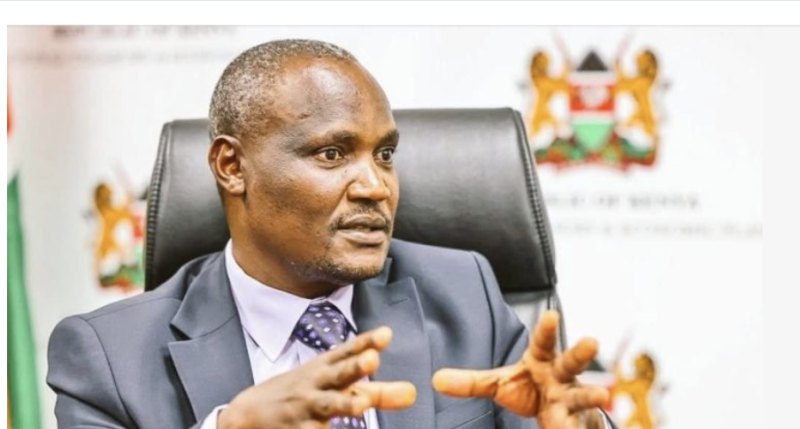
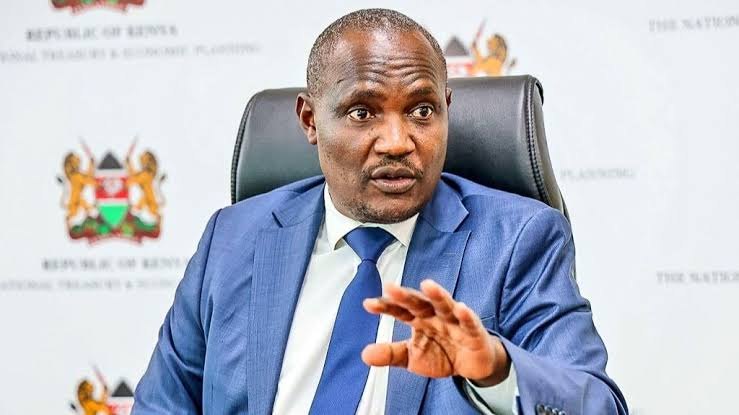
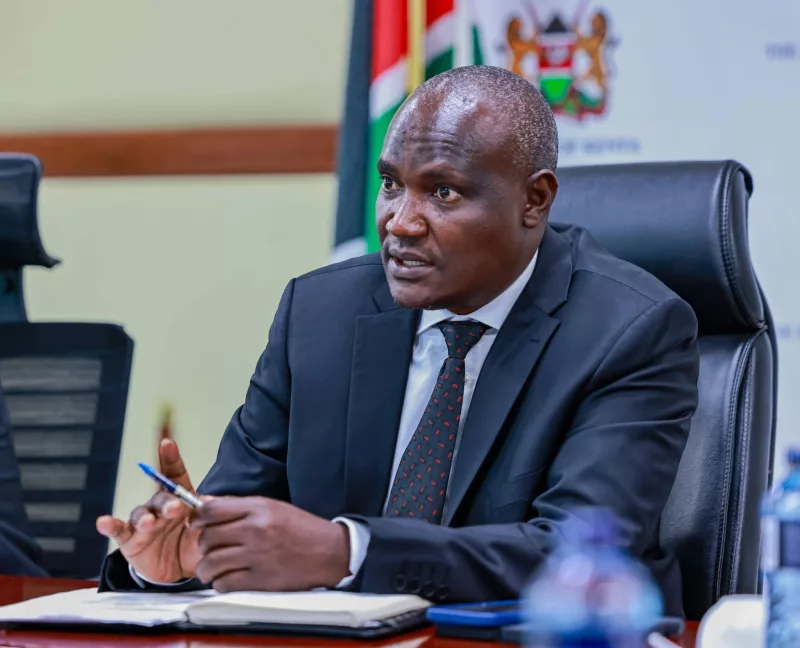 National Treasury Cabinet Secretary John Mbadi during an interview at his office/FILE