

Retirement remains a risky and uncertain journey for Kenyans. For many, the word “retirement” is still whispered with fear, often associated with poverty, dependence and declining dignity. Yet, retirement should not be a season of anxiety – it should be a time of security, contribution and fulfilment after decades of service to family and our communities.
Over the last several years, Kenya has made notable progress in expanding pension coverage. For example, with the NSSF Act, pension coverage grew from 15 per cent in 2021 to about 26 per cent in 2024 with a projected growth of 34 per cent by 2029 (Retirement Benefits Authority (RBA) - 2024).
The reforms in the retirement benefits sector such as the growth of occupational schemes, individual pension plans, and innovative products targeting the informal sector, are commendable.
However, beneath these gains lies a deeper and more worrying problem: while more Kenyans are joining pension schemes, far too many are retiring with savings that are simply not enough to sustain a dignified life.
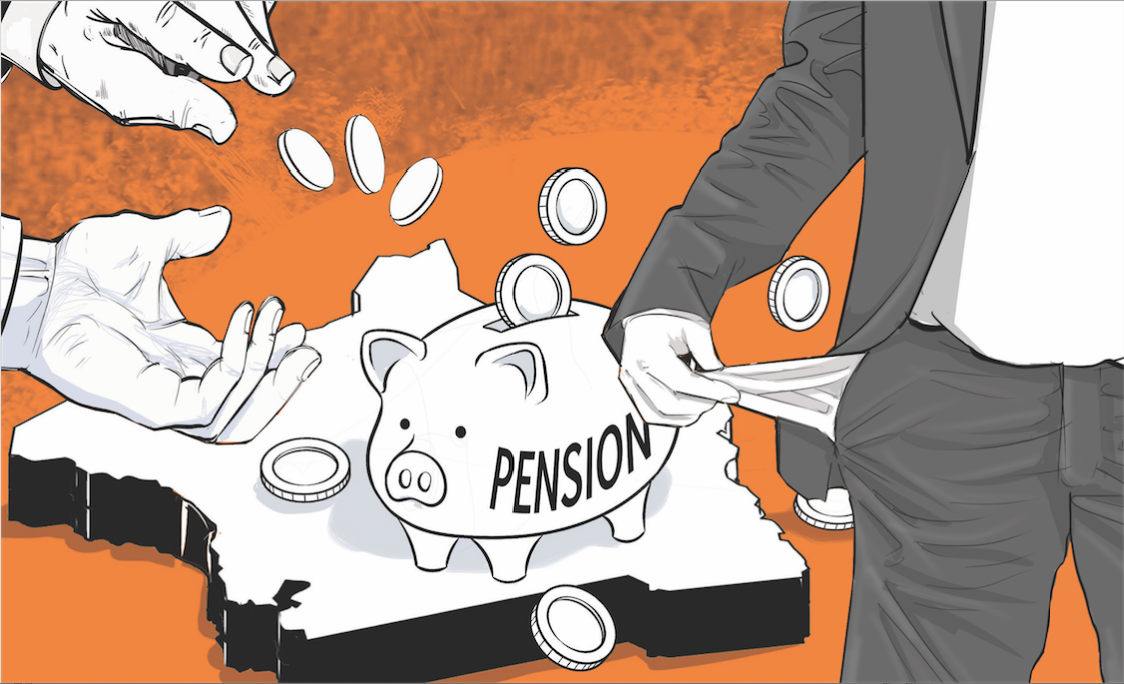
Today, less than a quarter of Kenya’s working population is covered by any form of formal pension arrangement. The majority – especially those in the informal sector – still rely on family support, small businesses or sheer resilience in old age.
Even among those who are covered, income replacement rates are low once one retires. According to the RBA pension report of 2024, 52 per cent of retirees had saved for between 30 and 40 years, but many could not comfortably retire with their pension.
This is because an estimated 12 per cent were receiving an income of Sh40,000–Sh50,000, while 9.6 per cent received between Sh51,000 and Sh100,000 and a mere 1.9 per cent received over Sh100,000 per month. To further compound this reality, 83 per cent reported having dependants who were less than 24 years of age.
In addition, many retirees take part of their pension
in lump-sum, which they exhaust
within a few years, leaving
them financially vulnerable for the remainder of their lives. This reality is not just a personal
tragedy (which it is for many a retiree in Kenya); it should be an issue of
national policy concern.
Kenya’s population is ageing and life expectancy is increasing, and the proportion of Kenyans above 60 years continues to rise. At the same time, family structures have changed and continue to change. The traditional safety nets where adult children cared for ageing parents has weakened under the pressures of urbanisation, unemployment and rising costs of living.
For many, African traditions that once ensured care and dignity in old age have been weakened over time. Ironically, the burden has shifted in the opposite direction, with retirees increasingly supporting their adult children. In the absence of strong retirement income systems and adequate pension coverage, old-age poverty is no longer a future risk – it is an unfolding social and economic crisis in Kenya.
Given the reduced income in retirement and high dependency on retirees, retirement life is precarious for many Kenyans. With limited opportunities to earn additional income, even for those who are willing and able to work, many retirees facing income inadequacy are left with few viable economic options. In response, some turn to small businesses as a survival strategy, with the latest trend being ventures such as digital marketing.
For some, however, these enterprises fail, resulting in the loss of hard-earned savings. Others are forced to rely on their adult children, even when those children are themselves financially strained.
With poor and expensive health coverage in Kenya, health shocks can quickly wipe out the savings of many retirees in case of a health emergency. In addition, housing insecurity increases for those working in urban areas such as Nairobi, forcing many a retiree to move to rural areas (shags ) without adequate preparation for “rural life” nor the resources to sustain their livelihood.
As a result, it's no surprise that emotional distress and loss of dignity follow closely behind.
Unfortunately, retirement for many in Kenya, instead of being a reward after many years of labour, becomes a season of survival, disappointment, despair and destitution. There is evidence to show that mental health, and especially alcohol abuse, becomes the default for some who are struggling with life in retirement to numb their pain.
Second, irregular incomes in the informal sector make consistent saving and payment to a pension scheme (if an appropriate one is available) difficult. Third, financial literacy around retirement planning remains limited. Too many Kenyans only begin thinking seriously about retirement in the final years of their careers – when it is already too late to build meaningful savings.
There is also a clear policy imbalance. While national conversations have rightly emphasised expanding pension coverage, far less attention is paid to outcomes – specifically, whether pension benefits are sufficient to support a decent life in retirement.
As a society, we rarely ask whether pensions can cover rent, medical expenses or other basic needs. True success in pension reform should be measured not only by participation rates, but by the dignity retirees experience in old age.
First, in addition to increasing pension coverage, we must place
pension adequacy at the centre of retirement policy and discussions.
Contribution rates, benefit designs, and payout structures need to be reviewed with one key question in mind: will this income
last, and will it be enough for retirees to live a
decent life?
Second, flexible and inclusive savings mechanisms for informal workers must be scaled up. Digital platforms, micro-contributions and matched savings incentives can help bring millions into meaningful long-term savings for retirement.
Third, retirement education must begin early. Retirement planning should not be a final-year seminar. It should be a lifelong conversation. Employers, regulators, financial institutions and civil society all have a role to play in helping Kenyans understand that retirement is not an event—it is a process and a life transition that, for some, can last 20 or more years. As such, to thrive and live a happy, meaningful and fulfilled life in retirement, adequate planning is necessary.
Finally, we must broaden the retirement conversation beyond money. No doubt that adequate income in retirement is essential, but so are good health, having a purpose, social connection and continued participation in society. A dignified retirement has to be holistic. It recognises retirees not as dependents, but as valuable members of our society with experience, wisdom and ongoing contributions to make.
Kenya stands at an important crossroads. If we act now – strengthening coverage, improving adequacy and reshaping how we prepare for later life after the workplace – we can build a holistic retirement system that includes both the financial and non-financial aspects and protect not just incomes, but human dignity.
Retirement should not push Kenyans
into financial struggle
due to limited pension coverage and inadequate benefits.
Instead, it should open the door to financial security, renewed purpose, and a
dignified life after many years of hard work and contribution.
Certified retirement and transition coach and is the founder and CEO of Reinvent RetireMINT