

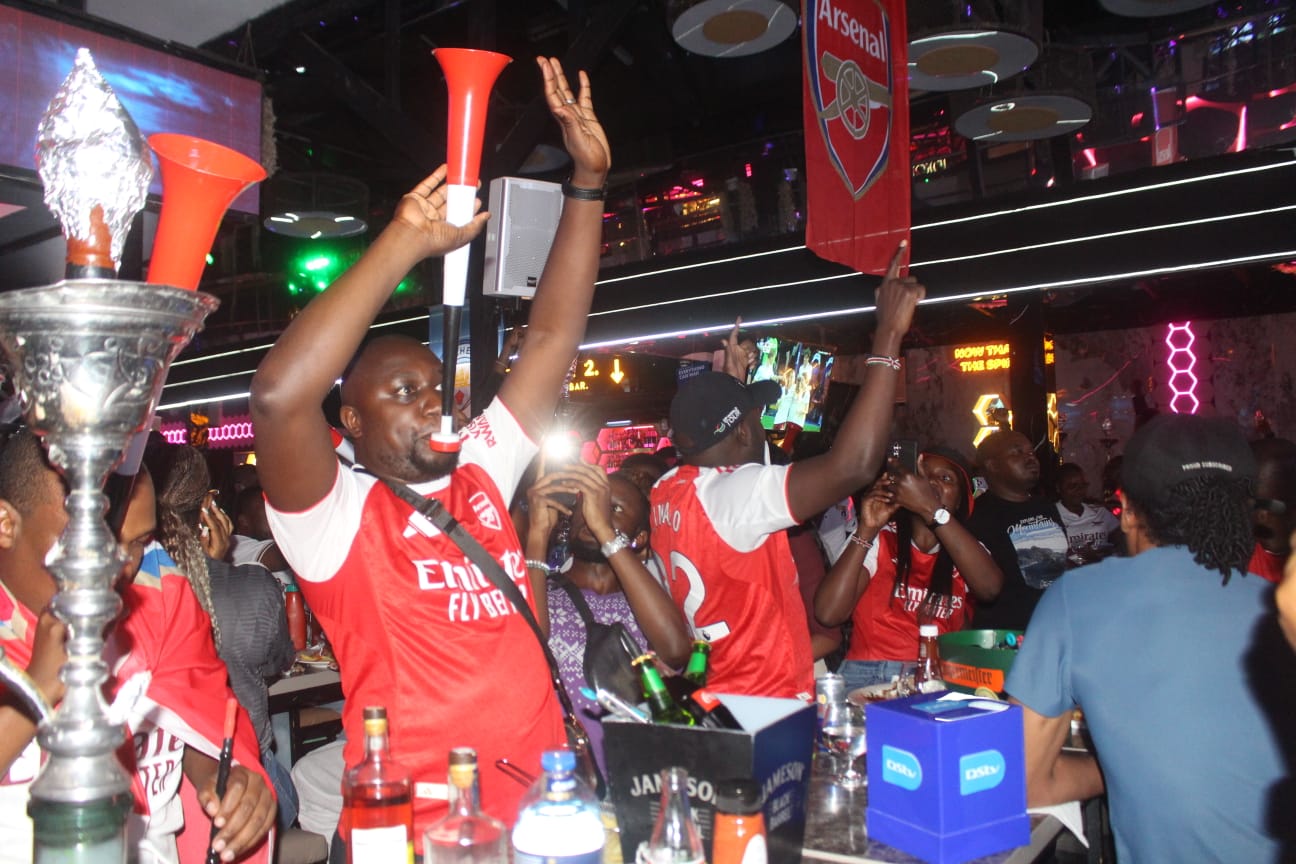
 Arsenal fans celebrate at a club in Nairobi after their team lifted the EPL cup on Sunday, May 24 /MOSES MWANGI
The celebrations around Arsenal’s league victory have been impossible to ignore. Across Kenya and much of Africa, fans poured into streets, pubs, and social media to celebrate the club’s success. For Arsenal supporters, it was a deserved moment after years of investment, patience, and rebuilding. In business terms, it was simply a return on investment.
But amid the celebrations came an uncomfortable debate. Ugandan President Yoweri Museveni and several local leaders questioned why Africans spend so much money, emotion, and attention on foreign football while local sports continue to struggle with poor funding and low fan support.
It is not wrong to support Arsenal, Manchester United, Real Madrid, or any foreign club. Sports are global entertainment. Fans buy jerseys, subscriptions, and tickets because they enjoy quality football. But one important question remains: why is that quality so high in Europe in the first place?
The answer is investment.
Top football clubs spend heavily to attract and retain elite talent. Arsenal’s wage bill alone is estimated at more than £340 million annually, with stars such as Bukayo Saka reportedly earning over £300,000 per week. Those salaries are supported by billions earned from broadcasting rights, sponsorships, merchandise sales, and loyal fans across the world, including millions in Africa.
In Kenya alone, huge amounts of money are spent every year on English Premier League broadcasting packages, satellite subscriptions, internet streaming, and imported merchandise. Media companies pay heavily for EPL rights because demand is enormous. Weekend businesses from pubs to betting shops also depend heavily on European football traffic. Entire economies now move around foreign leagues.
Some commentators have described this obsession as a form of “sports colonialism,” where African consumers heavily finance European sports industries while investing very little in their own leagues. The comparison may sound harsh, but the imbalance is difficult to ignore.
Many Kenyans cannot name players from local clubs such as AFC Leopards, Gor Mahia, or Tusker FC beyond a few famous names. That is not because Kenyans hate local football. It reflects years of poor marketing, weak management, low sponsorship, and limited investment in facilities and talent development.
Good football does not appear by magic. It is built
deliberately through academies, coaching, salaries, media coverage, and fan
engagement. Europe understands this very well. That is why clubs spend heavily
marketing themselves globally. They need African audiences because those
audiences help fund the massive salaries and transfer fees that sustain elite
football. Ironically, many of the top players benefiting from this system are
Africans themselves.
Yet Africa also has the talent to build competitive local leagues. Tanzania has shown signs that local football can attract strong fan support, sponsorship, and serious investment. Clubs such as Simba SC and Young Africans have built regional excitement and improved the quality of their leagues. The NBA’s rise globally also shows what focused investment and branding can achieve.
Kenya can do the same. Local clubs can fill stadiums. Sports bars can attract crowds for Kenyan games just as they do for the EPL. Local television rights, endorsements, and merchandise can grow into billion-shilling industries if there is serious planning and long-term commitment.
The growing number of sports academies across Kenya and Africa should not exist only to export talent abroad. They should also strengthen local clubs and leagues. Africa already has the athletes. What is missing is sustained investment, organization, and belief in our own sports products.
Supporting Arsenal or any foreign club is not the problem. The problem is when we become consumers only, while failing to build systems that benefit our own economies and sports industries. Passion alone cannot grow football. Investment can.
And perhaps that is the real lesson from Arsenal’s success.