


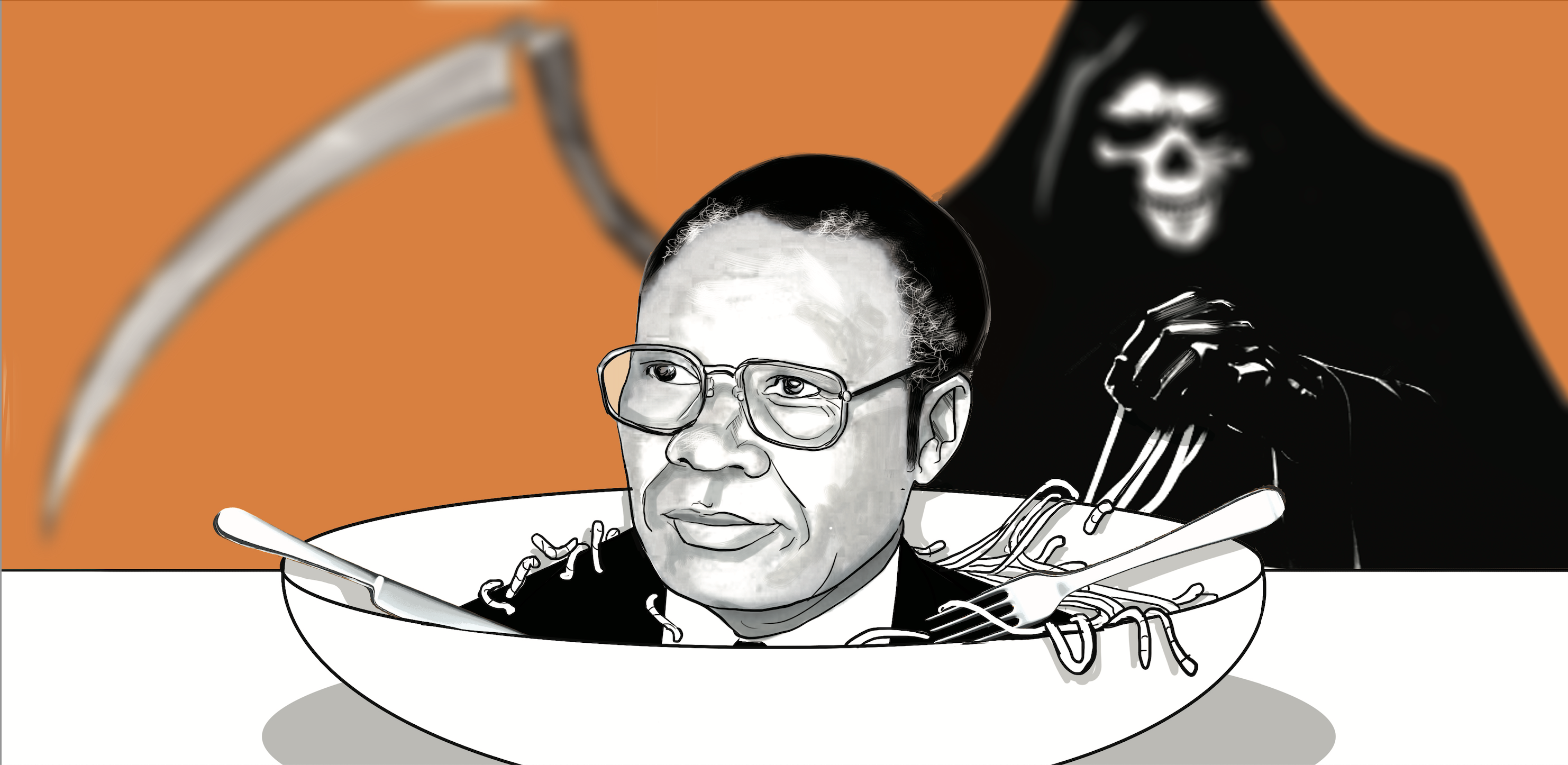
In Hamlet, William Shakespeare deploys dark wordplay to mock the ultimate futility of human life, ambition and power. When King Claudius demands to know Polonius's whereabouts, Hamlet drops a simple "at supper" response.
The dialogue spirals when Claudius follows up, asking where exactly Polonius is.
"Not where he eats, but where he is eaten. A certain convocation of politic worms are e'en at him," Hamlet says, compounding the horror:
"Your worm is your only emperor for diet. We fat all creatures else to fat us, and we fat ourselves for maggots. Your fat king and your lean beggar is but variable service—two dishes, but to one table. That’s the end."
Hamlet was not done. He signed out his dark humou r by stating that a man may fish with the worm that has eaten a king, and eat of the fish that fed upon that worm.
When Slobodan Milošević died in 2006, I deployed this Hamletian humour to characterise his demise. The man who once claimed the power of life and death in the Balkans died a lonesome death in a cold jail cell at The Hague, where he was on trial for war crimes.
As a Serbian ultranationalist, Milošević fomented ethnic and religious strife in the region, leading to thousands of deaths and the suffering of millions. He was perhaps the single person most responsible for Yugoslavia’s bloody disintegration.
Cornered and presented with an opportunity to atone for his sins of commission and omission on a world stage, Milošević chose instead to stage political rants inside the courtroom, mocking his captors and questioning their legitimacy.
However, when the angel of death came calling on the morning of March 11th, the coward in him did not let out a whimper of a cry or the slightest protest. When the guards called his name and shook his foot, he did not respond.
This week, it was the turn of yet another ignominious figure in human history to answer the immortal call, again in the world’s justice capital of The Hague: genocidaire Félicien Kabuga.
Possibly a greater coward than Milošević, Kabuga never truly answered for his indictment of genocide and crimes against humanity—including the persecution, extermination and murder committed during the 1994 Rwandan genocide against the Tutsi.
A tea and coffee tycoon, Kabuga, reportedly imported thousands of machetes that slashed to death hapless Tutsis caught in the web of his sponsored hate campaign. When the genocide ended, Kabuga fled Rwanda.
He left a trail of destruction wherever he stepped, including Kenya, where he enjoyed considerable succour of state elements. When the heat became too much in Nairobi, he fled to Europe.
For years he operated under the radar of authorities until Covid-19 pandemic protocols and surveillance sold him out to French authorities. The fugitive was captured on May 16, 2020.
When he appeared before judges that November, he neither answered questions nor entered a plea. He was later found unfit to stand trial and scheduled for provisional release.
Through flight, old age and illness, he conned the world out of the opportunity to hold him accountable for his role in one of the darkest chapters of human history.
While he was provisionally free, the world was still not ready to come to terms with his liberty. For three years, no country—except the one he almost destroyed—was willing to accept him into its territory. He died away from his own country, unwanted and unloved.
Kabuga, like Milošević before him, is a tragic figure. These were men whom fate afforded a privileged public profile and immense fortune. Yet, both diminutive in frame and wearing permanent scowls, they chose to inflict death and misery upon their fellow humans.
They may have escaped the corporeal hand of justice, but in the very end, universal order put them in their rightful place.
In the greater, incorporeal architecture of the universe, men—however powerful they may be—are insignificant, fleeting actors. In the words of the Biblical book of Job, man "comes forth like a flower and is cut down; he flees like a shadow and continues not."
We eat to be eaten. Kabuga is finally at supper, being devoured.
Advocate of the High Court, Senior Project Manager with the Friedrich Naumann Foundation. The views expressed here are his own