



The Teachers Service Commission has quietly delivered one of the most significant administrative overhauls in recent years: the successful migration of over 400,000 teachers from Minet ION to the Social Health Authority under the Public Officers Medical Scheme Fund (POMS).
It is a shift that many thought would stall, given the entrenched systems, political pressure points and technical weight behind the outgoing arrangement.
Yet it happened — smoothly, on time, and without the chaos that usually accompanies large-scale government transitions.
This move is not just about changing a health insurer.
It marks a turning point in Kenya’s public-sector reform agenda, showing that major institutional transitions can succeed when leadership is aligned and the mission is clear.
President William Ruto’s directive to consolidate and nationalise health insurance coverage set the stage for this shift.
The order came with tight deadlines and a complicated task: reorganise how one of Kenya’s largest workforces accesses healthcare. From the start, critics doubted whether the Commission — led by an acting CEO — could pull it off.
Their concern was not unfounded. For decades, Minet ION had built a deep-rooted system: a wide provider network, an established claims architecture and relationships woven tightly into the country’s medical ecosystem.
Undoing that structure was never going to be simple. Past attempts by other institutions to break from similar monopolistic setups had failed or dragged on for years.
The fear was that any disruption would leave teachers stranded without health services and spark immediate public outcry.
That the TSC had to undertake this process while keeping every teacher and dependent continuously covered only made the task more daunting.
What unfolded instead was a striking show of cooperation between TSC and the Social Health Authority.
Rather than blame-shifting or operating in silos, the two institutions moved in unison — planning jointly, troubleshooting jointly and communicating jointly.
This “one team” approach became the backbone of the entire transition. Challenges that could easily have derailed the process were confronted early, openly and with shared responsibility.
The result was a transition that did not cause panic, confusion or gaps in service delivery. This level of coordination is rare in public administration, and it deserves recognition.
It also provides a workable model for other agencies preparing for changes — whether in procurement systems, digital infrastructure, or personnel management.
More importantly, the TSC–SHA experience has produced a wealth of practical lessons. The mapping of stakeholders, the staging of implementation, the contingency planning, and the management of public communication all provide a playbook that government departments can replicate.
Kenya has often struggled with institutional memory — major reforms are executed, then forgotten, and their lessons lost. This time, documentation and knowledge-sharing should be part of the post-transition phase.
The expertise gained here can ease future reforms, save public money and reduce the risks associated with large-scale change.
While the administrative achievement is impressive, the human impact carries even more weight. Teachers and their families now enjoy comprehensive health coverage under a unified national framework.
They are no longer tied to a private arrangement whose rules and exclusions often limited access to timely care.
A teacher should not worry about whether a hospital visit is covered or whether the insurer will honour a claim. Under the new scheme, coverage is wider and more predictable.
Strong health cover does more than keep teachers healthy — it lifts the quality of learning in Kenyan classrooms.
A teacher who can access medical care without financial strain is more likely to maintain consistent attendance, bring energy to their work and engage students better.
Research across the world points to the direct link between educator well-being and student performance. In that sense, this migration is not just a health reform; it is an investment in Kenya’s long-term education outcomes.
The numbers alone tell an important story. More than one million Kenyans — teachers and their dependents — are affected directly.
Thousands of healthcare facilities are now aligned with SHA protocols, creating more uniform standards and faster reimbursement timelines.
Other public-sector groups are watching closely, and the message is clear: complex reforms are possible when institutions pull in the same direction.
This migration challenges the familiar narrative that government bodies are slow, rigid and ineffective.
It shows instead that, with clear leadership and honest cooperation, public institutions can deliver reforms at scale and with precision. The TSC–SHA transition is not merely a procedural achievement.
It is evidence that Kenya’s public sector, when properly guided and supported, can rise to meet ambitious national goals. It is a lesson worth studying — and repeating.
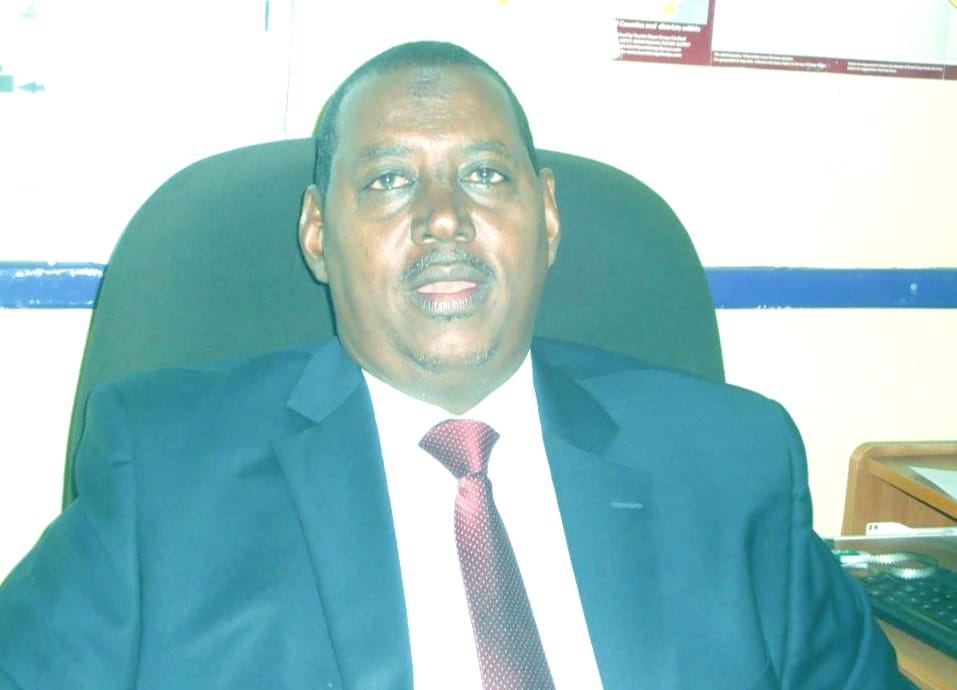
Ibrahim Hish Adan is a former Teachers Service Commission Regional Director, education policy consultant, and commentator on teacher welfare and governance.