


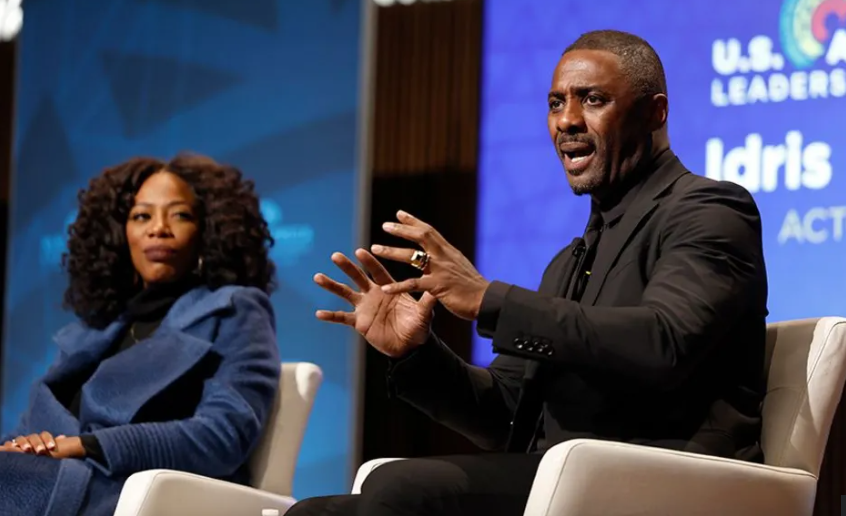
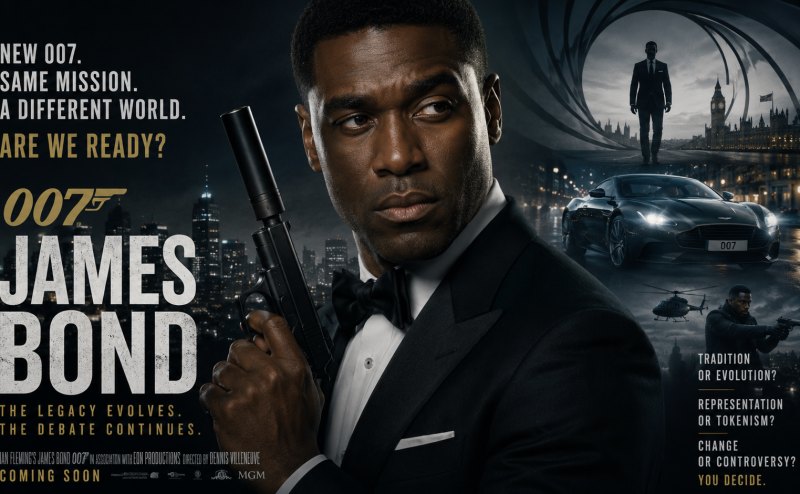
When British actor Idris Elba recently suggested that James Bond should not become ‘woke’ and noted that some audiences might not accept a Black actor as 007, he reignited a debate that has followed the iconic spy franchise for years.
The controversy raises an uncomfortable question: Why does the prospect of a Black James Bond provoke such intense reactions in the first place?
The term ‘woke’ has become one of the most overused and misunderstood words in contemporary culture. Increasingly, it is deployed whenever long-established institutions, stories or characters are imagined through a more inclusive lens.
Yet casting a Black actor as James Bond would not automatically transform the character into a political statement. It would simply mean that a talented actor was chosen to portray one of cinema's most enduring figures.
After all, Bond is a fictional character. Over six decades, he has been interpreted by different actors, each bringing distinct personalities and nuances to the role.
Sean Connery's Bond was not Roger Moore's. Daniel Craig's Bond differed significantly from Pierce Brosnan's.
Audiences accepted these changes because the essence of Bond lies not in the actor's appearance but in the character's defining traits: intelligence, confidence, resourcefulness and an appetite for risk.
Opponents often argue that changing Bond's race would violate tradition. Yet history suggests that cultural icons survive precisely because they evolve. Stories that remain frozen in time eventually become museum pieces rather than living narratives.
The Bond franchise itself has continually adapted to changing geopolitical realities, social norms and audience expectations. Reinvention has been central to its longevity.
More importantly, the resistance to a Black Bond reveals a troubling inconsistency. Few people object when fictional characters undergo other significant changes in adaptation. We readily accept new settings, altered storylines and updated personalities. But when race enters the conversation, many suddenly invoke fidelity to the source material. Such reactions invite scrutiny.
Representation is not about replacing one group with another. Nor is it about ticking diversity boxes. At its best, representation broadens the range of people who can see themselves reflected in stories, leadership and heroism.
It challenges outdated assumptions about who gets to occupy positions of power, sophistication and cultural significance.
The idea that audiences would reject a Black Bond may also underestimate audiences themselves. Contemporary viewers are increasingly interested in compelling performances and strong storytelling rather than rigid adherence to historical casting norms. Success or failure would depend on the quality of the film, not the complexion of the actor.
The real test for any James Bond actor has never been race. It has always been whether they can convincingly inhabit the role.
If a Black actor can do that, then the question should not be whether Bond has become ‘woke’. The question should be why such a possibility remains controversial in the 21st century.
The future of iconic characters should be determined by imagination and talent, not by the limitations of inherited assumptions.