


I used to treat Kenyan music the way you treat that one WhatsApp group that only sends “good morning” messages with glittering roses. Muted, mildly embarrassed and occasionally checked out of guilt. For the longest time, it all sounded like a low-budget remix of whatever was trending in the West. Same beats, same accents that mysteriously crossed continents mid-verse, same music videos with fancy rented cars that had never seen Ngong Road traffic.
I wasn’t convinced. Not even a little. But somewhere between a random Thursday night in Westlands and a sweaty, overcrowded pop-up show in Kilimani, something shifted.
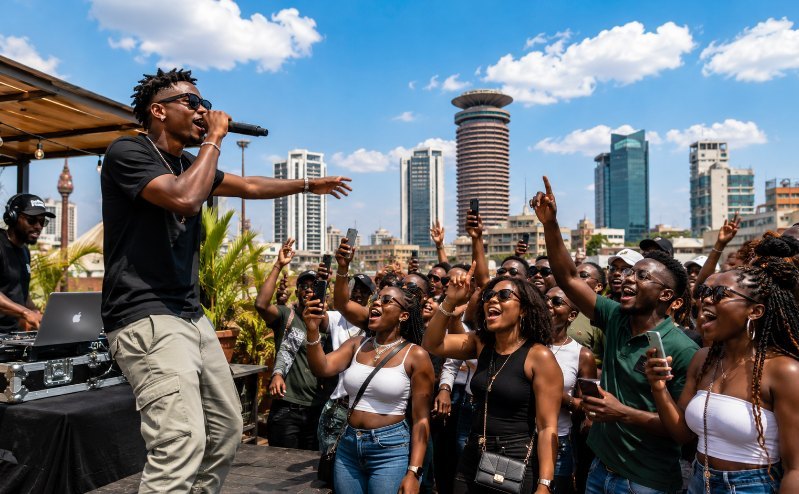
I remember it clearly. A friend dragged me to this tiny live set at a restaurant that normally sells overpriced burgers and plays safe Afrobeats playlists. That night, though, a young Kenyan artiste, with no major label or flashy PR, stepped up with nothing but a mic and a DJ who looked like he’d just come from campus. The first song started, and instead of the usual borrowed vibe, I heard Sheng, I heard Nairobi, I heard us. The crowd knew every word. I didn’t. That was my first clue that I had been left behind.
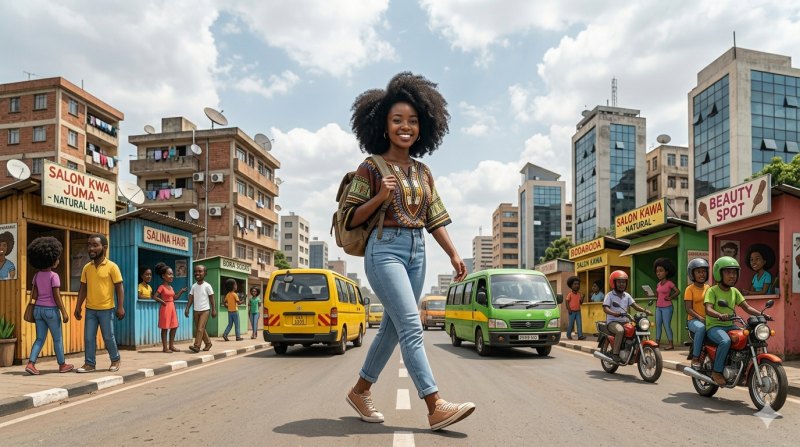
And honestly? I deserved it. Because while I was busy dismissing Kenyan music as “trying too hard”, Gen Z artistes were busy building something entirely their own. They weren’t asking for permission from Western trends anymore; they were sampling matatu culture, TikTok slang, heartbreaks from situationships and the quiet anxiety of trying to make rent in Nairobi. It was messy, raw and very, very real.
Now I’m that person refreshing Instagram stories, looking for the next event. Yes, me. The former Kenyan music skeptic. The one who once said, “I just don’t vibe with it.” Character development is real.
What’s happening isn’t just about music, it’s about identity. For a long time, Kenyan pop culture sat in this awkward middle space, constantly measuring itself against global standards. But Gen Z artistes have flipped that script. They’re not trying to sound American or Nigerian anymore; they’re trying to sound like themselves. And somehow, that’s exactly what makes them globally interesting.
Take the lyrics. You’ll hear references to specific estates, inside jokes about Kenyan parents or the universal trauma of romantic relationships that only seem to get more complicated as we get older. These aren’t abstract themes; they’re lived experiences. When an artiste, for instance, sings about being broke at the end of the month but still showing up for a night out in town, you don’t just hear it, you relate to it.
And the audiences? Completely different energy. At a recent concert, I found myself squeezed between a group of university students arguing about who discovered the artiste first, and a couple in their late 20s who looked like they had come straight from work but ready to groove to the music long into the wee hours of the morning.
No one cared about status. No VIP sections creating artificial hierarchies. Just people, sweating, singing and screaming lyrics like their lives depended on it. That sense of community is powerful. It’s not just fandom, it’s belonging.
Of course, not everyone is sold. “I still think a lot of Kenyan music lacks polish,” says Mary Njoki, 20. “Like, I get the vibe, but sometimes the production just isn’t there yet.”
She’s not entirely wrong. The industry is still growing. Not every track is a masterpiece. But that’s also part of the charm. It’s evolving in real time, and we’re watching it happen.
On the flip side, there are people like Tom Wafula, 26, who told me, “For the first time, I hear songs that actually sound like my life. Not someone else’s idea of it.” That’s the heart of it, really.
This rise of Gen Z Kenyan artistes reflects something bigger happening socially. We’re in a moment where young people are rejecting imitation, not just in music, but in fashion, language, even career paths. There’s a quiet rebellion against the idea that success has to look imported. And maybe that’s why these concerts feel electric. They’re not just performances, they’re proof. Proof that Kenyan creativity doesn’t need to be filtered through someone else’s lens to be valid.
I think about that version of me who dismissed local music so easily. Honestly, I cringe a little. Not because I was entirely wrong; there was a phase where imitation dominated, but because I didn’t stick around long enough to see the transformation.
Now? I’m fully converted. From small, dimly lit restaurant gigs, where you’re practically breathing the same air as the artiste, to massive concerts where the bass hits your chest like a second heartbeat, I’m there. Happily. Eagerly. Slightly dehydrated, but committed. Kenyan music didn’t just get better. It got honest. And in a world where everything feels curated, filtered and algorithm-approved, that honesty hits different.