

 One of the luxury electric SUVs being
inspected at the Mombasa port on Friday / BRIAN OTIENO
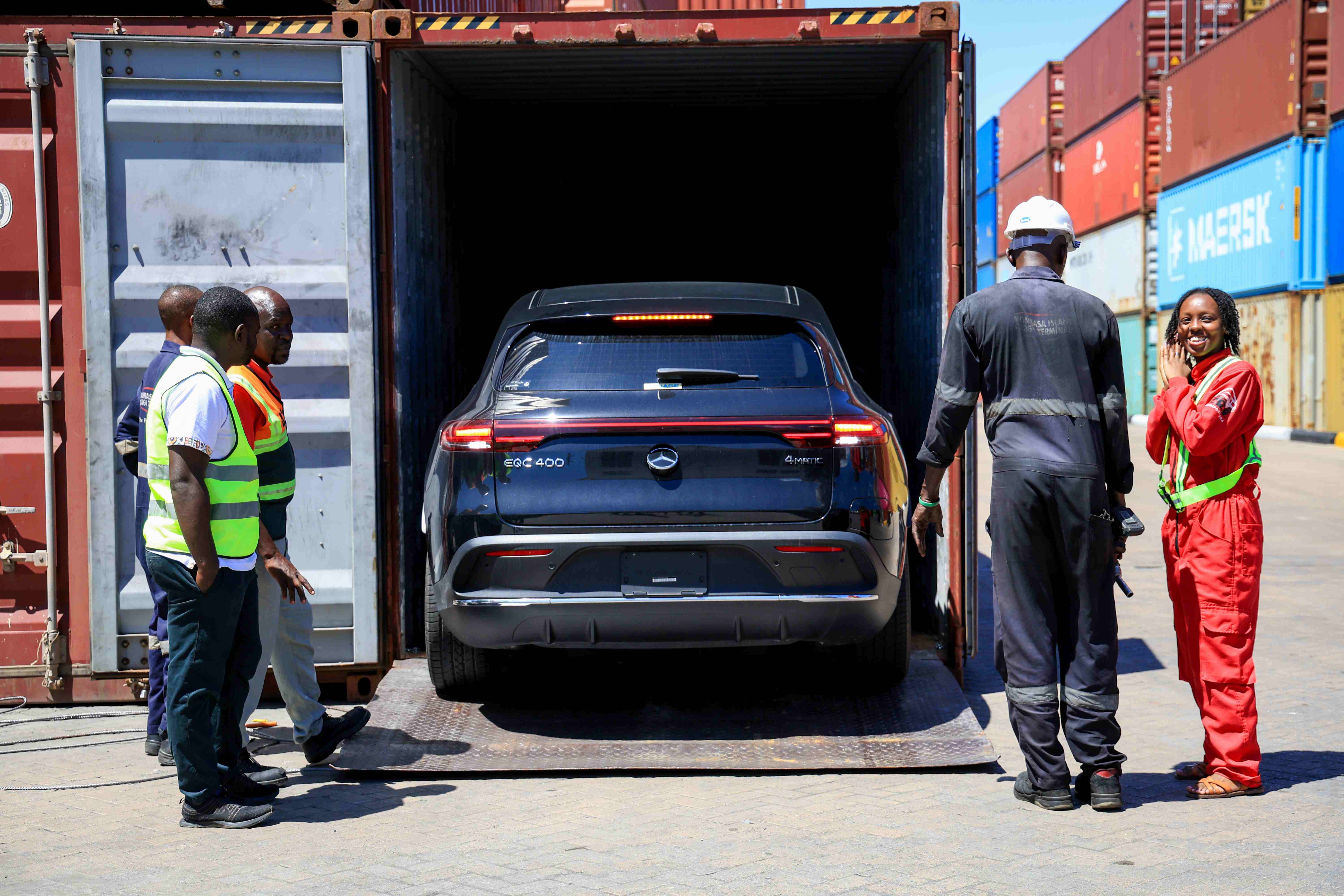
One of the luxury electric SUVs being
inspected at the Mombasa port on Friday / BRIAN OTIENOAs the transport industry prepares for a potentially damaging strike by transport stakeholders, including the matatu and taxi industries, due to the increased fuel prices, there is a ray of hope for the future.
The first batch of luxury electric Sports Utility Vehicles (SUVs) hit Mombasa on Friday, a significant step in the electric vehicle industry in Mombasa and Kenya.
Kenyans are increasingly embracing electric vehicles as an alternative to petrol or diesel vehicles, whose continued use is said to be significantly damaging the environment by emitting carbon into the air.
Six Mercedes-Benz EQC 400 electric SUVs were received at the Mombasa port, through the MIT terminal, by Equator Mobility in partnership with Car Imports 254.
The entry of electric SUVs comes at a time when there is growing demand for EVs in Kenya, with the cost of fuel skyrocketing.
There is also an increasing interest in environmentally friendly transport alternatives with Mombasa county partnering with several environmental organizations to ensure good quality air as carbon sequestration takes root.
Car Imports 254 sales representative Juliet Ngung’u said the vehicles were sourced from Japanese auctions and subjected to extensive inspections before shipment.
“We have seen a high rise in the need for luxury EV models in the country,” said Ngung’u. “These are the first units, but more are expected to arrive soon.”
The EQC 400 models arrive as low-mileage used vehicles, each with approximately 12,000 km on the odometer.
According to Equator Mobility representative Alex Mwanzo, the SUVs are designed to combine luxury with energy efficiency.
“These vehicles can cover up to 350km on a single charge, which is practical for many urban and inter-city journeys,” Mwanzo said.
He added that although the vehicles are capable of much higher speeds, they have been electronically limited to 110km per hour to comply with Kenyan road safety standards.
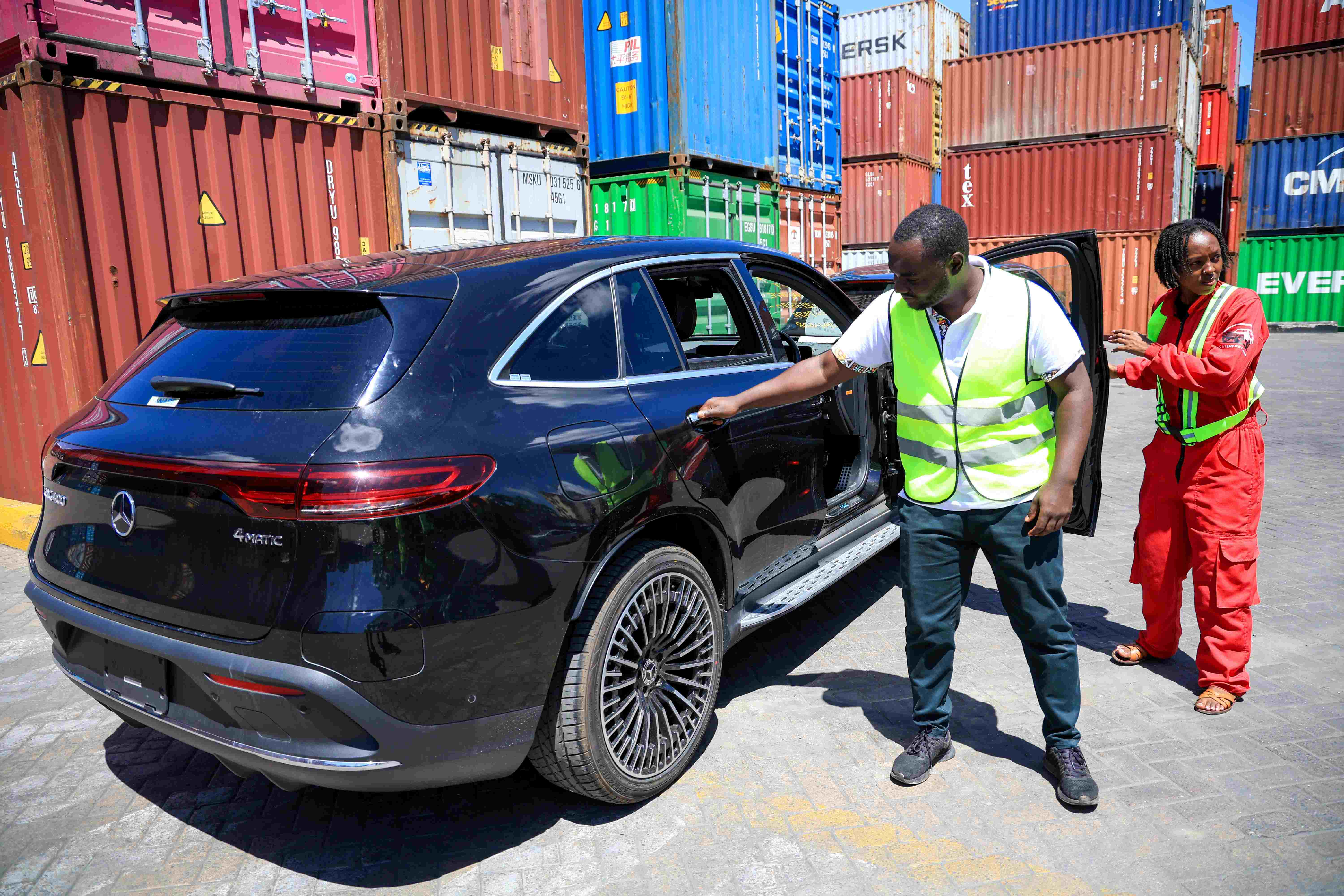 One of the luxury electric SUVs being
inspected at the Mombasa port on Friday / BRIAN OTIENO
One of the luxury electric SUVs being
inspected at the Mombasa port on Friday / BRIAN OTIENOIndustry
stakeholders say the rising cost of fuel has accelerated the shift toward
electric mobility.
Mwanzo noted
that fuel prices in Kenya have nearly doubled over the last decade, making EVs
increasingly attractive despite their high upfront costs.
The luxury
SUVs are expected to retail at between Sh6 million and Sh7 million, a figure
dealers say remains competitive within Kenya’s premium vehicle market.
“There is
already strong interest from buyers,” Mwanzo said, revealing that at least 15
clients are currently on a waiting list for the EQC models.
The
development reflects a broader transformation in Kenya’s transport sector,
where electric technology is increasingly being adopted beyond private luxury
vehicles.
Electric boda
bodas, tuk-tuks, taxis and buses are gradually becoming more common on Kenyan
roads.
However,
experts say the growth of the sector will depend heavily on the expansion of
charging infrastructure and the availability of skilled technicians.
To address
this gap, industry players say Kenya is developing specialised training
programmes for electric vehicle maintenance and repair to prepare the local
workforce for the transition.
Equator
Mobility says it plans to increase the number of luxury EVs in the country from
the current four units to more than 10 before the end of the year.
“In the next five years, I see electric vehicles becoming quite big in Kenya,” Mwanzo said, attributing the trend to the global shift toward EV production, particularly in Japan, where most of Kenya’s imported vehicles originate.