

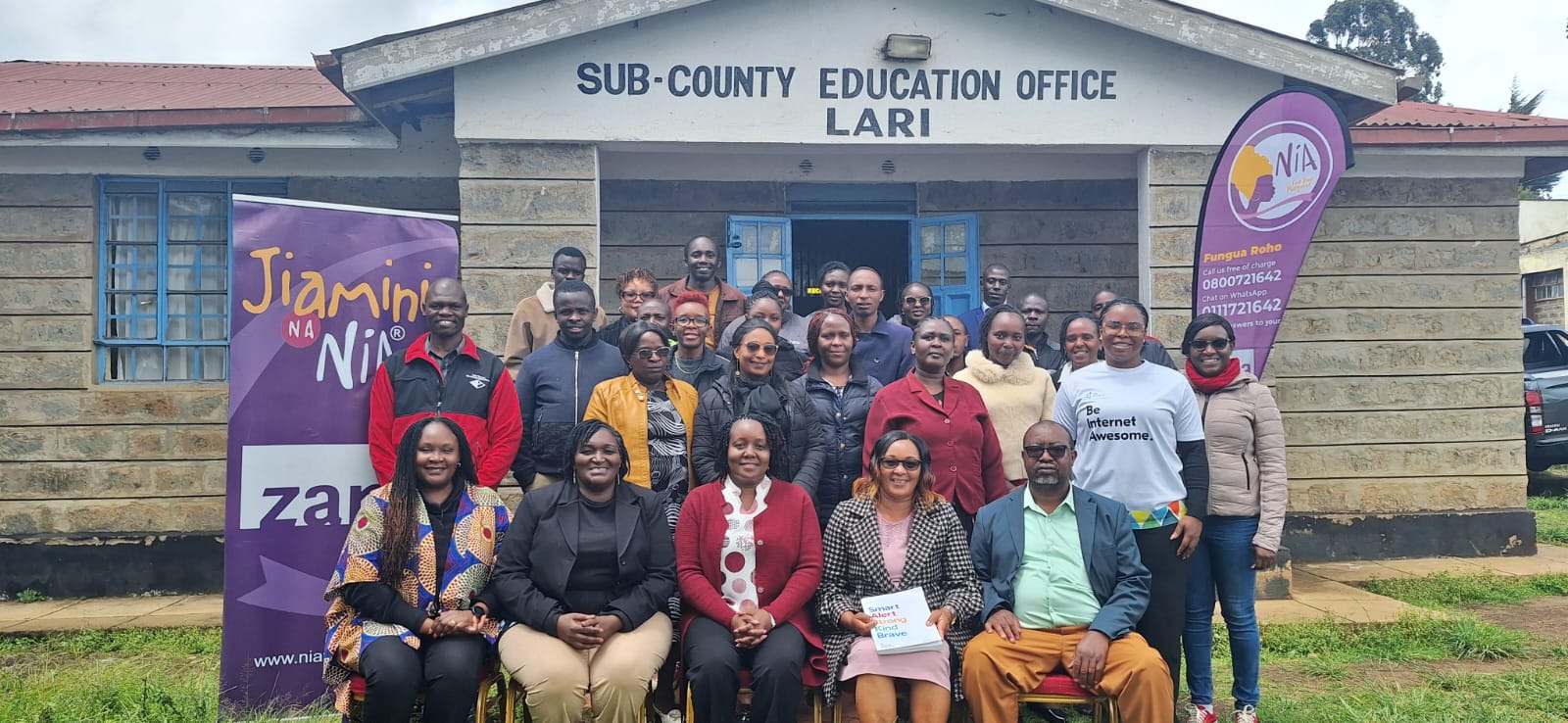
 A team working to expand access to digital literacy in Kenya in a picture in Lari,, Kiambu County/Robert Omollo
Two organisations are partnering with Google.org to expand access to digital literacy and online safety education for children, teachers and parents in Kenya.
Junior Achievement Africa and ZanaAfrica will implement the programme dubbed Be Internet Awesome (BIA), targeting 28,000 people.
Of the 28,000 individuals, 15,200 will be children aged between seven and 15 years, 500 teachers, and 700 parents and caregivers, who will be directly reached. The remaining more than 11,000 people will be reached through social media platforms.
The programme aims to equip participants with the knowledge and confidence to navigate the digital world safely and responsibly by the end of 2027.
As internet access continues to expand across sub-Saharan Africa, more children are coming online for the first time, often without the guidance needed to use it safely.
A 2022 Disrupting Harm study conducted in six countries across Eastern and Southern Africa found that 67 per cent of Kenyan children aged between 12 and 17 had internet access at the time of the study, but only 33 per cent had received information on how to stay safe online.
JA Africa Chief Executive Officer Simi Nwogugu said the gap exposes children to risks such as cyberbullying, harassment and exploitation, challenges that are becoming increasingly common across the region.
“As digital connectivity becomes central to everyday life in Africa, children must be equipped not only to participate but to be protected. With support from Google.org, we are helping young people turn access into opportunity, building a generation of informed, responsible and confident digital citizens,” Nwogugu said.
Be Internet Awesome, developed by Google, introduces the fundamentals of digital safety through interactive lessons and Interland, a gamified platform that helps children build practical skills around privacy, cyberbullying and media literacy.
Google.org Senior Programmes Manager Alessia Scarpellini said the initiative will be delivered through school-based sessions, teacher training and community outreach programmes to ensure access for both urban and rural communities.
The organisers said the programme aligns with national priorities on child protection and ICT in education, including Kenya’s Industry Guidelines for Child Online Protection.
“At Google.org, we believe every child should be able to explore the internet with confidence and care. By supporting JA Africa’s community-based approach, we are helping educators, caregivers and young people build the skills they need to navigate the online world safely,” Scarpellini said.
The programme was launched in Lari, Kiambu County, with support from Lari Sub-County Director of the Teachers Service Commission Mary Karanja.
ZanaAfrica Executive Director Beatrice Jane and Founder and CEO Megan Mukuria said their research shows the programme is urgently needed by children, teachers, parents and caregivers, many of whom may not be tech-savvy enough to help children stay safe online.
The Children’s Act, 2022, includes provisions aimed at enhancing child safety and protection, including mandatory reporting of suspected abuse.
Jane said online child sexual exploitation and abuse remain growing challenges that require collaboration among stakeholders.
“We acknowledge that just like technology, the landscape of online abuse against children is constantly evolving, and that is why we are committed to collaborating with JA and Google to align with government frameworks for child safety in Kenya,” she said.
Mukuria warned that the country faces serious safeguarding risks, noting that 1.5 million children will enter adolescence in the next two years, while 18 million children under 18 could potentially be exposed to online harm.
The Be Internet Awesome project targets to reach more than 20,000 children with digital safety and responsible online behaviour skills, train more than 1,000 teachers to deliver the curriculum, and engage 6,000 parents and caregivers through workshops and learning sessions.