Whenever protests
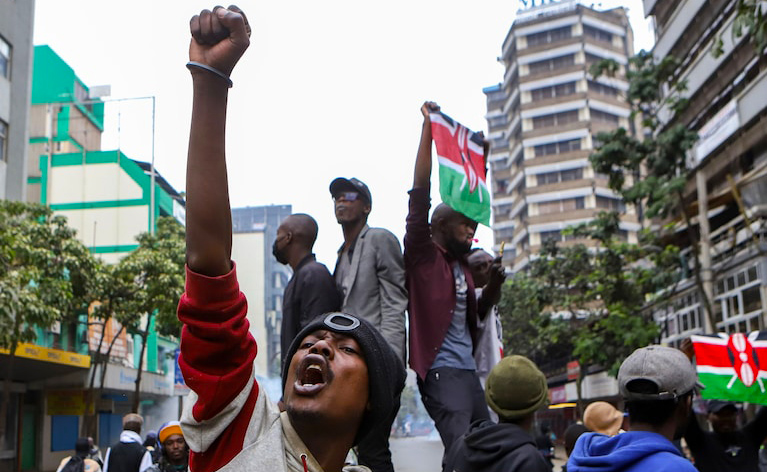
are witnessed in Nairobi, the demonstrators are always almost 90 per cent men
and boys below the age of 35. Protests are now mostly in estates, where the
youth are confined, because most are jobless or work low-wage jobs and they are
at home and not in the centres.
Those in the centres mostly always are engaged
in some kind of jobs, that’s why the protest dynamic has changed from being in
major town CBDs to estates such as Kitengela, Mlolongo, Githurai, Kibera, to
name but a few.
Picture a situation
where there were reasons to protest, but all the youth were engaged in some
kind of meaningful employment, with very decent salaries. They would definitely
not be available to protest.
There would be a different kind of discourse on
how to put the government in check, when ad hoc decisions like fuel hikes are made.
There would be calm sit-ins as a way of protesting, no businesses would be
burnt down, perhaps no businesses perhaps would have to close down and
transport wouldn’t be paralysed.
Schools would still
be open, safe access to public places would still be guaranteed. Granted, sometimes
the government needs to increase prices in some crucial areas, but one thing
for sure is the middle-to-upper-income citizens would almost never
protest. Those who protest on their behalf are always those most affected by
any hike in the cost of day-to-day life.
Kenya’s poverty
headcount rate stands at about 39.8 per cent, meaning nearly four in every 10
Kenyans live below the national poverty line, with poverty measurements often
adjusted using purchasing power parity to reflect the real cost of living.
This
means that those on the streets anytime there are protests, such as those
witnessed this week, mostly live below the poverty line and a hike in fuel costs affects
nearly all spheres of their lives, slightly more than how it would affect those
who can afford the normal day-to-day basics and luxuries.
A recent report
reveals that the Federation of Kenya Employers and the Kenya Labour Market
Information System indicate the unemployment and underemployment rate for youth
in this age 15- to 34 broader demographic hits as high as 67 per cent. This
demographic is quite a majority that the government needs to empathise with
when making economic decisions that affect Kenyans.
An empathetic government must go
beyond policing protests and begin addressing the lived realities of the young
people filling the streets. Many of these youth are not protesting because they
enjoy unrest, but because they feel unheard, excluded and economically trapped.
A young person who wakes up daily without hope of employment, struggles to
afford food and transport and sees little opportunity for upward mobility is
more vulnerable to frustration and anger.
Empathy, therefore, requires
leadership that listens before reacting and policies that prioritise dignity,
inclusion and opportunity for the ordinary citizen.
An empathetic government would
invest aggressively in labour-intensive industries, youth entrepreneurship,
vocational training and affordable credit for small businesses in informal
settlements and peri-urban areas. It would understand that beyond statistics,
unemployment inflicts emotional and psychological pain, including hopelessness
and social alienation. Creating meaningful work for young people is not only an
economic solution, but also a peace and security strategy.
Equally important
is honest and transparent communication with citizens during difficult economic
periods, such as the current period. If taxes or fuel prices must increase,
citizens are more likely to cooperate if they feel sacrifices are shared fairly
across all social classes and if public resources are managed responsibly.
The
youth also need to see visible efforts against corruption, wastage and
inequality. Empathy also means creating spaces where youth voices are included
in decision-making processes rather than only being engaged during elections or
moments of crisis.
Ultimately, the
ideal Kenyan society where young people feel valued, economically empowered and
listened to is less likely to experience recurring unrest and the destruction
of public and private property.