

Kenya remains the dominant trading economy in East Africa , accounting for the largest share of regional economic activity and trade with the world.
This is despite a drop in intra-EAC trade amid growing engagement with global markets.
Latest East Africa Community data, for the first quarter of 2026, shows the regional bloc's total trade with the rest of the world grew by 30.7 per cent to $46.3 billion (Sh5.9 trillion), up from $35.4 billion (Sh4.6 trillion) during a similar period last year.
Exports grew faster than imports, helping the region post a trade surplus of $1.6 billion (Sh207.1 billion).
Kenya remains the economic heavyweight of the bloc, contributing the largest weight in the EAC's economic basket at 43.1 per cent, ahead of Tanzania's 30.0 per cent and Uganda's 17.9 per cent. Rwanda, Burundi and South Sudan account for significantly smaller shares.
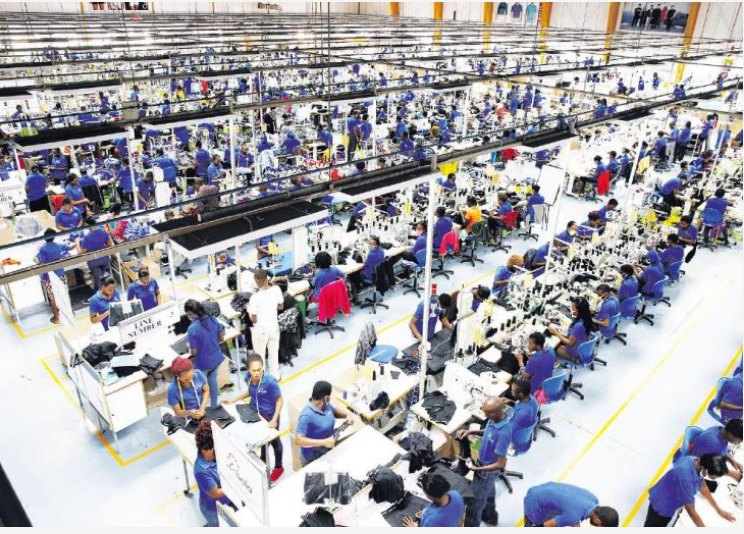
The figures underscore Kenya's central role as the region's manufacturing, logistics and financial hub, even as other member states accelerate exports of minerals and agricultural commodities.
Regional trade statistics show that trade within the EAC bloc declined by 10.4 per cent to $4.72 billion (Sh610.9 billion) during the quarter, reducing its share of total EAC trade from 14.9 per cent to 10.2 per cent.
This decline comes despite robust overall growth in international trade, suggesting that member states are increasingly looking beyond the region to global markets.
Africa remained the EAC's largest trading partner, accounting for 24.1 per cent of total trade worth $11.17 billion (Sh1.4 trillion).
Trade with the Southern African Development Community (SADC) expanded by 17.4 per cent to $7.02 billion (Sh908.5 billion), while commerce with the Common Market for Eastern and Southern Africa (COMESA) slipped 4.7 per cent to $4.32 billion (Sh559.1 billion). The data reveals a changing structure of regional exports.
Copper has emerged as the single most important export commodity, accounting for 44.8 per cent of all EAC exports and generating $10.7 billion (Sh1.4 trillion) during the quarter, largely driven by production from the Democratic Republic of Congo.
“Precious metals and gemstones contributed another 21.6 per cent, while traditional exports such as coffee, tea and spices accounted for 5.4 per cent,” EAC says ion its report.
China retained its position as the EAC's largest trading partner. Exports to China surged from $5.9 billion (Sh763.6 billion) to $8.6 billion (Sh1.11 trillion), while imports from the Asian giant climbed from $4.2 billion (Sh543.6 billion) to $6.8 billion (Sh880.1 billion).
Other key export destinations included the United Arab Emirates and South Africa. Among EAC economies, Kenya continues to stand out for macroeconomic stability.
Kenya recorded annual inflation of 4.4 per cent in March 2026, significantly lower than Rwanda's 8.8 per cent and far below Burundi's 10.6 per cent and South Sudan's 27.9 per cent.
Tanzania posted inflation of 3.2 per cent while Uganda recorded the lowest rate at 2.8 per cent.
Inflation in this countries has however gone up in the wake of the Middle East crisis mainly as a result of higher energy prices, mainly fuel, which has increased production costs, impacted transport, agriculture, manufacturing among other key sectors.
The region's overall economic outlook however remains positive despite persistent challenges, EAC notes.
EAC exports increased by 33.3 per cent to $24 billion during the quarter, outpacing import growth of 28.1 per cent to $22.4 billion and helping the bloc achieve its strongest trade balance in recent years.
However, the decline in intra-EAC trade highlights a growing concern for policymakers seeking deeper regional integration.
While member states are benefiting from expanding global demand, particularly for minerals, the figures suggest the bloc is yet to fully unlock the potential of its common market.
For Kenya, the numbers reinforce its role as the anchor economy of East Africa, leveraging its relatively stable macroeconomic environment, developed infrastructure and strategic position as a gateway for regional trade.
As the EAC's total trade approaches the $50 billion mark, Nairobi remains at the centre of a rapidly evolving regional economy increasingly connected to global supply chains.
![[PHOTOS] Raila Odinga Stadium construction enters home stretch](https://cdn.radioafrica.digital/image/2026/06/45f6990c-4882-4cd2-b83c-8fc730dcdce5.jpg)