For millions of Kenyans, devolution was meant to bring
better roads, equipped hospitals, clean water and improved public services
closer to home. But across much of the country, many of those promises
remain unfinished—literally.
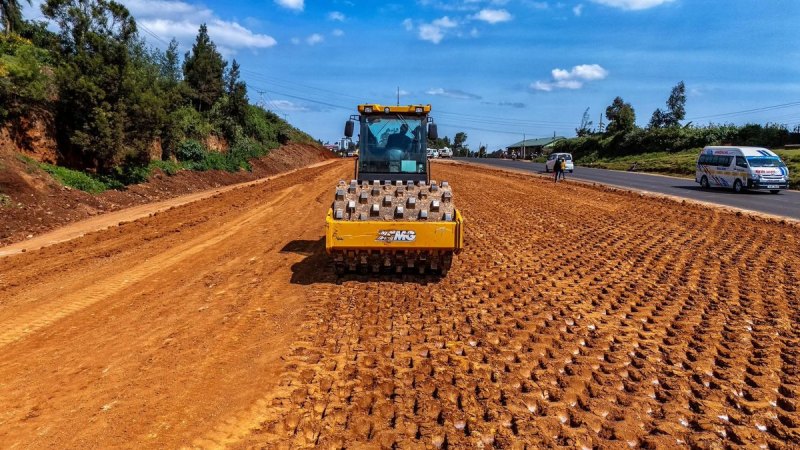
From abandoned health centres and incomplete markets to
stalled roads and water projects, development is increasingly taking a back
seat as county governments channel billions of shillings into salaries, travel and other recurrent expenses.
A new report by Controller of Budget Margaret Nyakang'o has
painted a worrying picture of spending in the devolved units.
The report exposes a widening development crisis in which salaries,
travel and other non-essentials continue to crowd out spending on projects
that directly improve the lives of residents.
The County Governments Budget Implementation Review Report
for the first nine months of the 2025-26 financial year shows that 41 of the 47
counties breached the legal ceiling on wage expenditure.
This is even as more billions of shillings were spent on
travel and operations with hundreds of development projects remaining stalled.
According to the report released on Monday, county
governments received Sh388.37 billion during the review period but spent
Sh171.36 billion on compensation for employees alone.
This translates to a wage-to-revenue ratio of 44 per
cent—well above the statutory limit of 35 per cent.
"This exceeded the statutory ceiling of 35 per cent by
nine percentage points, indicating that personnel costs continued to exert
significant pressure on county fiscal space," Nyakang'o said in the
report.
Section 107(2) of the Public Finance Management Act, 2012,
together with the Public Finance Management (County Governments) Regulations,
requires counties to ensure spending on salaries and employee benefits does not
exceed 35 per cent of total revenue.
Only five counties complied with the law.
Tana River posted the lowest wage bill at 27 per cent of its
revenue, followed by Kwale and Nakuru at 30 per cent each, Uasin Gishu at 31
per cent and Kirinyaga at 32 per cent.
At the other end of the spectrum, Homa Bay and Taita Taveta spent
up to 63 per cent of their revenues on salaries and employee allowances.
Machakos, Baringo, Bomet, Bungoma, Nyeri, Samburu, Vihiga,
and Marsabit also spent more than half of their revenues on personnel costs.
The figures reveal the difficult choices counties are
making, with recurrent expenditure increasingly leaving little room for
development.
Homa Bay, for instance, spent Sh4.55 billion on
salaries from the total revenue of Sh7.26 billion.
It also spent Sh219.82 million on domestic travel and
Sh623.56 million on operations and maintenance.
By comparison, the county spent only Sh1.62 billion on
development, representing just 31 per cent of its annual development
allocation.
In Taita Taveta, the county spent Sh3.19 billion on employee
compensation, Sh204.8 million on travel, and Sh754.11 million on operations and
maintenance, while only Sh746.87 million went to development projects.
This is the trend in many counties where personnel emolument,
travel and operations and maintenance gobble up billions of shillings.
This is even as Nyakang’o revealed that several counties
continue to rely on manual payroll systems, despite repeated calls for
automation.
According to Nyakang'o, manual payrolls remain vulnerable to
manipulation and increase the risk of irregular payments and ghost workers.
"The highest manual payroll shares were reported by
Siaya at 13.8 per cent, Wajir at 12.7 per cent, Tharaka Nithi at 12.5 per cent
and Lamu at 10.1 per cent.
In contrast, Narok, Trans Nzoia, Turkana and Uasin
Gishu reported no manual payroll," the report states.
Beyond the swelling wage bill, the report reveals a worrying
slowdown in development spending.
Out of an annual development budget of Sh234.33 billion,
counties had spent only Sh72.07 billion by the end of the first nine months of
the financial year—an absorption rate of just 31 per cent.
Overall, 43 counties recorded development absorption rates
below 50 per cent, with only four counties surpassing that mark.
Nandi posted the highest absorption rate at 55 per cent,
followed by Meru and Wajir at 54 per cent each and Marsabit at 51 per cent.
Nine counties performed particularly poorly, spending less
than one-fifth of their development budgets.
Kajiado recorded the lowest absorption rate at only nine per
cent, followed by Lamu at 11 per cent, Siaya and Uasin Gishu at 13 per cent
each, Tana River and Baringo at 17 per cent, Nakuru at 19 per cent and Mombasa
and Migori at 20 per cent.
The Controller of Budget warned that counties risk failing
to deliver planned projects unless they significantly accelerate
implementation.
"County governments should accelerate implementation
and spending under development budgets during the remaining months of FY
2025-26 to improve absorption and support delivery of planned projects,"
Nyakang'o said.
The law requires county governments to allocate at least 30
per cent of their budgets to development expenditure over the medium term,
recognising that investment in infrastructure and public services is the
cornerstone of devolution.
However, as development spending stagnates, expenditure on
travel continues to soar.
County governments spent a combined Sh13.17 billion on
domestic and foreign travel during the review period.
Among the biggest spenders were Kitui, which spent Sh523.41
million, Meru Sh515.83 million, West Pokot Sh504.28 million, Kiambu Sh477.54
million and Samburu Sh444.53 million.
They also spent another Sh88.22 billion on operations and
maintenance.
The spending comes against the backdrop of hundreds of
stalled development projects spread across the country.
According to the report, at least 237 projects valued at
Sh13.66 billion have stalled in 22 counties, denying residents access to
essential services while exposing public funds to waste.
Kilifi recorded the highest number of stalled projects at 68
valued at Sh597.16 million, followed by Machakos with 54 projects and Baringo
with 24.
"The reported causes of project stalling included
inadequate budgetary allocations, unresolved contract variations, contractor
abandonment, contract termination, missing contract files and projects under
investigation," the report states.
Nyakango warned that stalled projects not only delay service
delivery but also undermine value for money by locking billions of shillings in
incomplete investments.
"Stalled projects delay service delivery, undermine
achievement of intended development objectives and expose funds already paid to
value-for-money risks," Nyakang'o said.
She urged county governments to prioritise the completion of
ongoing projects instead of launching new ones.
"County governments should prioritise stalled projects
that can be completed and operationalised in subsequent budget cycles, allocate
adequate resources for completion and resolve outstanding contractual issues in
accordance with the law, including through relevant dispute-resolution or
oversight agencies where applicable," she said.
The findings are likely to focus a spotlight on county
governments as pressure mounts to demonstrate that devolution is translating
into tangible improvements in people's lives.
INSTANT ANALYSIS
The report exposes a growing imbalance in county spending,
where recurrent expenditure—particularly salaries, travel and operations—is
increasingly crowding out development. Despite receiving billions in revenue,
most counties are failing to complete projects that directly improve
livelihoods, raising concerns about accountability and value for money. The
findings are likely to renew pressure for stricter enforcement of fiscal
discipline, payroll reforms and project monitoring to ensure devolution delivers
tangible benefits instead of sustaining bloated administrative structures.


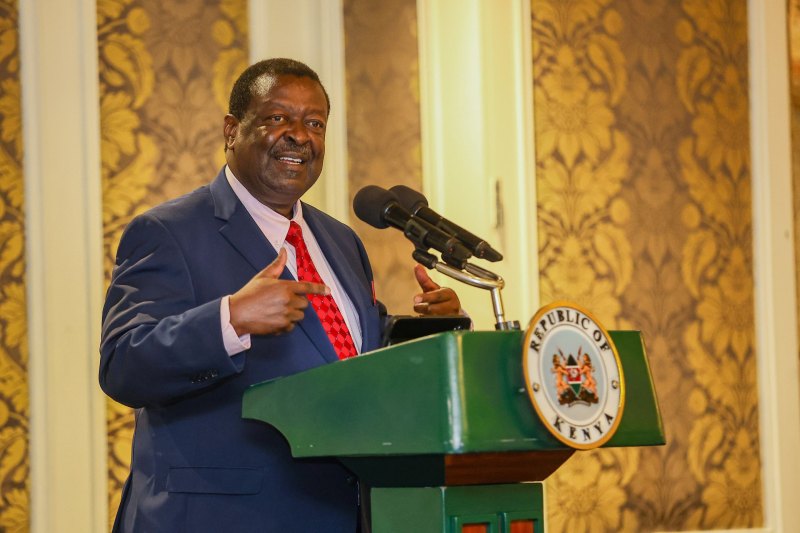
 Controller of Budget Margaret Nyakang'o.FILE