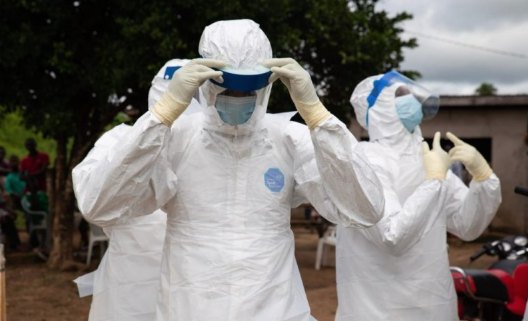


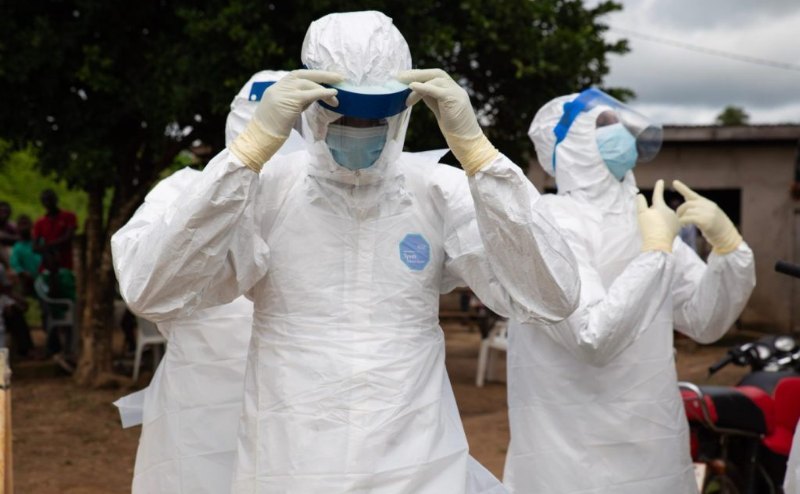
 Medics in protective gear /FILE
Health authorities have reported more than 1,000 confirmed Ebola cases in the Democratic Republic of the Congo (DRC), with 254 deaths recorded, according to an update shared by World Health Organization (WHO) director general Tedros Ghebreyesus.
The figures highlight the continued spread of the viral disease in affected regions, even as response efforts are being scaled up by national and international health agencies.
Tedros noted that around 100 patients have recovered so far, reinforcing that “timely access to care can significantly improve survival rates.”
In recent weeks, the WHO, alongside the Africa Centres for Disease Control and Prevention (Africa CDC) and the DRC Ministry of Public Health, Hygiene and Prevention (MinSanteRDC), has intensified efforts to contain the outbreak.
These measures include expanding the number of Ebola Treatment Centres, increasing laboratory testing capacity, and strengthening disease surveillance systems to detect and respond to new cases more quickly.
Health workers have also been trained in clinical management of Ebola cases as well as infection prevention and control practices aimed at reducing transmission within healthcare settings. Community engagement has been highlighted as a key component of the response, with local teams working to improve awareness of symptoms, encourage early reporting, and address misinformation that can hinder containment efforts.
Despite these interventions, Tedros stressed that the outbreak continues to require a much larger response.
“We need more treatment centres, more trained health and care workers, more testing, more teams from within communities supporting communities," he said.
He also emphasised the need for sustained international solidarity to support ongoing operations on the ground, stating: “We need continued solidarity from international community to end this outbreak.”
Humanitarian access remains a critical concern, with health officials warning that reaching all affected communities is essential to stopping transmission chains.
Persistent insecurity and logistical challenges in parts of the country continue to complicate response efforts.
Tedros said long-term stability is closely tied to broader conditions in the region, noting that “ultimately, we need peace for the people of DRC.” Health agencies continue to coordinate efforts in hopes of bringing the outbreak under control while strengthening preparedness for future health emergencies.