WHEN Nelius Wangu joined the University of Nairobi to study
journalism, President William Ruto had just announced a new funding model for
government-sponsored students.
“I'm a third year student, now getting to my final year,
come September. I have been a beneficiary of student loans under the new
funding model since 2023. We were the first cohort,” Wangu said.
“My experience has not always been smooth. When I first
applied, I had to come here at the main offices at Anniversary Towers three
times to have my details updated.”
Funding is allocated based on a student’s financial need
established through a Means Testing Instrument (MTI).
“Under the Student-Centered Funding Model, the most needy
students receive up to 90 per cent government support towards programme costs,
comprising 50 per cent scholarship and 40 per cent loan, leaving families or
guardians to contribute only 10 per cent,” Higher Education Loans Board CEO
Geoffrey Monari told the Star.
“The model replaced the previous one-size-fits-all approach,
where all students received similar support regardless of economic status.”
The model supports both university and Technical and Vocational
Education and Training (TVET) learners, promoting inclusivity across the
post-secondary education sector.
The impact has been massive. “The number of students
supported increased from 339,347 in the 2022-23 financial year to 823,691 in
2025-26, an increase of 484,344 students or 143 per cent,” Monari said.
The new model ensures public funds are directed to students
who need them most. This has improved efficiency in the utilisation of limited
government resources through evidence-based allocation using the MTI.
Under the Bottom Up Economic Transformation Agenda (BETA),
the government has continued to allocate substantial funds towards student
financing under the new framework.
In the three years prior to the Kenya Kwanza administration,
total allocation for student funding was Sh44.24 billion. Since 2023,
allocation has shot up to Sh113.66 billion.
“The model provides opportunities for academically qualified
students from poor households to pursue higher education. It supports the
government's agenda of reducing intergenerational poverty through education by
reducing financial barriers to higher education,” Monari said.
"We believe the government is committed to ensuring no
Kenyan student is left behind."
In addition to increased funding, the government slashed
university fees beginning September last year.
“This bold step reaffirms our commitment to ensuring
affordable, accessible and quality university education,” said Higher Education
Principal Secretary Beatrice Inyangala, in a letter to vice chancellors and
principals of constituent colleges.
Under the revised structure, expensive programmes like
Medicine, Dentistry, Veterinary Medicine and Pharmacy cost a minimum of Sh12,
343 and a maximum of Sh75, 000 per semester.
Architecture costs Sh12,960 and Sh57, 888. Engineering and
Surveying cost between Sh14,256 and Sh57,024 per semester.
Other courses including Built Environment and Design-Construction,
Real Estate, Urban and Regional Planning, Landscape Architecture, Design and
Computing cost between Sh12,960 and Sh51,840.
Students of Nursing, Clinical Medicine, Medical Medical
Laboratory Science and Technology pay between Sh14, 400 and Sh57, 600.
Those studying Animal Science, Radiography, Sport Science,
Medical Psychology, Physical Therapy, Public Health, Environmental Health,
Community Health and Development pay Sh13,082 to Sh52,326.
Food Science and Technology and Food and Nutrition students
pay Sh11, 401 – Sh45, 603.
Agriculture, Natural Resource Management and the Natural
Environment, and Wildlife Science and Management cost Sh9, 729 – Sh38, 880.
Basic sciences including Mathematics, Physics, Chemistry,
Biology and Geography cost between Sh10,659 and Sh42,636.
Applied Social Sciences and the Arts such as hospitality,
media and communication studies, library and information studies, business
information technology, sport science and management, fashion design, interior design,
music (B.Mus.), civil aviation management, maritime management, agribusiness
management, theatre and film studies, fine art, food service and management,
law go for Sh9,690 – Sh38,760.
Business, Education (Arts), and Economics students pay
between Sh7, 525 and Sh30, 101 per semester.
But concerns about the new funding model persist. Wangu said
some of her friends were placed in the wrong category or band and received
little financial help. “I have friends who have been forced to defer their
studies due to lack of fees,” she said.
Ahmed Rashid, a third-year law student and president of the
University of Nairobi Students Association, said some students from well-off
families are placed in the vulnerable band while some who are needy end up in
the upper middle or even high-income bands.
“There is no clear criteria that the government uses to
identify the financial capabilities of various students,” Rashid said.
“There are some parents who are making good money, but some
don't make any at all, but we still rely on scant information that doesn't
actually give us the correct financial position of a particular parent.”
Rashid gave the example of his friend Elvis, placed in Band
5 (high income).
“I know Elvis from a long time ago. I can't say Elvis is
vulnerable, but he belongs somewhere in low income. He should be in Band 2, but
Band 5? Then what does that mean? That someone has negotiated through
corruption or influence, because it is easy for a rich person to bribe so that
he can be placed in the vulnerable or extremely needy band, which is Band 1.”
Monari acknowledged the challenges and urged students to
provide accurate information.
“For any student who applies but is not given the amount
they deserve, we have an appeal process. During the financial year 2024-25, we
had 11,000 appeals that were successful,” he said.
Another key transformation in higher education is the
repositioning of TVET from an alternative education pathway to a central pillar
of Kenya’s human capital development strategy.
Technical and Vocational Education Training PS Esther Mworia
said under President Ruto’s administration, TVET has become a key driver of
BETA, supporting industrialisation, affordable housing, manufacturing,
agriculture, the digital economy and the green transition.
Enrolment stood at 1,201,320 as of May 2026, up from 350,000
in 2022.
The sharp rise in numbers is due to expansion and
modernisation of TVET facilities, the full implementation of Competency-Based
Education and Training (CBET), and the rollout of the Dual Training Model that
integrates classroom learning with industry experience.
Other reforms include implementation of Recognition of Prior
Learning, increased access to student financing through scholarships and loans
and strengthened industry partnerships to improve employability.
Mworia said 169,629 trainees have benefited from TVET
scholarships and a total of Sh6.9 billion disbursed since the 2023-24 financial
year.
“TVET is no longer the second choice. It is increasingly
becoming the first choice for young people seeking practical skills and
economic opportunities,” the PS said.
The government is not focused only on training but also in
offering employment support. Over 3,000 TVET graduates have been slotted under
the Mkulima Majuu Programme for seasonal agricultural jobs in the United
Kingdom.
Another 12,465 youths have been mobilised under Kazi Majuu
international labour mobility initiatives, with 6,206 having qualified for
overseas opportunities.
Some 1,100 training and employment opportunities were
secured through partnership with Full Care Medical SEZ Ltd in the textile and
apparel sector.
Another 127 graduates were employed through partnership with
Sainath Education Centre and EPZ industries, while 49 others were supported for
overseas hospitality jobs in Jordan, Mauritius and Seychelles.
“The ultimate measure of success is not how many students
graduate, but how many secure meaningful employment, create businesses and
contribute to national development,” Mworia said.
“The TVET transformation under President Ruto is about
converting skills into decent jobs, enterprises and sustainable livelihoods,”
she said.
“Through CBET, modular training, dual training, Recognition
of Prior Learning, digital skilling and industry partnerships, the government
is equipping young Kenyans with practical, certified and market-relevant
competencies to participate effectively in the priority sectors of BETA.”

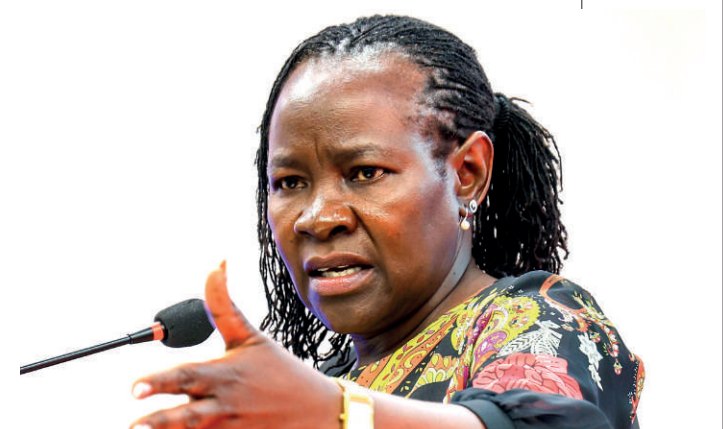
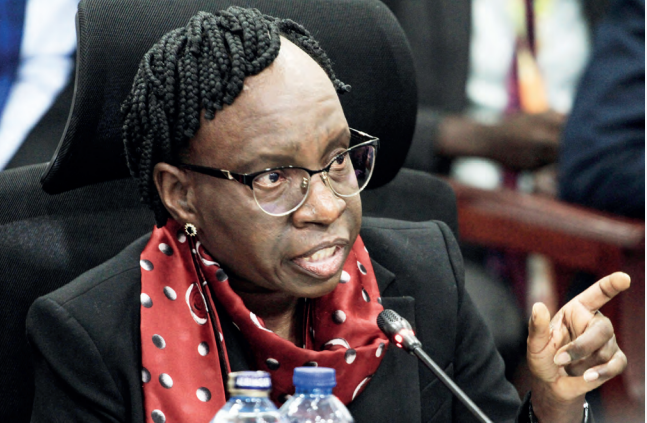
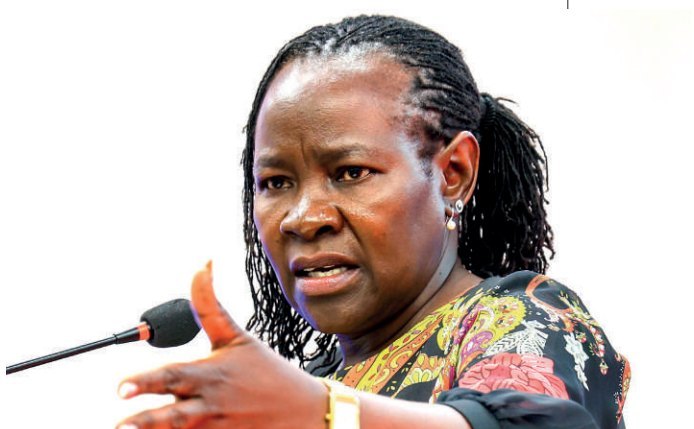 Technical and Vocational Education Training PS Esther Mworia /BRIAN OTTIENO