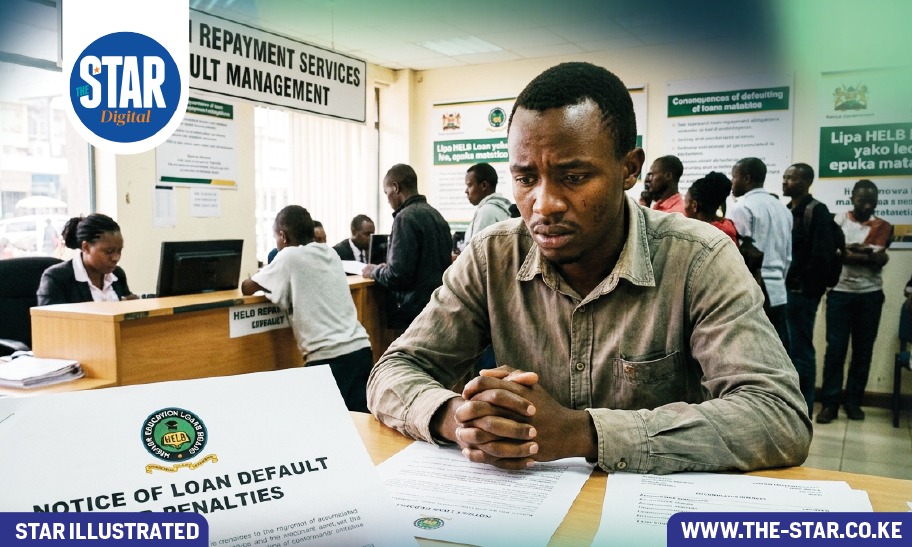
Helb loan defaults by age of debt
Financial Year ending June 30, 2025
3mon agoHillary BettInfographics
Data shows consistent disparity in access to higher education financing, with male students receiving a larger share.


Audio By Vocalize
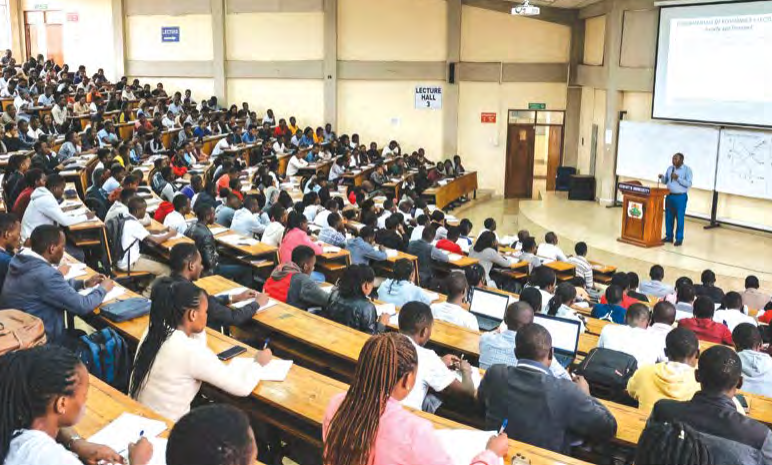 Male students consistently outnumber and outreceive female counterparts in HELB loan allocations across five academic years.
Male students have consistently received a larger share of loans disbursed by the Higher Education Loans Board (HELB) over the past five academic years, according to fresh data from the Kenya National Bureau of Statistics.
The figures, contained in the 2026 Economic Survey, point to a sustained gender imbalance in both the number of beneficiaries and the total value of loans allocated between the 2021-22 and 2025-26 academic years.
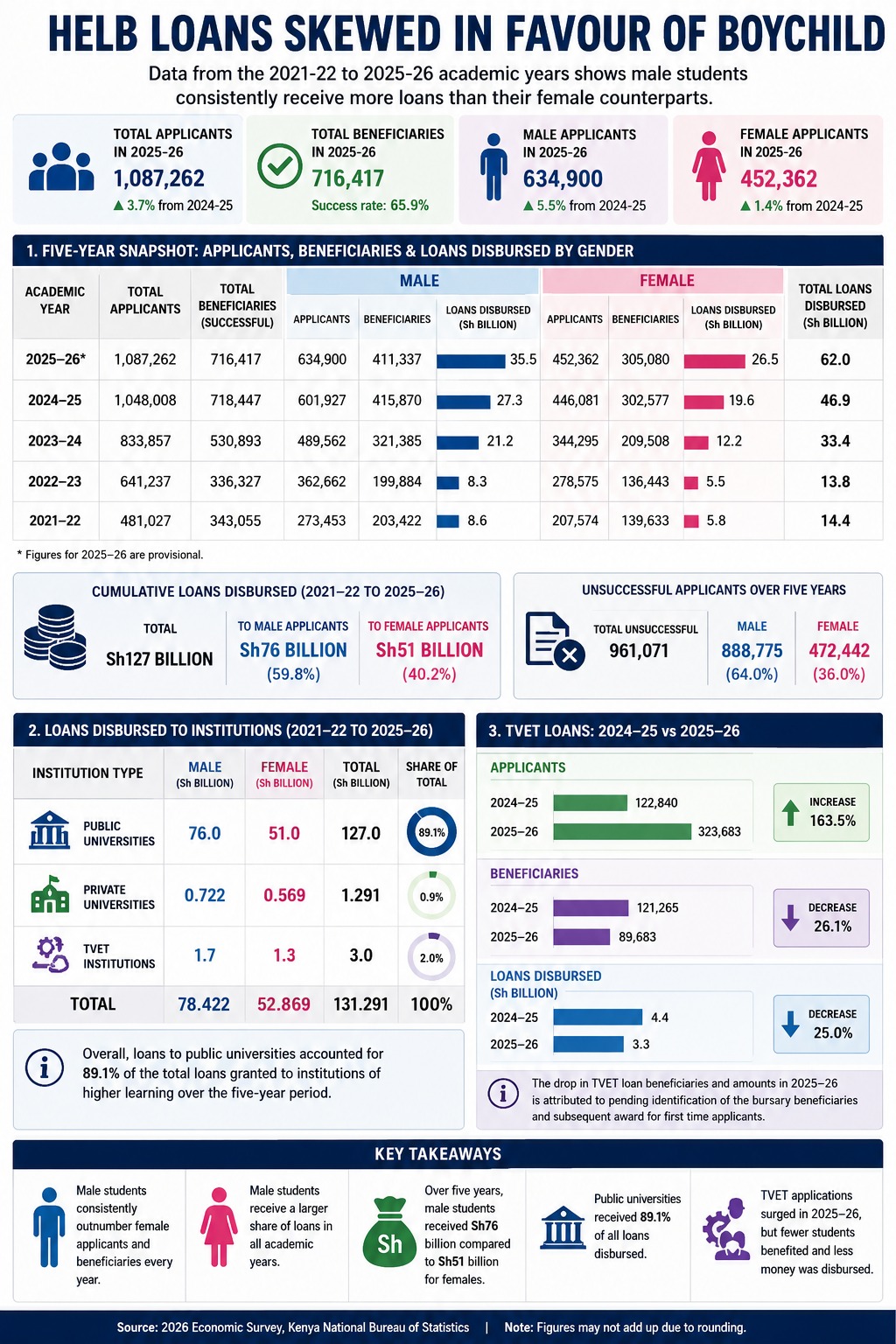
Over the five-year period, HELB disbursed a cumulative Sh127 billion to students in public universities, with male beneficiaries taking Sh76 billion compared to Sh51 billion allocated to female students.
The disparity is also reflected in private universities, where male applicants received Sh722 million against Sh569 million for female counterparts, and in Technical and Vocational Education and Training (TVET) institutions, where Sh1.7 billion went to male students compared to Sh1.3 billion for females.
The trend persisted into the latest academic cycle. In 2025-26, the total number of loan applicants rose by 3.7 per cent to 1,087,262.
Of these, 716,417 were successful, translating to a 65.9 per cent success rate. Male applicants accounted for 634,900 of the total, marking a 5.5 per cent increase, while female applicants rose modestly by 1.4 per cent to 452,362.
Out of those approved, 411,337 were male compared to 305,080 female beneficiaries. In monetary terms, male students received Sh35.5 billion in loans, significantly higher than the Sh26.5 billion disbursed to female students.
The survey notes that these figures for the 2025-26 academic year remain provisional. A similar pattern is evident in the 2024-25 academic year.
Out of 1,048,008 applicants, 718,447 secured loans, including 415,870 male and 302,577 female beneficiaries. Of the Sh46.9 billion disbursed that year, Sh27.3 billion went to male students, while female beneficiaries received Sh19.6 billion.
The approval dynamics also highlight disparities in unsuccessful applications. In 2024-25, 186,057 male applicants did not secure loans compared to 143,504 female applicants.
However, the higher number of male applicants overall still translated into a larger absolute number of beneficiaries.
In the 2023-24 academic year, HELB disbursed Sh33.4 billion to 530,893 successful applicants out of 833,857 total submissions.
Male beneficiaries accounted for 321,385 and received Sh21.2 billion, while 209,508 female beneficiaries shared Sh12.2 billion.
A total of 302,964 applicants were unsuccessful, including 167,177 males and 135,787 females. The gap was equally visible in earlier years.
In 2022-23, HELB issued Sh13.8 billion in loans to 336,327 beneficiaries. Of this, Sh8.3 billion went to male students, compared to Sh5.5 billion for female recipients.
That year saw 641,237 applications, comprising 362,662 males and 278,575 females, but only 199,884 male and 136,443 female applicants received funding.
In the 2021-22 academic year, 481,027 students applied for loans, with 343,055 approvals.
Male beneficiaries stood at 203,422, receiving Sh8.6 billion, while 139,633 female students shared Sh5.8 billion out of the total Sh14.4 billion disbursed.
Beyond universities, the TVET segment shows shifting dynamics. The number of applicants surged to 323,683 in the 2025-26 academic year, up from 122,840 the previous year.
Despite this sharp rise, the number of beneficiaries dropped by 26.1 per cent to 89,683.
According to the survey, the decline in successful applicants was linked to delays in identifying bursary beneficiaries and finalising awards for first-time applicants.
Consequently, the total amount disbursed to TVET students fell from Sh4.4 billion in 2024-25 to Sh3.3 billion in 2025-26.
Overall, public universities continued to dominate loan allocations, accounting for 89.1 per cent of the total funds disbursed to higher learning institutions over the review period.
The data underscores a persistent gender gap in higher education financing, with male students not only applying in higher numbers but also receiving a disproportionate share of available funds.
While the survey does not delve into the structural causes of the disparity, the consistency of the trend across multiple academic cycles raises questions about access, equity and the criteria used in loan allocation.
Financial Year ending June 30, 2025
The system fixed before a molehill becomes a mountain.