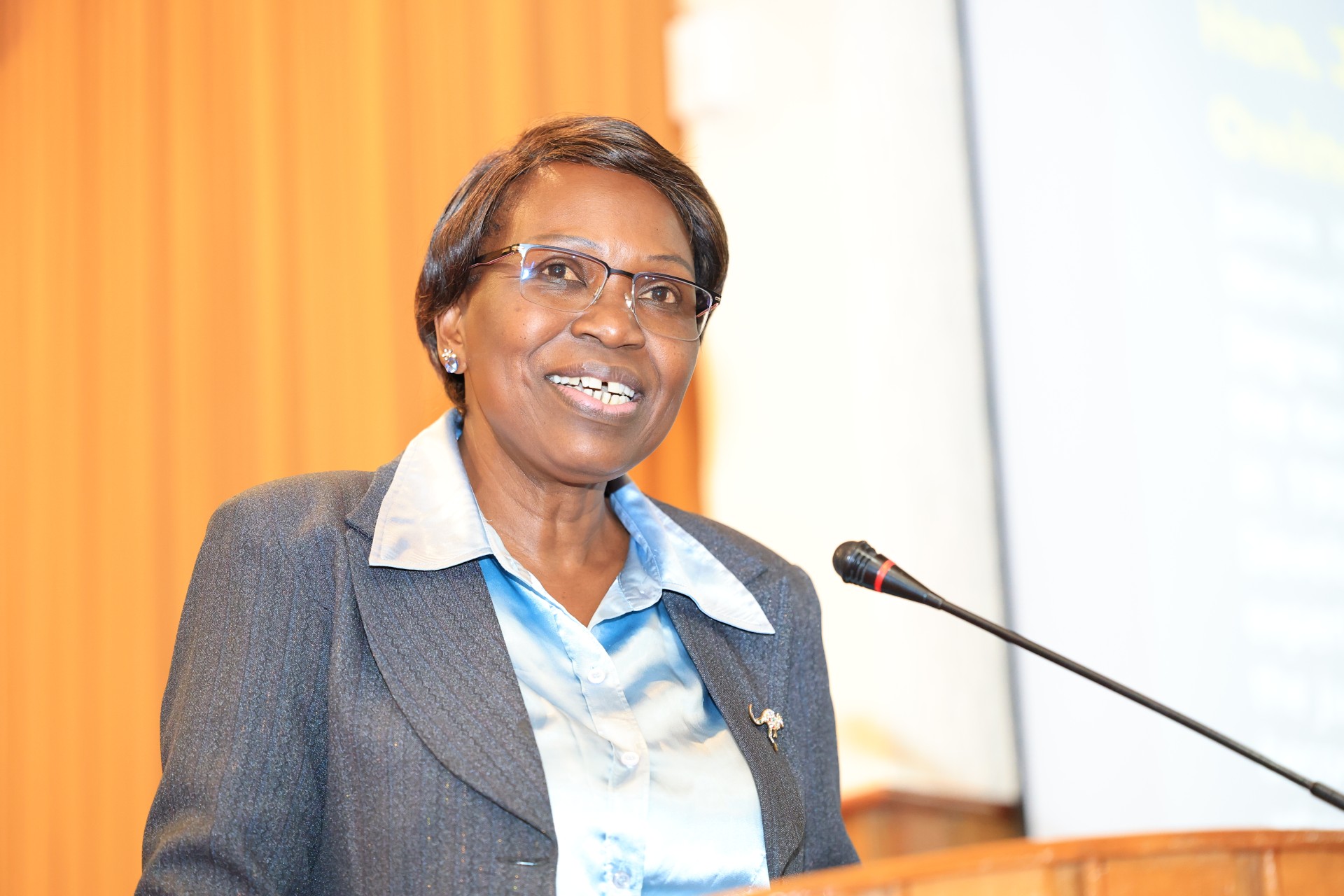



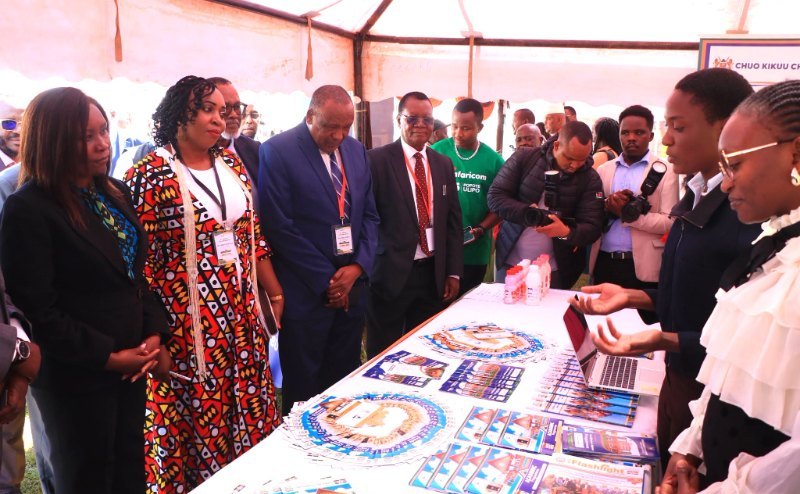
 Embu Governor Cecily Mbarire (L) leading a team of government and civil society leaders during the opening of the 4th AJS annual conference at Embu University on June 17, 2026 /ALICE WAITHERA
Mistrust has been cited as one of the biggest challenges facing Kenya's Alternative Justice System, with stakeholders warning that low public confidence is contributing to growing case backlogs in courts nationwide.
Speaking during the 4th National Conference on Alternative Justice Systems in Kenya at the University of Embu, Undugu Society of Kenya deputy executive director Donah Okumu said mistrust of AJS remains a significant obstacle to the successful implementation of the framework.
She said many Kenyans continue to take even minor disputes to court because they are not fully convinced that community-based mechanisms can deliver fair outcomes.
"We have seen a backlog of cases in the formal justice system because many Kenyans do not yet trust that AJS can actually resolve their cases. Some of the pending cases are minor disputes that can easily be resolved, but because of trust issues, these cases continue to pile up in the courts."
She said Undugu Society currently works with 53 community associations whose leadership structures help address disputes at the grassroots level before they escalate.
Each association has leaders who engage community members, facilitate dialogue and help find solutions to conflicts, reducing the need for lengthy court processes.
Okumu said the organisation has spent more than five decades developing interventions focused on street families, youth empowerment and family support systems.
These initiatives, she noted, have created practical models for conflict resolution and social transformation.
The society’s executive director, Eric Mukoya, said the challenge is further compounded by discrimination, exclusion and a lack of identification documents among vulnerable groups.
“There is a lot of stigmatisation, profiling and labelling. Unless that is addressed, no justice system will help Kenyans because the challenge is as much attitudinal as it is systemic," he said.
He cited the case of street-based individuals who, he said, lack birth certificates and national identity cards, making it difficult for them to access government services.
According to Mukoya, the absence of identification documents leaves many people invisible within existing systems and vulnerable to exclusion.
The Alternative Justice System is a framework recognised under Article 159 of the Constitution of Kenya, which encourages the use of traditional and community-based mechanisms in resolving disputes.
The approach was introduced to complement the formal court process by providing accessible, affordable and timely justice while promoting reconciliation and social cohesion.
Through AJS, disputes can be resolved using culturally accepted methods as long as they do not contravene the constitution or violate human rights.
Mukoya said the challenges affecting street families extend beyond legal recognition, arguing that exclusion increasingly manifests in digital, biometric and economic systems.
"AJS faces primary infrastructural challenges, including the lack of identification among street families. Many lack birth certificates and national identification documents, making them invisible within existing systems.
“As a result, they face discrimination from government and private institutions and often fail to access justice when legal issues arise," he said.
He further called for a justice system that responds to the realities faced by marginalised communities, noting that many vulnerable households struggle to meet basic needs.
According to Mukoya, justice should be accessible to everyone regardless of economic status.
The stakeholders called for increased public awareness of AJS and stronger support from government institutions.
They argued that building confidence in AJS would encourage more people to embrace alternative dispute resolution mechanisms, ease pressure on the courts and improve access to justice for vulnerable populations that continue to face structural barriers across the country.
The conference brings together key stakeholders in the justice sector, academia, government and community leadership to deliberate on the role of alternative dispute resolution mechanisms in promoting access to justice and social cohesion.
The conference provides a platform for dialogue and knowledge-sharing on the integration of Alternative Justice Systems into the broader justice framework, with a focus on enhancing inclusivity, conflict resolution and sustainable community development.
Embu Governor Cecily Mbarire said her county remains committed to supporting initiatives that foster social cohesion, strengthen community-based dispute resolution mechanisms and enhance access to justice for all.
The county is set to launch its AJS Action Plan as well as its AJS suite this week, becoming the 13th county to roll out the system.
Justice Richard Mwongo, an Embu High Court judge, said AJS is a system that is here to stay, noting that it fosters an understanding that each individual is part of the community.
“Through this manner of conflict resolution, wounds are healed, relationships restored and social harmony generated. In this way, the judiciary is aiding nation-building.”
Instant Analysis
The Alternative Justice System was introduced to complement the formal court process by providing accessible, affordable and timely justice while promoting reconciliation and social cohesion. However, persistent mistrust, coupled with social exclusion and lack of identification documents among vulnerable groups, continues to limit its effectiveness. Strengthening public awareness and confidence in AJS could help reduce court backlogs while expanding access to justice for marginalised communities.