

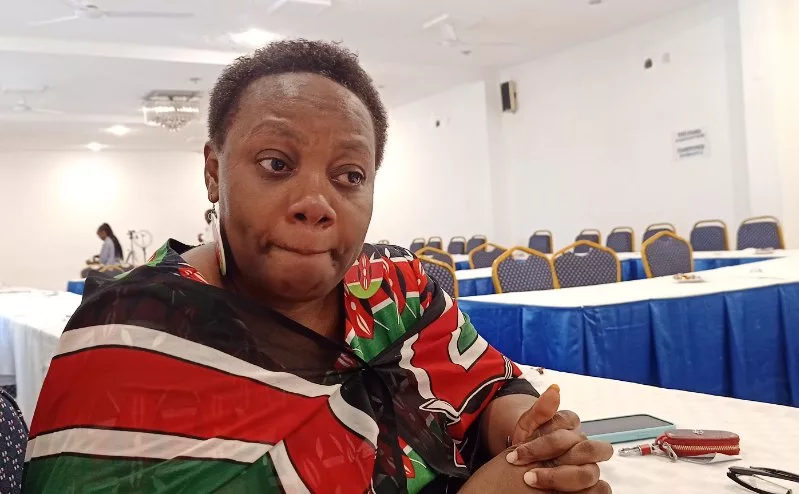
 CJGEA executive director Phyllis Omido gets emotional during an interview over the Owino Uhuru lead poisoning case / BRIAN OTIENO
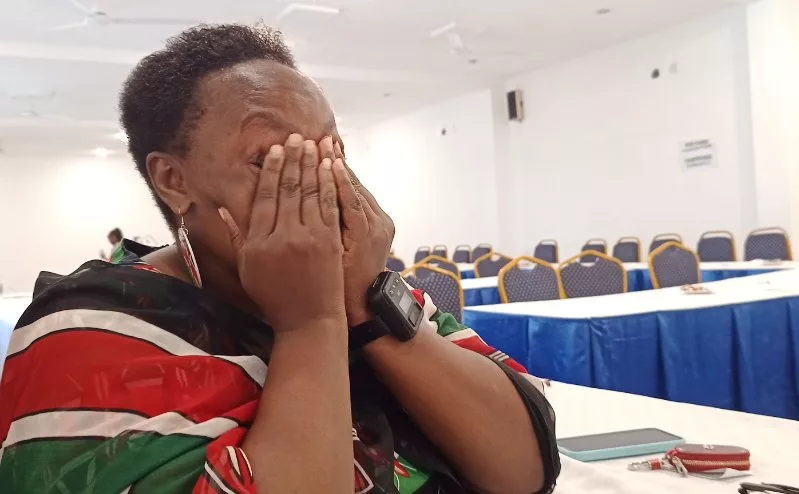 CJGEA executive director Phyllis Omido gets emotional during an interview over the Owino Uhuru lead poisoning case / BRIAN OTIENO
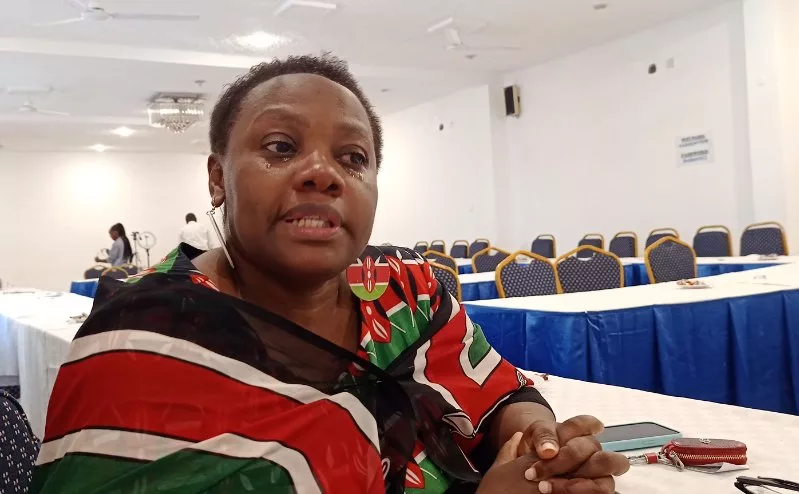 CJGEA executive director Phyllis Omido gets emotional during an interview over the Owino Uhuru lead poisoning case / BRIAN OTIENO
A judge will today
(Monday) explain to the parties why she allowed the accounts of Nema to be
reopened a week after they were frozen following garnishee orders from another
judge.
Environmental lobby
group, CJGEA (Center for Justice, Governance and Environmental Action) had, on June 4, successfully frozen Nema’s 22 bank accounts.
This is after the
environmental watchdog failed to comply with another order to release funds
that had been ordered for compensation of Owino Uhuru residents who had
suffered lead poisoning in Mombasa and for environmental clean-up and remediation.
However, Lady Justice
Belinda Akoth Akello on June 11 issued orders temporarily staying the execution
of the garnishee orders pending the inter parties hearing of an application by
Nema.
Nema told the court
they have not refused to pay the ordered compensation sum of Sh1.3 billion to
Owino Uhuru residents as compensation and a further Sh700 million payable to
CJGEA for the clean-up and remediation as had been ordered by the court and
further upheld by the Supreme Court.
The environmental
watchdog asked to be allowed to settle the decreetal amount in instalments starting
from the financial year 2026/2027.
In an affidavit
sworn by director general Mamo Boru, Nema said being a government agency, it
operated within a financial budget and as such the decretal sum had not been factored
for in the financial year 2025/2026.
Boru explained that
the decretal amount owed exceeds the authority’s budgetary allocation given
that it no longer receives funding from the Exchequer.
Nema, Boru said, is
financially constrained since it solely depends on fees collected through
issuance of licences to fund its operations.
“The meagre licensing
fees collected by the authority are insufficient to satisfy the decretal sums,
the said sums being substantially in excess of the revenue generated therein,”
Boru told the Environmental and Land court.
The environmental
watchdog said it is committed to paying the compensation and has demonstrated the
same by writing to the Environmental and Climate Change PS requesting them to
liaise with the National Treasury to provide the requisite sum.
It is because of
these efforts, which were communicated to CJGEA, that the lobby group withdrew
the garnishee application dated April 13, 2026, Boru said.
Boru had argued
that freezing the authority’s accounts would severely impair its ability to
carry out its statutory obligations, disrupt essential environmental regulatory
services, and occasion substancial prejudice to the public interest.
He said the
accounts frozen contained public funds held in trust for donors who donated the
funds for public interest.
On June 19, CJGEA through
executive director Phyllis Omido, protested the move to temporarily unfreeze
the Nema accounts, saying the watchdog is not sincere in its supposed interest
to comply with the court orders.
In a statement,
Omido said almost six years have elapsed since the Environment and Land
Court delivered its judgement, and nearly two years have passed since the
Supreme Court upheld that decision to award the compensation to Owino Uhuru
residents.
“Throughout this period, Nema has failed to
demonstrate any genuine or meaningful commitment to complying with the courts'
directives.
“This is despite Nema having received an advisory
from the National Treasury directing it to prioritise the Owino Uhuru
compensation in both the 2024/2025 Financial Year budget and the Medium-Term
Expenditure Framework,” Omido said.
Omido said, based on the history, Nema's recent
representation to the court appears inconsistent with its prolonged failure to
take concrete steps toward implementing the judgement.
She said CJGEA and the Owino Uhuru community have
been compelled to pursue multiple legal proceedings to enforce the compensation
awarded by the courts due to the continued inaction of responsible state
agencies.
“It is therefore surprising that Nema now professes
a willingness to comply while enforcement proceedings remain active before the
Environment and Land Court,” she said.
In 2020, the Environment and Land Court directed
that compensation be implemented within 90 days and remediation measures be
implemented within 120 days of the judgement.
In 2024, the Supreme Court affirmed that judgement,
reinforcing both the rights of the Owino Uhuru community and the legal obligation
of government agencies to comply.
“Yet, despite these unequivocal judicial pronouncements,
responsible institutions have repeatedly failed to implement the orders, opting
instead to shift responsibility from one agency to another while affected families
continue to suffer the consequences of lead contamination,” Omido said.
She noted that for nearly two decades, CJGEA has
stood alongside the Owino Uhuru community in the pursuit of environmental
justice.
“We have documented the devastating health impacts
of lead poisoning on children, women, and families; provided legal support to
affected community members; engaged both county and national government
institutions; participated in policy and advocacy forums; and consistently
pursued accountability through the courts,” she stated.
She said CJGEA has, throughout the journey, advocated
for comprehensive compensation, medical support, environmental remediation, and
accountability for those responsible for one of Kenya's most severe
environmental health disasters.
Today, she noted, the plight of Owino Uhuru
remains a stark reminder of the gap between commitments to address historical
injustices and the lived realities of affected communities.
“Despite securing landmark victories at every
level of Kenya's judicial system, including the Supreme Court, victims continue
to be denied the benefits of those judgements due to administrative inertia and
institutional disregard,” she said.
She noted that the garnishee orders secured by
CJGEA are therefore not merely a procedural legal step.
They represent a necessary intervention to uphold
the rule of law and restore public confidence in Kenya's justice system, Omido
said.
“Court orders must not become symbolic declarations
that can be ignored at the convenience of public institutions. The Constitution
guarantees every Kenyan the right to a clean and healthy environment, access to
justice, and equal protection under the law,” she noted.
She said these guarantees lose their meaning when
state agencies fail to respect and implement judicial decisions.
“We acknowledge and welcome the government's
recent initiative to compensate victims of human rights violations as a
positive step toward advancing justice.
“However, it is difficult to reconcile this effort
with the continued exclusion of other victims who remain sidelined and
marginalised. Justice must not be selective,” Omido said.
She called on the government to ensure compensation
for all victims of human rights violations, including those whose claims have
been conclusively determined and upheld by the courts.
Failure to do so, she argued, risks creating a
perception of unequal treatment and undermines the government's commitment to
accountability, justice, and the rule of law.
She said the Owino Uhuru struggle is not merely a
local issue but a national test of Kenya's commitment to environmental justice,
human dignity, accountability, and the rule of law.
“The garnishee orders bring victims one step
closer to realising the justice they have pursued for many years, but the
struggle for full implementation continues. Justice delayed has been justice
denied for far too long,” Omido said.
INSTANT ANALYSIS:
The Supreme Court in 2024 orders state agencies,
including Nema and the Export Processing Zone Authority, to pay a total of Sh1.3
billion in compensation to Owino Uhuru residents in Jomvu, Mombasa. This was
part of a larger Sh2 billion total package, which included an additional Sh700
million for environmental cleanup and remediation.