The Education Ministry has blamed delayed capitation to
learning institutions on underfunding and the late release of funds by the
National Treasury.
Education Cabinet Secretary Julius Migos Ogamba said the
country's education financing crisis can no longer be explained as an
administrative failure.
He was appearing before the National Assembly's Public
Investment Committee on Governance and Education, chaired by Luanda MP Dick
Maungu.
Ogamba told MPs that his ministry has consistently submitted
funding requests on time and immediately remits funds upon receipt from the
National Treasury.
However, he said the resources allocated to the sector have
failed to match rising enrolment and increasing operational costs, leaving
institutions burdened by widening deficits and mounting debts.
The committee is scrutinising Auditor General's reports for
the 2018/19 to 2024/25 financial years, focusing on delayed disbursement of
capitation to schools, teachers' training colleges, Technical and Vocational Education and
Training (TVET) institutions and public universities.
"Our challenge is not that the ministry sits on money.
The problem is that the resources released by the National Treasury fall far
below the actual funding requirements, and when the Exchequer is delayed,
institutions inevitably experience cash flow challenges," Ogamba told the
committee.
He was accompanied by Higher Education Principal Secretary
Dr Beatrice Inyangala, Technical and Vocational Education and Training
Principal Secretary Esther Muoria, Universities Fund acting chief executive
Edwin Wanyonyi and Higher Education Loans Board chief executive Geoffrey
Monari.
The Cabinet Secretary said annual capitation for TVET
institutions has remained at Sh5.2 billion for several years despite a sharp
increase in student enrolment.
He said the funding caters for trainees under the previous
capitation system as well as scholarships under the student-centred funding
model introduced in the 2023/24 financial year.
However, he said the budget has not kept pace with demand.
According to the ministry, while the approved annual allocation
has remained at Sh5.2 billion, actual disbursements have in several years
fallen below that amount, creating funding deficits for institutions.
The ministry further revealed that it has so far disbursed
Sh7.9 billion in scholarships under the student-centred funding model,
benefiting nearly 200,000 trainees.
However, the programme is already grappling with a
cumulative funding deficit of approximately Sh14.9 billion.
Ogamba said the state department for TVET submits Exchequer
requisitions to the National Treasury in good time and immediately transfers
the money to institutions once it is released.
"The occasional delays in disbursement of capitation
and scholarships are largely occasioned by the delayed release of Exchequer
funds from the Treasury. Once we receive the money, we release it immediately
to institutions," he said.
The CS painted an even bleaker picture for public
universities, saying the institutions are grappling with structural
underfunding that has accumulated over several years.
He revealed that under the student-centred funding model,
universities required Sh29.9 billion during the 2025-26 financial year but
received only Sh18 billion, leaving a funding gap of nearly Sh11.5 billion.
Continuing students under the previous Differentiated Unit
Cost model required Sh40.4 billion, yet only Sh23 billion was allocated,
resulting in another Sh17.4 billion shortfall.
Overall, universities required Sh70.3 billion for
scholarships and grants against an approved budget of Sh41.2 billion, leaving a
cumulative deficit of Sh28.9 billion.
The CS insisted that these deficits should not be
misconstrued as unremitted government funds.
"The figures represent budgetary gaps arising from
inadequate allocations, not undistributed Exchequer funds. Every shilling
released to the Universities Fund was disbursed to eligible public
universities," he said.
To cushion universities, Ogamba said the government released
Sh3.8 billion in December 2025 to settle verified arrears arising from the
2017–2021 Collective Bargaining Agreement (CBA), with another Sh3.8 billion
scheduled for release in the current financial year.
In addition, the National Treasury has committed Sh2.73
billion towards implementation of the 2021–25 CBA, while negotiations for the
2025–29 CBA will be guided by affordability assessments before financial
clauses are concluded.
However, Ogamba cautioned against indiscriminate staff cuts,
saying universities must retain sufficient academic and technical capacity to
fulfil their statutory mandate.
"The objective is not merely to reduce the wage bill,
but to ensure staffing is efficient, affordable and aligned with institutional
needs. Sustainable higher education financing requires adequate funding, predictable
disbursement and prudent financial management working together," he said.
INSTANT ANALYSIS
The committee is scrutinising Auditor General's reports for
the 2018-19 to 2024-25 financial years, focusing on delayed disbursement of
capitation to schools, teachers' training colleges, TVET institutions and
public universities.




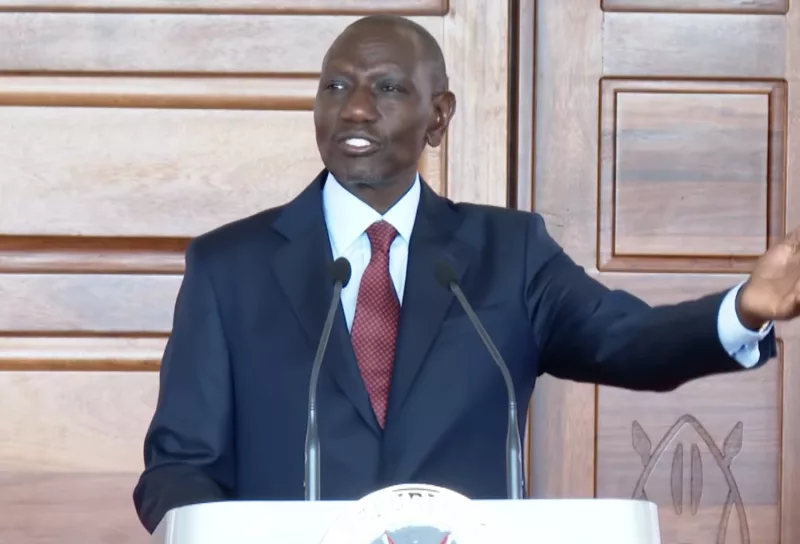
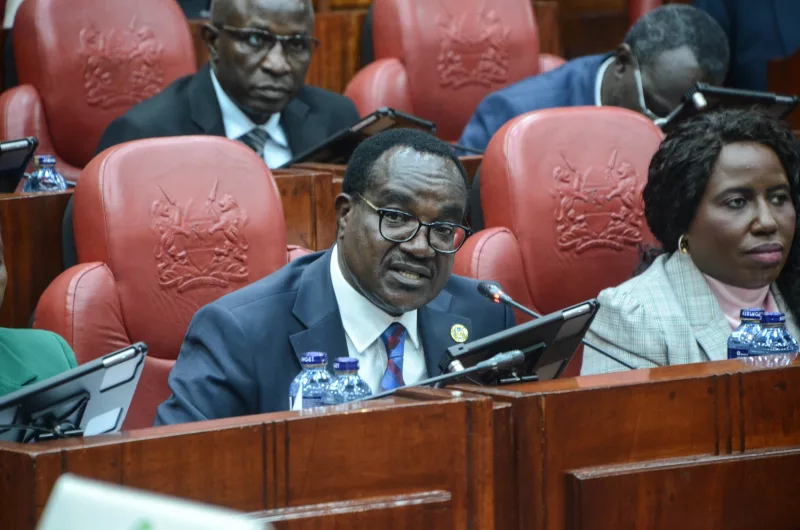 Education CS Julius Ogamba and Beatrice Inyangala when they appeared before the NA Public Investments Committee and Education to deliberate on the auditor general's report for the 2018/19 to 2024/25 financial years at Bunge Towers on July 15, 2026./DOUGLAS OKIDDY