Njoki Kinyanjui’s foundation gives voice to disabled people via films
by CATHY WAMAITHA
Audio By Vocalize
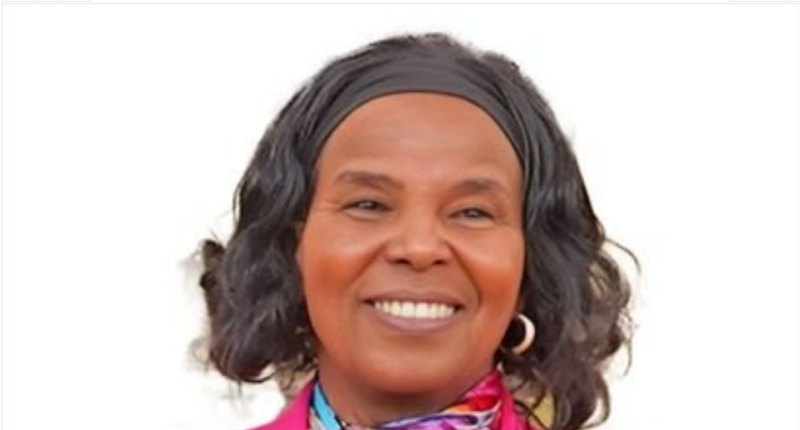
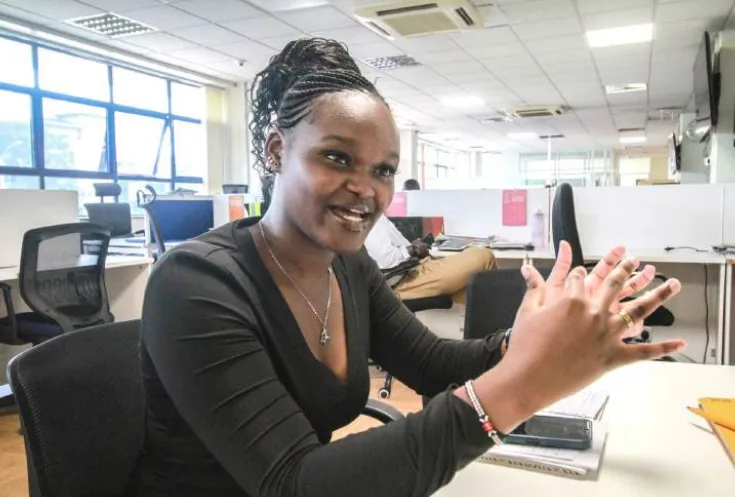
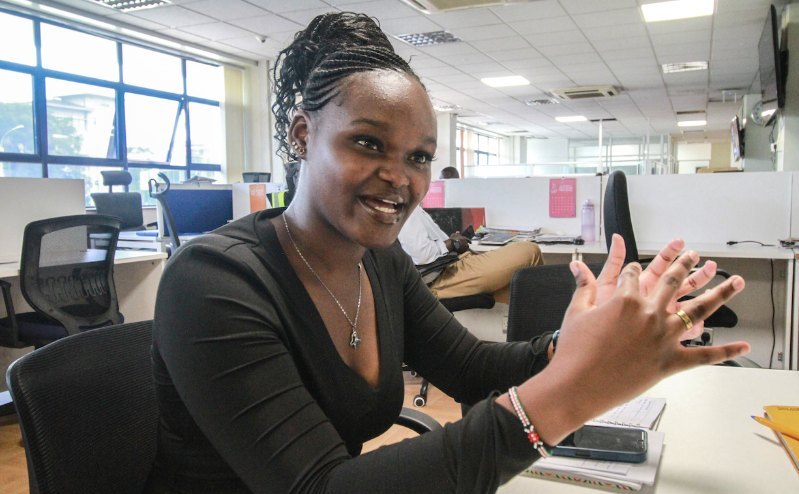
Women in Disability Space Foundation founder Njoki Kinyanjui during an interview at the Star offices in Westlands,
Nairobi last Tuesday /ENOS TECHE
Every morning, Ian leaves home by crawling on his knees across a steep and dangerous hillside in Murang'a.
He cannot walk, and without a suitable wheelchair, the journey is exhausting.
Yet despite the daily struggle, the Class 8 pupil has a dream that stretches far beyond the narrow paths he navigates. He wants to become a DJ.
For Ian, however, the biggest obstacle is not his disability alone. It is a society that often decides what people with disabilities cannot do before giving them a chance to prove what they can.
His family lives in poverty, and even his father questions whether a boy with a physical disability can ever build a career behind the turntables.
Ian's story is one of many being documented by the Women in Disability Space Foundation (WDSF), an organisation using film to challenge stereotypes and give persons with disabilities the opportunity to tell their own stories.
"A lot of persons with disabilities are not given that platform to talk about their ability," says the foundation's founder, Njoki Kinyanjui.
"We see people talking on behalf of PWDs. WDSF decided to give these people a platform to tell society that despite the challenges we have, we are capable of doing anything."
The documentary-driven organisation operates with a five-member production crew and has already produced two documentaries, including Ian's story, which was filmed in May.
Its mission is to shift public perception of disability from pity to possibility.
"The problem with society is that we treat disability as a charity concern rather than a human rights issue," Kinyanjui says.
"Inclusion will start when society stops asking persons with disabilities, 'Why can't you do this?' It will start when society asks, 'What is stopping you from achieving your dream?'"
Before founding WDSF, Kinyanjui worked with several organisations supporting persons with disabilities. She says one experience convinced her a different approach was needed.
"I attended many meetings and was shocked when some senior officials gave false impressions, sometimes to secure tenders or for their own benefit."
She realised that persons with disabilities were rarely given the opportunity to tell their own stories in their own words, often leading to misrepresentation.
As both a photographer and disability rights advocate, Kinyanjui spent two years conducting field research in rural communities before launching the foundation.
It was during an education mission in Murang'a that she met the Kandara subcounty education director, who lamented that persons with disabilities were routinely excluded from public participation.
That conversation eventually led the team to Ian's home, where they encountered the realities of poverty, exclusion and untapped potential.
For many families already struggling financially, disability comes with costs that place opportunity even further out of reach.
A quality wheelchair can cost up to Sh150,000, while specialised Braille machines for visually impaired learners can cost more than Sh300,000.
Kinyanjui says much of the available funding from government and development partners focuses on short-term support, such as food and assistive devices, rather than investing in education, employment and talent development.
"I give Ian a wheelchair, but that boy has a dream. Has that wheelchair helped Ian achieve his goal? It hasn't."
Instead, she proposes what she calls a 'dream support programme', where partners identify a person's ambitions, understand the barriers standing in their way and work together to remove them.
For Ian, that means finding a DJ school, musicians willing to mentor him and donors who can support his training.
"We don't just produce documentaries so people can watch them," she says. "As we tell Ian's story, we also want to empower him."
Beyond individual stories, the documentaries expose the challenges faced by women and girls with disabilities, particularly in rural communities.
Kinyanjui says many continue to face gender-based violence, fuelled by harmful cultural beliefs that portray disability as a curse or demonic possession.
She says deaf and non-verbal women are especially vulnerable because many police officers lack training in sign language and disability etiquette, making it difficult for survivors to access justice.
Although Kenya has enacted progressive laws to protect persons with disabilities, she argues that implementation remains the greatest challenge.
The Constitution requires that persons with disabilities occupy at least five per cent of elective and appointive positions, a commitment reinforced by the Persons with Disabilities Act, 2025.
However, Kinyanjui says legal protections mean little without effective implementation.
She also believes Kenya's education system must become more inclusive.
Many public schools, including some national schools, still lack ramps and other facilities needed to accommodate learners with disabilities, while many teachers have not received specialised training.
Kinyanjui welcomes the passage of the Kenyan Sign Language Bill, 2023 by the National Assembly on June 24, saying it could significantly improve access for deaf Kenyans.
The Bill establishes a Kenya Sign Language Council, regulates interpreters, requires television stations to provide sign-language interpretation and closed captioning, obliges public universities to offer free interpretation services and integrates sign language into early childhood and basic education.
Even so, she cautions that the legislation will only make a difference if it is fully implemented and adequately funded.
Despite working in a sector often dominated by older leaders, Kinyanjui says her age has never discouraged her.
"People should not look down on you because you are a Gen Z," she says.
"Despite my age, I can say we're making progress. And I say without apology, we can move forward and achieve our dreams."
Ultimately, she hopes for a society where disability is neither feared nor pitied, but understood.
"They don't want pity. They don't like to be helped without being asked because it suggests they cannot do things for themselves. These people can do anything," she says.
"Disability is not inability. We have to move from looking at persons with disabilities as people to be pitied and instead see them as people with talents that need to be nurtured. They need skills, not pity."
This is premium content
Subscribe to Continue Reading
Help us continue bringing you unbiased news, in-depth investigations, and diverse perspectives. Your subscription keeps our mission alive and empowers us to provide high-quality, trustworthy journalism. Join us today to make a difference!



 Women in Disability Space Foundation founder Njoki Kinyanjui during an interview at the Star offices in Westlands,
Nairobi last Tuesday /ENOS TECHE
Women in Disability Space Foundation founder Njoki Kinyanjui during an interview at the Star offices in Westlands,
Nairobi last Tuesday /ENOS TECHE