

Officials from the National Cereals and Produce Board met farmers in Eldoret to discuss the shortage of top-dressing fertiliser and pledged additional supplies to ease the crisis, particularly in the high-producing counties of the North Rift region.
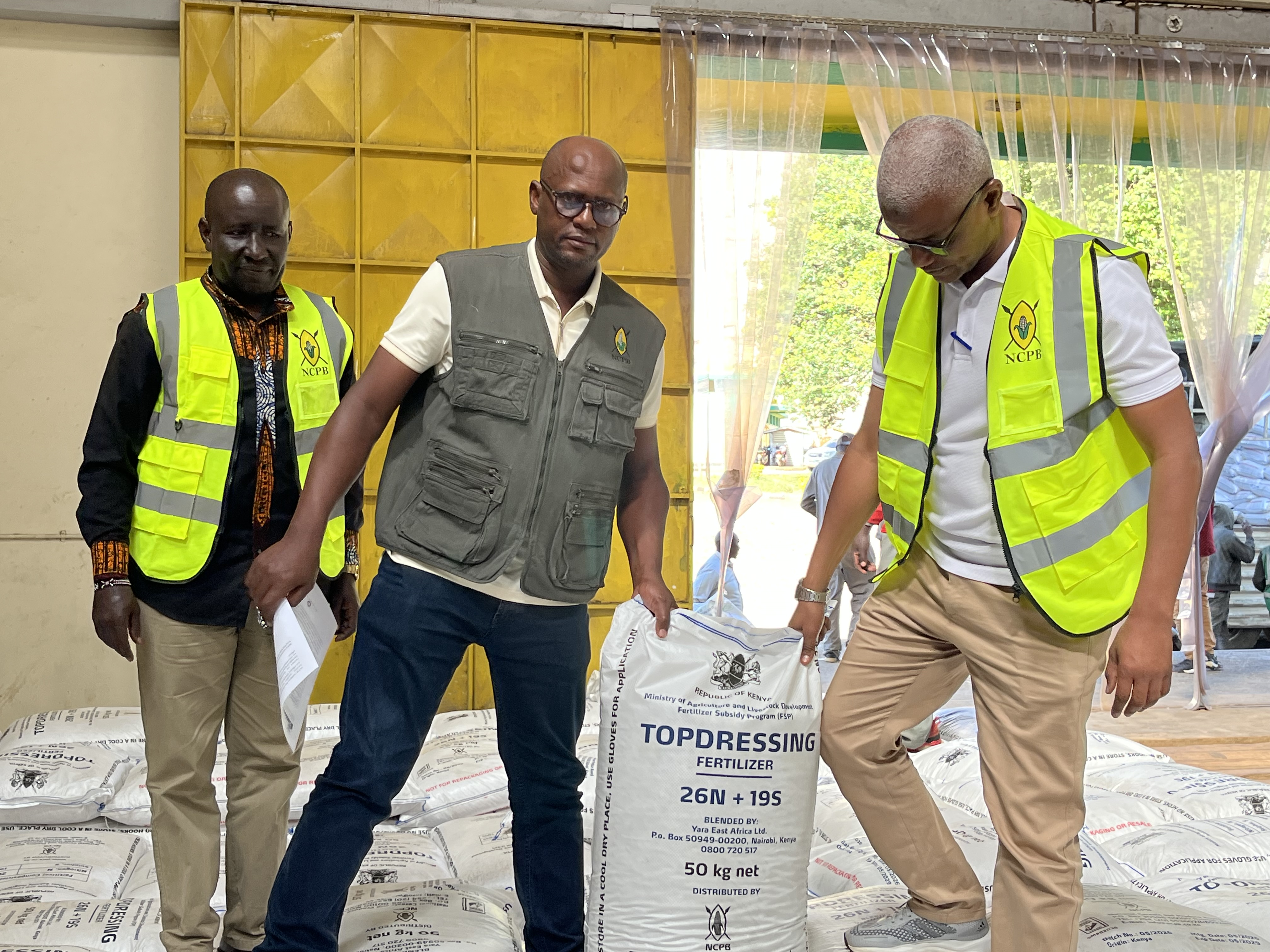
NCPB chief executive officer Samwel Ndung’u led a delegation that included officials from the Ministry of Agriculture. The team visited several depots in the region, where they met farmers who had lined up waiting for supplies of top-dressing fertiliser.
“We are here to assure you that, as farmers, you have done your part, and the government is committed to ensuring you get the support you need so that we sustain high food production in all parts of the country,” he said.
Ndung’u said the government had taken seriously complaints from farmers about the acute shortage of top-dressing fertiliser.
Most farmers in the region use the CAN variety for top dressing, but it has been in short supply for the past two weeks, sparking protests among farmers.
“NCPB, on behalf of the government, wishes to assure farmers and the general public that adequate measures have been put in place to address the current challenges affecting the distribution of top-dressing fertiliser under the Government Fertiliser Subsidy Programme,” he said.
Ndung’u said the government remains committed to supporting farmers through the timely and efficient distribution of subsidised fertiliser across the country.
He said during the ongoing long rains season, 7.5 million bags of fertiliser had been sold, comprising 4.2 million bags of planting fertiliser and 3.3 million bags of top-dressing fertiliser.
The figure represents an increase compared with the 2025 long rains season, during which 6.6 million bags were distributed, including 3.4 million bags of planting fertiliser and 3.2 million bags of top-dressing fertiliser.
“The growth reflects sustained demand and continued confidence in the government’s fertiliser subsidy programme,” Ndung’u said.
He said despite disruptions in global supply chains arising from ongoing challenges in the Middle East, the government had successfully supplied the stated quantities of fertiliser through a combination of locally blended and imported varieties.
To address the current shortage in the North Rift region, Ndung’u said NCPB had mobilised 100,000 bags for immediate delivery to depots in the area.
“NCPB reaffirms its commitment to working closely with the government, fertiliser suppliers and other stakeholders to ensure adequate availability and efficient distribution of fertiliser across all regions of the country,” he said.
The CEO encouraged farmers to continue redeeming their subsidy vouchers through designated NCPB depots and authorised distribution points.
Farmers have complained that the shortage of top-dressing fertiliser could affect maize production in the region.
Instant analysis
The fertiliser shortage highlights the critical role government subsidies play in Kenya’s food production system, particularly in the North Rift, the country’s grain basket. While NCPB’s pledge to deliver 100,000 bags may ease immediate concerns, the crisis exposes vulnerabilities in fertiliser supply chains, especially amid global disruptions. Any prolonged shortage of top-dressing fertiliser could affect maize yields and ultimately impact national food security and prices.
The increase in fertiliser uptake under the subsidy programme suggests growing farmer confidence, but timely distribution remains crucial. How quickly supplies reach farmers will determine whether crop productivity is protected this season.