For decades,
Kenya has invested heavily in building a globally competitive tourism
destination. We have world-class beaches, wildlife, heritage, hospitality
infrastructure and a workforce with generations of experience in the tourism
economy.
Yet one of our greatest tourism assets — the Kenyan
Coast — continues to operate below its potential.
The problem is no longer the attractiveness of our
destination. The problem is access.
An economic impact assessment commissioned by the Mombasa
Investment Corporation, a corporate agency of the county, presents compelling evidence of the need for air
access.
It says in a report that expanding direct
international air access to Moi International Airport could unlock billions of
shillings in additional economic activity, create tens of thousands of jobs and
significantly increase government revenues.
The numbers deserve national attention.
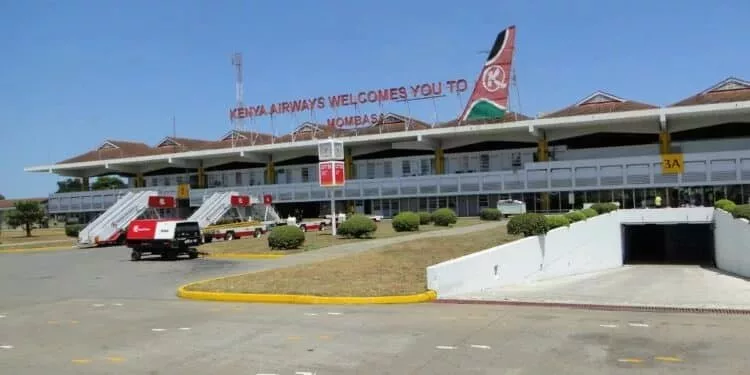
Last year, the airport
received 235,184 international arrivals, representing 9.2 per cent of Kenya’s
2.55 million international arrivals. This was an encouraging 14.7 per cent
increase from 2024.
But growth should not disguise the scale of the
opportunity we are leaving on the table.
The assessment models the impact of just four additional
international flights per week, operating for 36 weeks annually at a 78 per
cent load factor. The result would be about 31,450 additional visitors every year.
At an estimated average direct expenditure of $1,750
per visitor and applying a 1.7 tourism GDP multiplier, those four flights could
generate about Sh12.1 billion in additional annual economic output,
support more than 17,000 jobs and generate about Sh1.7 billion in additional
tax revenues.
Seven additional weekly flights could deliver about 55,000 additional visitors, Sh21.1 billion in annual GDP
impact, more than 30,000 jobs and about Sh3 billion in
tax revenues.
These are not insignificant numbers.
They demonstrate that air access is not simply an
aviation issue. It is an economic development policy.
Every additional aircraft landing at Moi International
Airport creates demand across an extensive value chain. Visitors require hotel
rooms, food, taxis, tuk-tuks, tour operators, entertainment, agricultural
produce, fish, crafts, financial services and professional services.
Tourism expenditure circulates through communities.
A hotel room occupied in Nyali creates demand for farmers
supplying fresh produce. A visitor travelling to Fort Jesus creates income for
guides and transport operators. A conference delegate extending a business trip
creates additional demand for restaurants, entertainment and retail.
This is why expanding international connectivity must be
understood as an employment strategy, an SME development strategy and a
national revenue strategy.
The opportunity extends beyond Mombasa.
Visitors arriving through Moi International Airport
travel to Diani in Kwale, Watamu and Malindi in Kilifi, our national parks and
other destinations across Kenya. Mombasa is not asking for a policy that benefits
one county. We are advocating for a gateway that strengthens an entire regional
and national economy.
The evidence from competing destinations is instructive.
Morocco welcomed 19.8 million tourists last year after aggressively expanding international connectivity
across multiple airports. Egypt received about 19 million visitors while allowing international
carriers direct access to resort destinations such as Sharm El Sheikh
and Hurghada.
South Africa demonstrates that strong regional gateways
can coexist successfully with a dominant national hub. Cape Town, Durban and
Johannesburg all receive direct international services.
Closer to home, Zanzibar has used a more permissive
approach to international charters and scheduled services to expand its tourism
market.
Kenya must ask itself a simple question: why should our
Coast compete globally with one hand tied behind its back?
Our position is not an argument against Jomo Kenyatta
International Airport. Neither is it an argument against Kenya Airways.
That would be a false choice.
Countries with successful tourism economies understand
that national hubs and regional gateways complement each other.
More passengers arriving directly in Mombasa create
additional domestic and regional travel opportunities. They increase demand for
connecting services, expand the overall aviation market and strengthen Kenya’s
attractiveness as a destination.
The objective must be to grow the market rather than
protect the distribution of an economy that remains smaller than its potential.
Kenya has set an ambitious target of attracting 5.5
million international visitors by 2028. We will not achieve that ambition
through marketing campaigns alone.
We must make it easier for tourists to reach our destinations.
The assessment commissioned by the Mombasa Investment
Corporation proposes an aspirational target of one million annual international
visitors to the Coast within three to five years.
At that scale, the regional tourism economy could
generate about $1.75 billion in direct visitor expenditure and an
estimated $3 billion — about Sh384 billion — in annual
GDP impact.
The modelling further estimates that
about 550,000 direct, indirect and induced jobs and more than Sh50 billion
in annual tax revenues at this level of tourism activity.
Even allowing for the need to continuously refine
economic modelling with primary data, the direction of the evidence is
unmistakable: connectivity creates growth.
The policy response should therefore be equally clear.
Kenya should establish a transparent and time-bound
process for approving international services into Moi International Airport,
adopt a more facilitative framework for charter and scheduled carriers. It
should actively pursue underserved source markets in Europe, the Gulf and
Africa.
Kenya should also establish a joint national-county
air access development platform bringing together government, regulators,
airports, airlines, tourism agencies and the private sector.
We must also recognise the emerging opportunity presented
by Meetings, Incentives, Conferences and Exhibitions.
Mice already accounts for about 27 per cent of Kenya’s international tourist arrivals.
Mombasa has the accommodation capacity, heritage, climate and leisure offering
required to compete for this market.
Our ambition to develop international convention
infrastructure must therefore be accompanied by international connectivity.
Conference facilities without adequate air access will never achieve their full
economic potential.
Mombasa county is prepared
to play its part.
Through the Mombasa Investment Corporation, we will work
with investors, airlines, tourism operators and neighbouring counties to
develop commercially viable routes, strengthen destination marketing and create
an investment environment that supports new hotels, convention facilities,
entertainment, the blue economy and tourism-related enterprises.
But aviation policy remains fundamentally a national
responsibility.
We therefore call upon the national government, aviation
regulators and industry stakeholders to work with us in unlocking Moi
International Airport.
This is not a demand for preferential treatment.
It is a case for rational economic policy.
Four additional flights a week could support more than
17,000 jobs.
Seven could support more than 30,000.
One million visitors could transform the economic
trajectory of the entire Coast region.
The question before us is no longer whether Mombasa has
the potential.
The evidence demonstrates that it does.
The question is whether we have the courage to make the
policy decisions necessary to unlock it.
The writer is Mombasa governor