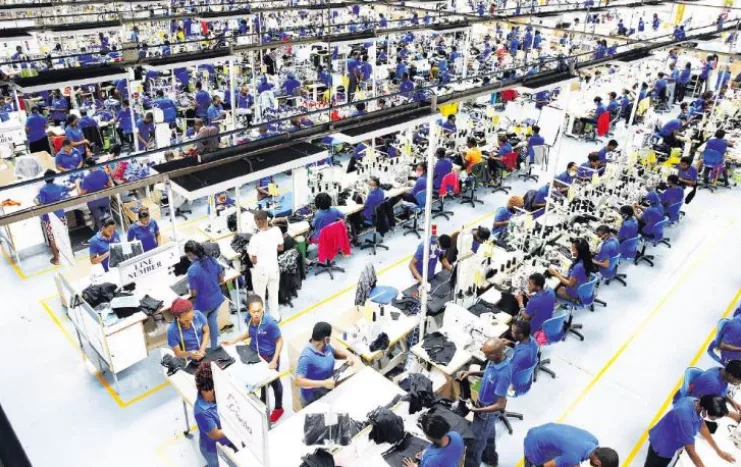



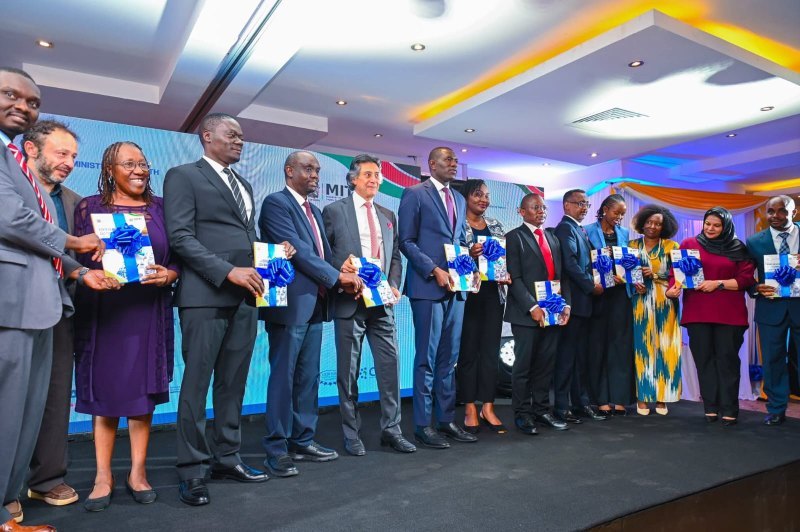
Kenya has launched the Kenya Health Products and Technologies Local Manufacturing Strategy 2026–2030, marking a decisive move to remove the barriers that have kept the country's manufacturing ambitions on paper for a decade
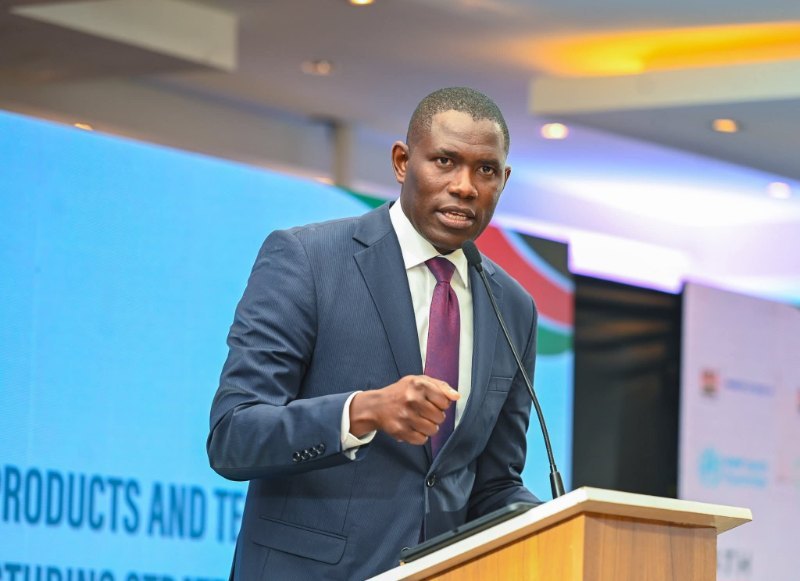
Speaking during the launch at the Eka Hotel, Ole Sereni, Health Cabinet Secretary Aden Duale stated that the country has already answered whether it should manufacture and must now confront the challenges holding it back
"The question this Strategy must answer is not whether Kenya should manufacture. We have already answered that. The question is whether we will finally remove the barriers that have kept manufacturing ambition on paper for a decade," Duale said.
Kenya currently imports roughly 70 per cent of its pharmaceutical products and effectively all of its vaccines, with more than USD 760 million of its USD 1.2 billion annual health market leaving the country in imports
Duale emphasised that local manufacturing is the floor beneath major health reforms, calling it the single largest lever left to pull on cost, access, and resilience
To bridge the gap between ambition and execution, the government plans to address capital limitations by establishing a dedicated health manufacturing credit guarantee facility in collaboration with the National Treasury, the Kenya Development Corporation, and development finance partners.
This initiative is designed to absorb the risks that private capital avoids on its own, de-risking long-tenor lending for pharmaceutical, vaccine, diagnostic, and medical device production.
The state will also pursue concessional and blended finance instruments with institutions such as Afreximbank, the African Development Bank, and the International Finance Corporation.
Duale noted that a manufacturer who can borrow against a credible, government-backed pipeline of demand will build, while those left to negotiate risk alone will keep waiting, adding that the government chooses to stop asking them to wait
The state will also pursue concessional and blended finance instruments with institutions like Afreximbank, the African Development Bank, and the International Finance Corporation to accommodate the seven-to-ten-year horizon required for biomanufacturing
This initiative aims to de-risk long-tenor lending for pharmaceutical, vaccine, diagnostic, and medical device production.
"No manufacturer builds a sterile production line on hope. They build it on a bankable balance sheet, and Kenyan health manufacturers have been asked to compete for capital on the same terms as a trading business, against the same risk premiums, with none of the patience that pharmaceutical manufacturing requires. That is really hard. The strategy must soften it.
This framework is also intended to help Kenya BioVax become a destination for African science rather than just a contract site for external formulas
He stated that Kenya must carry what its scientists discover through to something a local factory can produce at scale to stop losing research to other countries and stop importing innovations that began on Kenyan soil
Duale pointed out that Ireland became a global leader by building a similar institution to close the gap between science and supply
The government plans to anchor this transition on Institutions for Bioprocessing Research and Training alongside laboratories like KAVI, creating a structured pipeline for pre-clinical drug development, formulation, and process scale-up
Despite possessing deep scientific capacity through institutions like KEMRI, the Kenya Institute for Primate Research, and universities, Kenya has lacked a practical mechanism to convert discoveries into manufactured products.
The strategy also focuses on translating scientific research into industrial supply by building a bridge between laboratories and production lines.
"Kenyan factory can produce at scale. This is how we stop losing our own research to other countries' production lines, and how we stop importing innovations that began, in part, on our own soil.
This is also how Kenya BioVax becomes more than a vaccine fill-and-finish facility," Duale said.
To resolve market fragmentation, the ministry plans to aggregate demand so manufacturers have the scale required to justify investments.
Currently, 47 counties, the national government, faith-based organisations, and private providers buy products independently.
The state will consolidate public health procurement into pooled, multi-year volume commitments executed through KEMSA and anchored in advance market commitments for priority molecules, vaccines, and diagnostics manufactured locally through Kenya BioVax.
Duale remarked that no manufacturer will build a factory for 47 uncertain, competing buyers, but they will build for one certain, aggregated demand signal that can be taken to an investor or a bank.
"A manufacturer who knows, in advance, the volume Kenya will purchase over three to five years can take that commitment to a bank, to an investor, and to their own board. That is how demand stops being a hope and becomes a financeable instrument."
Beyond domestic borders, Kenya will champion pooled procurement frameworks across the East African Community and the AfCFTA, aligned with the continental goal of achieving 60 per cent local production of health commodities by 2040 under the leadership of President William Ruto.
Duale described credit de-risking, research translation, and demand aggregation as a single machine, noting that capital without a product pipeline builds an empty factory, a pipeline without demand never leaves the laboratory, and demand without financed capacity is just a wish list
He added that regulation serves as the glue, stating that the country is on its way to Maturity Level 3 by the end of the year
Addressing stakeholders directly, the Cabinet Secretary told manufacturers that the market is being built for them deliberately.
He asked development partners to de-risk alongside the ministry rather than donating around them, and universities that their work must now go beyond publication
Presiding over the launch, Medical Services PS Dr Ouma Oluga said local manufacturing is critical to building a resilient health system and reducing reliance on imported health products.
He noted that strengthening domestic production will support sustainable healthcare financing, improve access to quality and affordable health commodities, and enhance the country’s preparedness against global supply chain disruptions.
Dr Oluga said the Strategy seeks to address barriers that have limited the growth of local manufacturing while creating an enabling environment for investment, innovation, and industrial expansion.
He emphasised the need to translate research and innovations from institutions such as KEMRI and KEPHIS into locally produced health products that respond to Kenya’s healthcare needs.
He called on government agencies, development partners, manufacturers, researchers, and investors to strengthen collaboration in implementing the Strategy.
Oluga noted that partnerships will be key to advancing Universal Health Coverage and supporting the Government’s Bottom-Up Economic Transformation Agenda.
Among those in attendance were Federation of Kenya Pharmaceutical Manufacturers Chairperson Dr Vimal Patel, UNICEF Chief of Health Dr Luigi D’Aquino, PATH Kenya Country Director Carolyne Njuguna and representatives from AMREF, WHO, PPB, Biovax and other key stakeholders.