



Kenya is preparing to launch a National Infrastructure Fund (NIF) as part of a broader strategy to mobilise capital for roads, energy, irrigation, transport and other priority sectors critical to economic transformation.
The fund is intended to support the country’s ambition to transition into a developed economy while easing pressure on public debt.
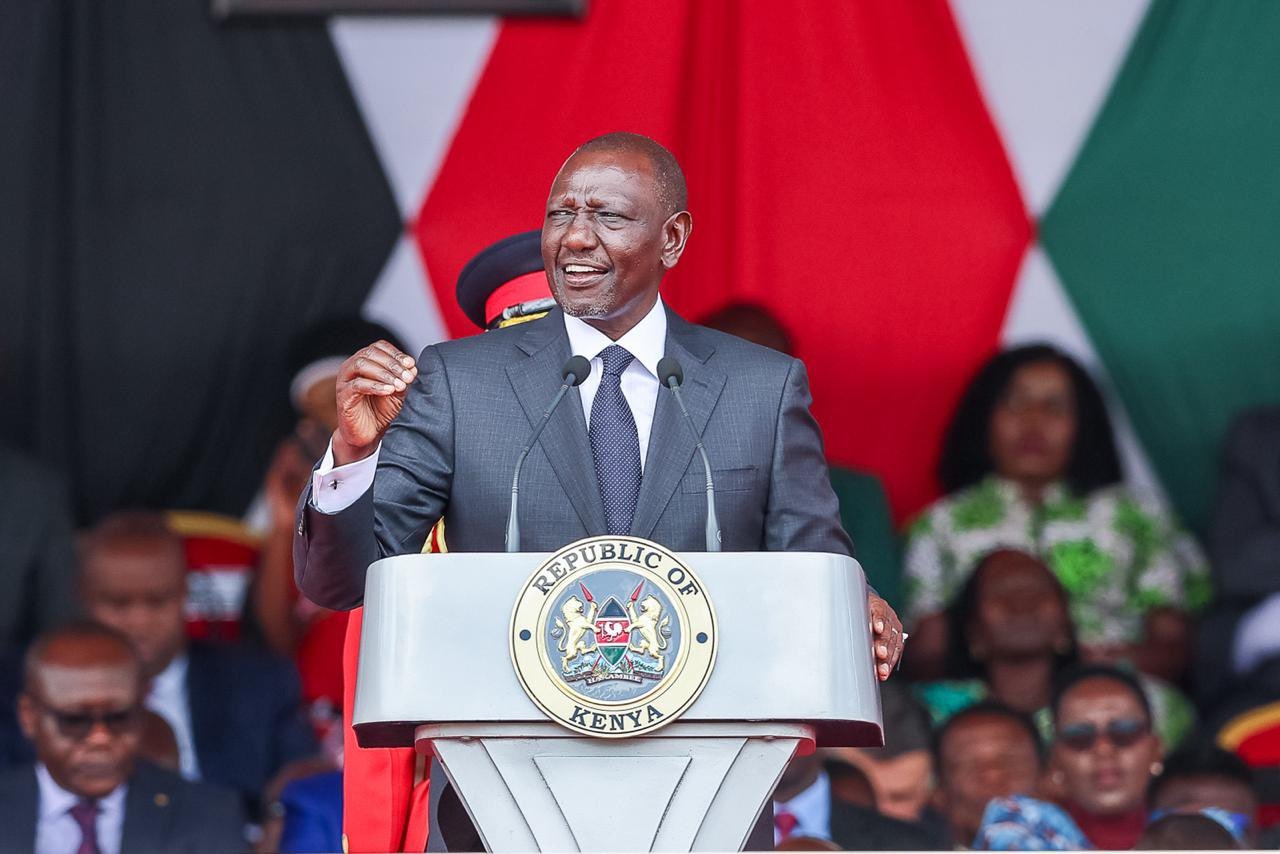
President William Ruto has linked the proposed fund to a wider reform agenda that includes asset sales and the establishment of a sovereign wealth vehicle, positioning infrastructure investment as a central pillar of Kenya’s long-term growth strategy.
The government has argued that the fund will help unlock financing without relying solely on traditional borrowing.
Today, President Ruto is expected to chair a Cabinet meeting at State House to among other issues, approve the Sh5 trillion infrastructure fund.
Ruto said the meeting will set in motion the implementation of his bold plan designed to mobilise long-term capital, unlock private sector investment, and fundamentally change how Kenya finances its national development agenda.
But what exactly is an infrastructure fund, how does it work, and what could it mean for Kenya?
Understanding infrastructure funds
An infrastructure fund is a pooled investment vehicle created to finance, build, upgrade or operate long-term physical assets that underpin economic activity.
These assets typically include highways, ports, railways, power generation plants, water systems, irrigation schemes, airports and digital infrastructure.
According to World Bank blogs and guidance notes on public infrastructure financing, such funds are designed to mobilise large amounts of capital and deploy it efficiently into projects that require long investment horizons and significant upfront costs.
Infrastructure funds may be fully public, fully private, or structured as hybrid vehicles that combine public capital with private and institutional investment.
What distinguishes infrastructure funds from traditional government spending is their focus on financial sustainability, professional management and the ability to attract non-government capital, particularly from pension funds, insurers and development finance institutions.
How infrastructure funds typically work
In practice, infrastructure funds follow a broadly similar model across countries, though details vary depending on national context.
According to the World Bank and Global Infrastructure Hub explainers, most funds begin with seed capital provided by government.
This initial funding establishes the fund, gives it credibility, and absorbs early-stage risks that private investors are often unwilling to take on their own.
The capital may come from budget allocations, asset sales, or dedicated financing arrangements. Once established, the fund defines a clear investment mandate, outlining the sectors it will prioritise and the types of projects it will support.
A strong project pipeline is essential. This means having feasibility studies, environmental and social assessments, land acquisition plans and revenue models in place before projects are presented to investors. The fund then uses its public capital strategically to crowd in private finance.
According to World Bank blogs, this is often done through co-investment, guarantees, concessional loans or first-loss capital that reduces risks for private partners.
Pension funds, sovereign wealth funds and insurers are particularly attracted to infrastructure because of its long-term, stable returns.
Returns to investors typically come from user fees such as tolls, power tariffs, port charges or government availability payments.
Where projects do not generate sufficient revenue, public subsidies or viability gap funding may be required. Strong governance, transparent procurement and independent oversight are widely cited as critical success factors.
According to international best practice outlined by the World Bank and OECD, infrastructure funds that lack clear rules and professional management are more likely to suffer from political interference and poor investment decisions.
How Kenya’s national infrastructure fund is expected to work
Kenya’s proposed National Infrastructure Fund is expected to follow a hybrid model that combines public anchor capital with private and institutional investment.
According to Reuters and reporting by the Financial Times, the government plans to use proceeds from selected state asset sales to capitalise the fund.
This approach is intended to free up value locked in public enterprises while redirecting resources toward new infrastructure development.
The fund is expected to support priority sectors such as energy generation and transmission, transport infrastructure, irrigation and water systems, all of which are considered essential for industrial growth, food security and job creation.
Government officials have presented the fund as a mechanism to finance development without significantly increasing Kenya’s public debt, which has come under pressure in recent years.
By sharing risks with private investors and spreading costs over longer periods, the fund aims to reduce immediate fiscal strain.
Why infrastructure funds appeal to governments
Infrastructure funds have gained popularity globally because they promise several advantages over traditional public financing.
According to World Bank analysis, one key benefit is faster project delivery.
Dedicated funds with professional management can move projects from planning to implementation more efficiently than standard government procurement systems.
Another advantage is reduced pressure on public finances. By leveraging private capital, governments can limit direct borrowing and allocate scarce budget resources to social services such as health and education.
Infrastructure funds also bring technical expertise. According to development finance practitioners, fund managers and co-investors often provide skills in project structuring, risk allocation and financial modelling that are not always available within government agencies.
For countries like Kenya, infrastructure funds also offer a way to tap into large pools of domestic savings. Pension funds and insurance companies require long-term investment opportunities to match their liabilities, and infrastructure assets can provide stable, inflation-linked returns.
What Kenya stands to gain
If well designed and managed, Kenya’s National Infrastructure Fund could significantly boost the country’s development agenda.
According to World Bank guidance, improved infrastructure can lower the cost of doing business, enhance productivity and attract private investment. Expanded energy capacity can support manufacturing and digital services, while better transport and logistics can improve trade competitiveness.
The fund could also help Kenya advance climate-resilient and green infrastructure. International experience shows that infrastructure funds with clear sustainability mandates are better positioned to attract climate finance and concessional funding for renewable energy and adaptation projects.
Importantly, the fund could improve planning discipline by forcing projects to meet bankability standards before financing is approved, reducing the risk of stalled or incomplete developments.
Countries that have used similar models
Kenya is not alone in pursuing an infrastructure fund model. Several countries have established similar vehicles, offering useful lessons.
In India, the National Investment and Infrastructure Fund (NIIF) was created as a government-anchored investment platform to attract long-term capital into infrastructure and related sectors.
According to NIIF disclosures and international case studies, the fund operates with professional independence while the government acts as an anchor investor.
Canada established the Canada Infrastructure Bank, a public institution designed to attract private investment into revenue-generating public infrastructure.
According to Canadian government documents and OECD reviews, the bank uses loans, equity and guarantees to make projects commercially viable, though it has also faced public debate over transparency and user fees.
The United Kingdom launched the UK Infrastructure Bank in 2021 to support net-zero and regional development goals.
According to UK government publications, the bank focuses on crowding in private investment while aligning infrastructure finance with climate objectives.
These experiences show that while infrastructure funds can mobilise significant capital, their success depends heavily on governance, clarity of mandate and public accountability.
The risks and challenges
Despite their potential, infrastructure funds carry real risks.
According to World Bank and OECD assessments, weak governance is one of the biggest threats. Funds that lack independence or transparency may finance politically motivated projects with low economic returns.
Another challenge is the risk of hidden public liabilities. Guarantees and off-balance-sheet financing can create future obligations for taxpayers if projects fail to perform, a concern frequently raised in international public finance reviews.
Project bankability is also a persistent problem. Many infrastructure projects struggle to attract investors because of weak feasibility studies, land acquisition disputes or uncertain revenue streams.
There are also social concerns. According to international infrastructure policy debates, projects financed through user fees can exclude low-income households unless safeguards and affordability measures are built in.
What will determine success in Kenya
Experts agree that Kenya’s National Infrastructure Fund will only succeed if it is built on strong foundations. According to World Bank best practice, a clear legal framework, independent governance and transparent reporting are essential to building investor confidence and public trust.
Clarity on how asset sale proceeds are used will also be critical. According to Reuters, asset sales are politically sensitive, and transparency will determine whether the public accepts the strategy.
Equally important is early investment in project preparation. Well-prepared projects reduce risk, lower costs and attract higher-quality investors.
A tool, not a silver bullet
Kenya’s proposed National Infrastructure Fund represents a significant shift in how the country plans to finance development. International experience shows that such funds can be powerful tools for mobilising long-term capital and accelerating growth.
But, as World Bank analysts caution, infrastructure funds are not a cure-all. Without strong governance, fiscal transparency and a clear public-interest mandate, they can create new risks rather than solving old ones.
Ultimately, the success of Kenya’s National Infrastructure Fund will depend not on its announcement, but on how it is designed, governed and implemented in the years ahead.