Over the past three years, parents, both
expatriate and increasingly Kenyan middle‑class families, have pushed demand for
British, American and International Baccalaureate programmes, prompting a wave
of private investment and a burst of new campuses across the capital and
satellite towns.
This is because parents increasingly seek to hand
their children the keys to global opportunities.
Mid last year, South African-listed group ADvTECH, which runs the Makini and Crawford International brands in Kenya, told investors that demand at its “rest of Africa” schools had lifted revenues.
It
had just completed the acquisition of the Runda campus, which has since been
rebranded to Makini Runda for approximately Sh1.3 billion.
The investment firm recently announced an operating
profit of about Sh15 billion for 2025.
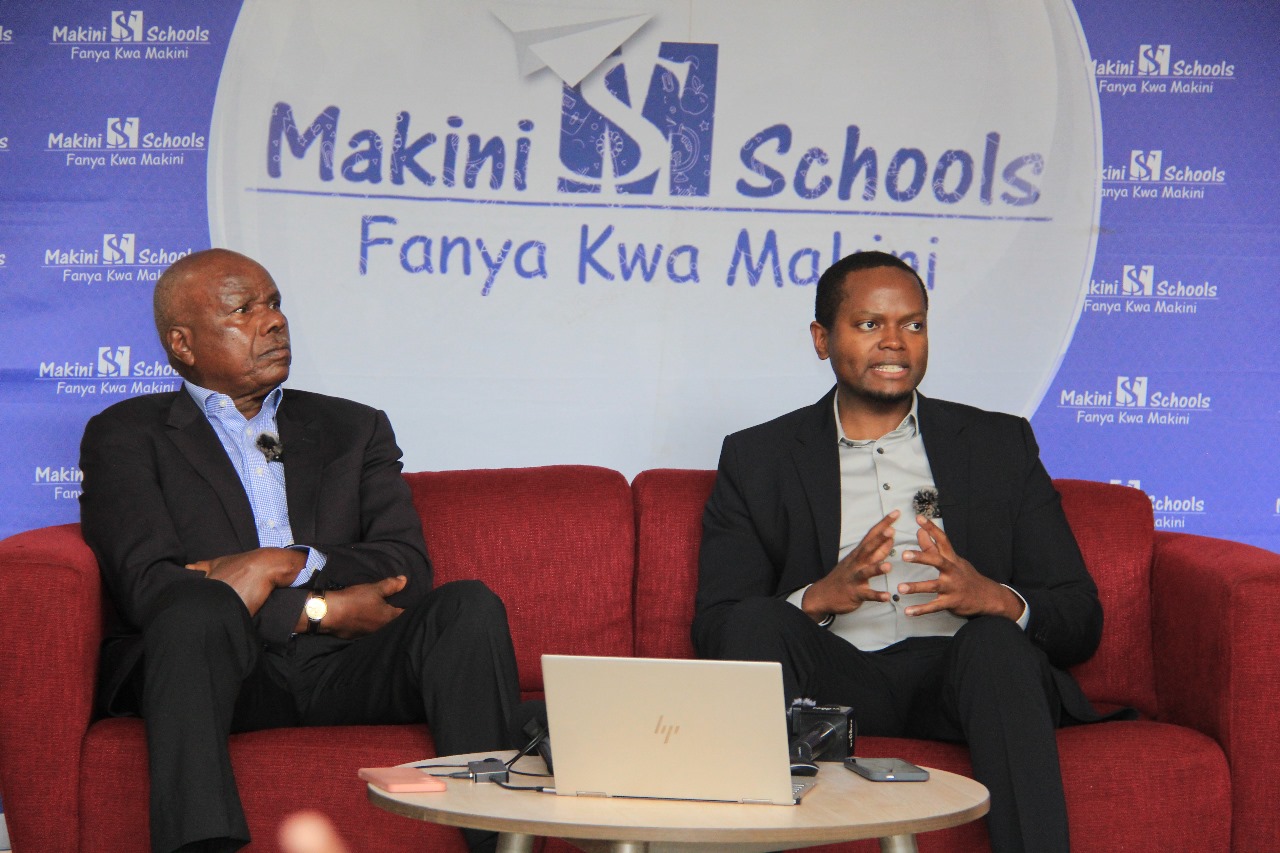
The Star spoke to Makini Schools
Regional managing director, Horace Mpanza, about Kenya as a strategic growth
driver, the future of education and the group's expansion plans.
What makes Kenya a strategic market for
educational investments?
Kenya combines several attributes that make
it highly attractive. It has a resilient economy, a strong culture that values
education and a growing young population.
Like
many African countries, demand for quality education is rising faster than
public systems can accommodate, creating opportunities for responsible
private-sector participation.
The market is also highly competitive,
which ultimately benefits parents because schools must continually invest in
quality. Trust, reputation and educational outcomes matter greatly, and brands
such as Makini have built that trust over decades.
What is driving the growing demand for
international curricula?
One key factor is global mobility. Parents
increasingly want qualifications that are recognised internationally and allow
learners to transition easily between schools and universities across different
countries.
At the same time, some parents have
expressed uncertainty about the implementation of Kenya's Competency-Based
Education (CBE) curriculum. However, we believe CBE is a strong curriculum that
equips learners with relevant skills for the future.
At Makini, we offer both Cambridge and CBE
pathways because we recognise that families have different needs and
aspirations. Both curricula can successfully prepare learners for higher
education and future careers.
How are your schools preparing learners
for Africa's evolving labour market?
The shift from the previous curriculum to
CBE is a significant step forward because it prioritises competencies over rote
memorisation. Skills such as research, problem-solving, communication,
collaboration and critical thinking are increasingly important in today's
economy.
The future workplace is changing rapidly.
New professions continue to emerge, while technology is reshaping traditional
employment models. Our role is to expose learners to these realities early.
That is why we invest heavily in digital
learning, coding, robotics and AI-enabled tools. Learners engage with
technology from an early age through makerspaces, robotics programmes and
digital learning platforms. This exposure helps them develop adaptability and
confidence in a fast-changing world.
We are already seeing positive outcomes,
including improvements in mathematics performance through the use of AI-powered
learning tools.
How can private education providers
collaborate more effectively with the government?
There is considerable room for stronger
public-private partnerships. Kenya has been relatively receptive to
private-sector participation in education, but more can be done.
Collaboration could include teacher
professional development, educational research, curriculum innovation and the
sharing of best practices.
Education has profound social and economic
implications, and both public and private institutions ultimately share the
same goal of preparing future generations for success.
How does ADvTECH balance growth with
affordability in a market where private education is often viewed as expensive?
Affordability is central to the Makini
model. Within the ADvTECH portfolio, some brands operate at premium price
points, while others, such as Makini, are designed to provide high-quality
education at a more accessible cost.
We achieve this by running efficient
operations and ensuring resources are directed towards areas that directly
improve educational quality.
We are disciplined about avoiding wastage
because unnecessary costs eventually get passed on to parents.
This efficiency enables us to invest in
teacher development, facilities and technology while keeping fee increases
reasonable and sustainable.
The firm recently reported an operating
profit of about Sh15 billion. What were the key drivers behind this
performance?
The results reflect contributions from the
entire ADvTECH portfolio, which includes more than 30 universities and numerous
school brands across Africa. The higher education division remains the largest
contributor to the revenues.
Makini, Crawford International in Tatu
City, Gaborone International School in Botswana and Flipper International
School in Ethiopia collectively contributed six percent of ADvTECH revenue.
I
must note that these schools are growing rapidly. Importantly, being part of a
larger group enables significant investment in technology, infrastructure, and
innovation.
At Makini, for example, classrooms are
equipped with digital learning tools, projectors and teacher laptops that
enhance learning and help students grasp complex concepts more effectively.
These investments are possible because of
the scale and resources of the broader ADvTECH group.
What are your current enrolment numbers
in Kenya following the acquisition of Regis School Runda?
Regis School has approximately 1,400
learners, bringing Makini's enrolment to about 6,100 students. Across our
Kenyan operations, total enrolment now stands at roughly 7,000 learners.
Our focus remains on delivering quality and
ensuring accessibility. When parents see tangible value and strong outcomes for
their children, enrolment growth follows naturally
What are your expansion plans in Kenya?
Kenya remains a priority market for the
group and as such, we continue to evaluate acquisition opportunities while also
exploring greenfield developments.
Our ongoing investments signal a long-term
commitment to the country, and we expect to announce new developments in the
short to medium term as we expand our footprint.
Beyond infrastructure, we will continue
investing in technology, artificial intelligence and teacher development.
Growth also creates opportunities for career progression, with many teachers
advancing into leadership positions as the organisation expands.
What is your long-term vision for
building a pan-African education ecosystem?
Our vision is to make high-quality
education accessible to more families across Africa without compromising
standards.
As populations continue to grow and
urbanisation accelerates, governments alone will not be able to meet demand.
Credible private education providers have an important role to play alongside
public systems.
Through brands such as Makini in Kenya,
Gaborone International School in Botswana and Flipper International School in
Ethiopia, we aim to deliver quality, accessibility and long-term impact across
the continent.