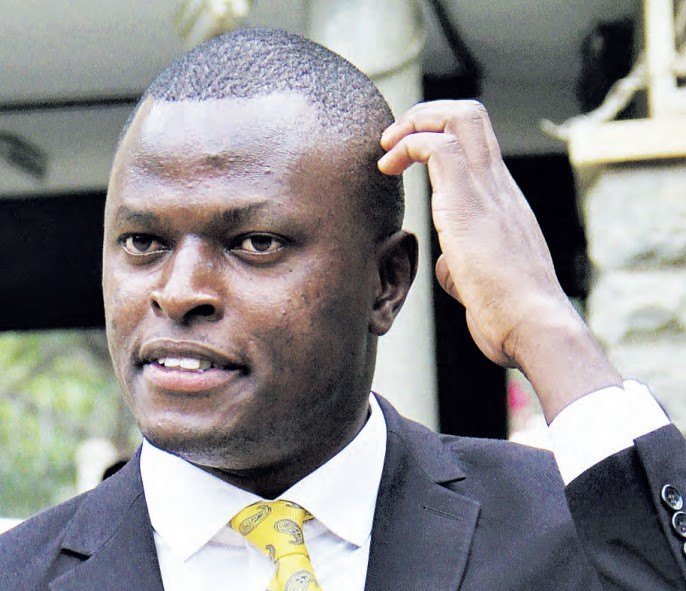
Murang’a Governor Irungu Kang’ata remains one of the most
closely watched political figures in Mt Kenya’s multiparty era, praised for his
consistent electoral wins but equally debated for his recurring political
realignments that have followed him from one election cycle to another.
From councilor in 2002, to Member of Parliament in 2013,
Senator in 2017, and Governor in 2022, Kang’ata’s political rise has been
steady and uninterrupted.
Political analysts argue that what defines his political
journey is not just victory but rather a consistent pattern behind him, noting
that in each election cycle, Kang’ata is always elected under a new political
formation.
From Ford People to TNA, Jubilee and later UDA in the 2022
election, this pattern has fueled a growing debate over whether his success is
driven by personal popularity or calculated political timing.
That debate has
further intensified following his recent public declaration that he will not
defend his governorship on the UDA ticket in 2027, instead signaling a fresh
political direction under the “Linda Mwananchi” movement.
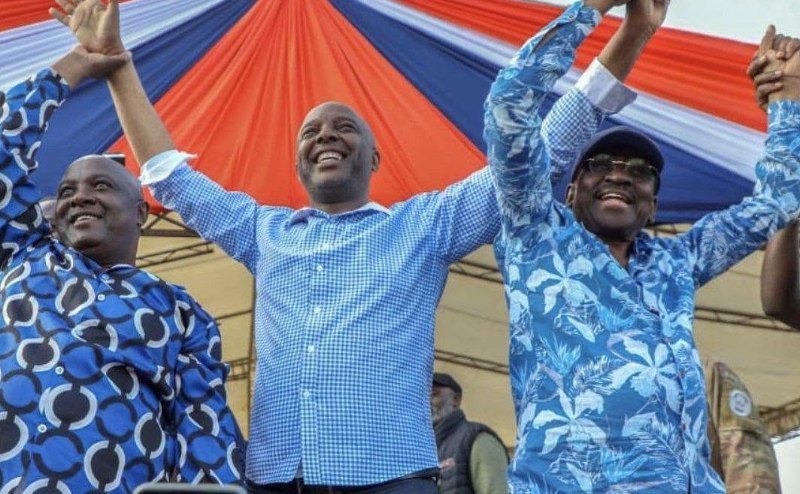
On Sunday during a Linda Mwananchi public rally in Thika,
Kang’ata urged Edwin Sifuna’s faction to team up with former Deputy President
Rigathi Gachagua ahead of the next general election.
“People are tired of
unfulfilled promises, the high cost of living and unemployment. As Linda
Mwananchi we are ready to work with like-minded leaders to ensure change in
2027. I have also asked Sifuna to look for Wamunyoro (Rigathi Gachagua) and
work together. I just want a better Kenya,” Kang’ata said.
Also speaking on Monday during an interview with Inooro TV,
Kang’ata confirmed he is a member of the Linda Mwananchi movement, noting that
it brings together members from different political formations ranging from
UDA, DCP, Wiper, ODM among others.
“You know I was elected on UDA ticket. What
I said a month ago is that I will not defend my seat on it, but plainly
speaking DCP party is the most popular in Mt Kenya region,” he said.
He added
that in Mt Kenya, Gachagua is a dominant political figure and has attracted a
strong following, noting that the Linda Mwananchi lobby group will closely work
with him for the blessings of Mt Kenya region.
Earlier on May 3, Kang’ata said his decision to exit UDA
followed pressure from both inside and outside the party. He revealed that he
had held a direct discussion with President William Ruto in an effort to settle
disagreements, but the talks did not yield a conclusive agreement.
Kang’ata had
also dismissed speculation that he may be eyeing either the presidency or
deputy presidency in 2027, insisting his focus remains at the county level.
“His Excellency the President has always told us that the people are supreme.
Thank you for that statement, and therefore, my responsibility is to adhere to
what the people have told me. In light of that, I have tried my best to have
these issues resolved internally. I had a candid discussion with His Excellency
the President one-on-one, where we shared these ideas, but we did not reach
what we call ‘full convergence’,” he said.
On the ground, several MCAs have defended the governor’s
approach, arguing that Murang’a voters are more concerned with performance than
party labels.
Murang’a nominated MCA Njeri Muchiri (UDA), during an interview
with the Star, downplayed concerns that Kang’ata’s exit has weakened the ruling
party ahead of 2027, insisting that UDA remains firmly rooted at the
grassroots.
“It will not be a walk in the park for the governor and for him
leaving UDA was not a big deal,” she said. “The party is intact on the ground
and he should prepare for a tight contest in 2027.”
She also argued that the
timing of his departure was politically sensitive, maintaining that President
Ruto still has political goodwill due to his development record.
“It was wrong timing. He should have allowed the President’s
visit to sink into the people’s hearts. That move was politically damaging and
may affect development momentum in the region,” she added.
Thomas Muteti, Makuyu MCA (Murang’a), differed with Njeri’s
sentiments, noting that Kang’ata’s political trajectory reflects a growing
trend of “issue-based alignment rather than party loyalty” in Kenyan politics.
He said the county’s political culture is highly individualised and that, given
Kang’ata’s development record, party affiliation may not play a major role in
his re-election bid.
“The politics of Murang’a county are very diverse. People
value performance more than party, even in 2022, several leaders were elected
as independents,” he said.
He added that Kang’ata’s move to the Linda Mwananchi
movement fits into a broader pattern of pragmatic politics. “Kang’ata is a
smart politician. That is why he has moved from MCA to governor successfully,
the biggest gamble he made was in 2017 when he vied for senator seat from MP
and thus party issue in 2027 isn’t a headache,” he said.
Kagundu-ini MCA Samson Mukora echoed similar sentiments,
saying the governor’s influence is grounded in visibility and delivery. He
maintained that Murang’a electorates look at leadership and not just party
tags, noting that Kang’ata has remained active and present on the ground.
“Kang’ata is a textbook case of a politician who reads the political wind
early. He doesn’t wait for party structures to collapse, he moves when he
senses a shift in public mood,” he said.
Ichagaki MCA Hilary Muigai said Kang’ata’s political timing
has consistently been accurate, expressing confidence that he will be
re-elected in 2027 regardless of the party he chooses.
He dismissed reports
that the governor has already formed his own political party, noting that
Kang’ata will announce his political vehicle at the appropriate time.
“Kang’ata is not a politician who waits for the wave to hit.
He studies where the wave is forming and moves early. In Kenya’s coalition
politics, timing is everything and he understands timing very well,” Muigai
said. He described Kang’ata as a “political adapter” rather than a traditional
party loyalist.
“He has built a model where personal brand overrides party
label. That is why he can shift platforms and still retain voter confidence. It
is rare, but increasingly effective in Kenyan politics,” he said.
Political analyst and Nakuru Parliamentary aspirant John
Wahinya, during an interview, described Kang’ata as a political opportunist,
arguing that he thrives more on shifting alliances than on ideology or loyalist
politics.
He noted that while such moves may be interpreted as strategy, they
raise deeper questions about the consistency of Kang’ata’s political identity
and long-term convictions.
“You can call it strategy, but it also raises a
question: what exactly anchors his politics? Because every election cycle comes
with a new political home,” Wahinya said.
Political commentator Isaac Wanjekeche argues that Kenyan
politics increasingly rewards flexibility, but at the same time that
flexibility often raises questions about consistency and intent. He said
leaders like Kang’ata have mastered the art of political survival in a highly
fluid environment where alliances shift quickly.
“There is a thin line between adaptability and opportunism.
Kang’ata walks that line very carefully. His strength is that he wins in every
election cycle with a different party formation. His weakness is that no one is
ever fully sure where he stands politically long-term.” Wanjekeche said.
Kang’ata’s political repositioning has since drawn attention
across political divides, with Siaya Governor James Orengo, during a Sunday
political rally in Thika, urging electorates to pray for him.
“There is one
governor I work with called Irungu Kang’ata. I want you to pray for us and pray
for him because I know he is listening, if you pray, I know he is going to join
us in the rally. If you do not pray, he will not come,” Orengo said.
Juja Parliamentary aspirant Waruiru Waithaka said that
Orengo’s remarks underscored the political attention surrounding Kang’ata’s
shifting alliances, with both government and opposition camps closely watching
his next move.
He said Kang’ata represents a growing class of adaptable
politicians whose influence is built more on personal branding than party
loyalty. “He has built a strong personal political identity, but adaptability
without ideological anchoring can create long-term uncertainty,” he said.
@Njaumburuh

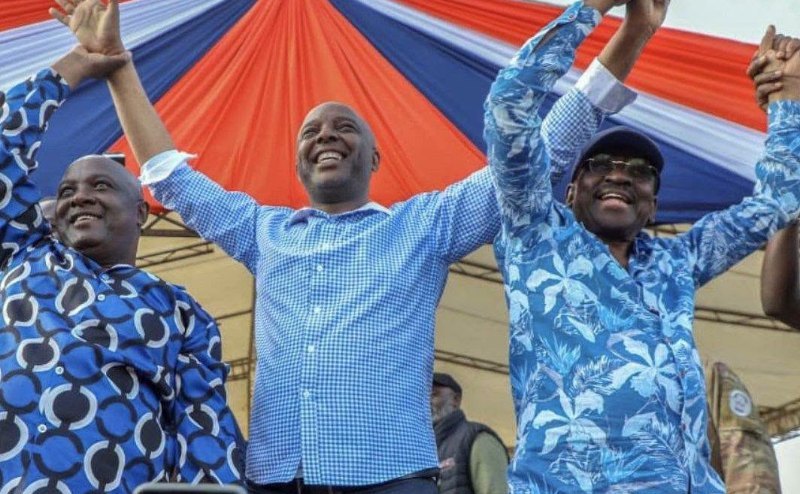 Godfrey Osotsi with James Orengo welcome Irungu Kangata to Linda Mwananchi during the rally in Thika /Handout