Critics are questioning why billions of shillings are being
directed to State House and security agencies while key sectors such as health
and education continue to grapple with funding shortfalls.
This is the second supplementary budget the Executive is taking to Parliament, apart from the original budget approved by the National Assembly.
At the core of the controversy are allocations of Sh1 billion to State House for other operating expenses and Sh3.5 billion to the
National Intelligence Service (NIS) for security operations.
The State Department for Internal Security has been allocated an additional Sh1.55 billion.
The additional allocations were included in the
Supplementary Appropriations Bill (No. 2), 2026, which sought to provide extra
resources to several government agencies before the end of the financial year.
Other beneficiaries include the Sports department, which
received Sh4.1 billion for Talanta Stadium and the Water department which got
Sh2.3 billion for Mwache Dam payments.
The Education department was allocated Sh1.5 billion for
examination invigilation fees, while the Broadcasting department received Sh150
million for facilitation of the 2026 World Cup broadcasting rights.
The government also allocated Sh5.7 billion for the NYOTA
programme, spread between the State Department for MSMEs and the State
Department for Youth Affairs.
But while government insists the allocations are necessary
to plug budget gaps, opponents see a different picture.
They read a trend of poor planning, excessive reliance on
supplementary budgets and growing expenditure under votes that attract limited
public scrutiny.
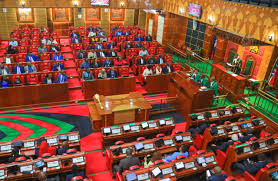
The debate played out dramatically both inside and outside
Parliament.
Suba South MP Caroli Omondi was among the sharpest critics. “What we are witnessing is a long list of examples of poor
planning in this administration, a government that is very long on promises and
short on delivery, marked by impulsive expenditure and limited transparency and
accountability."
The legislator questioned the rationale behind the
allocations. “We know why this money is being allocated to these
particular offices, it is to provide resources for political campaigns. It is
confidential expenditure that nobody can verify,” he alleged.
Kajiado North MP Onesmus Ngogoyo also questioned the timing
of the allocations, noting that Parliament was being asked to approve billions
of shillings just days before the financial year ends.
“It is just two weeks to the end of the financial year,” Ngogoyo said. “When are they going to spend
this money, at what point and on what?”
His concerns echoed the argument by critics who contend that
it undermines parliamentary oversight by rushing legislators into approving
expenditure that cannot be adequately scrutinised.
Outside Parliament, civil society organisations raised
similar concerns.
Institute for Social Accountability (TISA) executive
director Diana Gichengo accused the government of normalising emergency
spending mechanisms that were originally intended for exceptional circumstances.
“They don’t respect the need for planning and due process.
They have made it the norm,” Gichengo said.
“Considering that the ministerial expenditure is about Sh2
trillion, the new allocations would push the extra budget high by Sh332
billion, which is more than the 10 per cent allowed in law.”
She argued that the government was increasingly relying on
supplementary allocations despite the absence of major emergencies that would
justify such expenditure.
“They have overshot the allocations by 10 per cent yet we
did not have any major emergencies like Covid-19 or floods, and the drought
situation was handled by well-wishers,” she said.
“Kenyans should know that the Sh18 billion has to be
borrowed,” Gichengo said, particularly questioning the ever-rising allocations
to intelligence agencies.
“For instance, why is NIS budget ever increasing, yet
intelligence is not financial. We must call out this appetite for using
expensive credit for non-emergencies,” she said.
The fresh supplementary allocations have also become a rallying point for the opposition, with key luminaries reading foul play.
Democracy for Citizens Party leader Rigathi Gachagua attacked the Ruto team, accusing it of diverting public
resources through expenditure lines that receive minimal public scrutiny.
“The money is to be drawn in cash through votes disguised as
maintenance and operations, other operating expenses and security operations," Gachagua claimed.
He alleged that the money would be used for political
purposes. “This is happening when hospitals have no drugs, cancer
patients are in deep pain, our students have no capitation, university and
college students have no funding.”
Ruto allies, however, dismissed the criticism and defended
the allocations as legitimate and necessary.
Budget and Appropriations Committee chairman Samuel Atandi
argued that supplementary budgets are inevitable because Parliament rarely
provides agencies with the full amounts they request during the budgeting
process.
“There is no time we have been able to meet the budget
requirements 100 per cent,” Atandi said. “The resource requirement for State House is about Sh25
billion. As at now, State House has a gap of about Sh8 billion, which we are
unable to fund.”
He maintained that the additional allocation should not be
interpreted as overfunding. “Therefore, this debate about State House being overfunded
needs to come to an end,” he said.
Atandi also defended the allocation to NIS. “For example,
NIS has a resource gap of Sh30 billion. We must admit that this House will
never find resources to fully fund budget requests.” “The budget before us is therefore proper.”
Narok West MP Gabriel Tongoyo, whose committee oversees allocations
to some of the affected offices, also sought to reassure the public.
“It is my committee that appropriates and allocates funds to
these offices, and I can confirm to the country and this House that these funds
are well spent, justified and are for the good of the country, not an
individual,” he said.
Majority Leader Kimani Ichung’wah similarly defended the
supplementary estimates, arguing that part of the expenditure would directly
benefit ordinary Kenyans.
“We are using the power of the purse to create at least even
one job,” Ichung’wah said. “The NYOTA programme is not just supporting the growth of
our country but changing the lives of families.”
He argued that the budget was largely a realignment
exercise. “The budget is also realigning areas where a state department cannot
absorb allocated resources.”
“Sh1.8 billion is coming from the Contingency Fund and is
being taken to more important things,” Ichung'wah added. “Even as we politick, let us
use this House to inform Kenyans of the facts.”
Yet even some MPs who supported the Bill acknowledged
concerns over oversight of confidential expenditure, although they dismissed
the existence of confidential votes (citing 2024 ban).
Rarieda MP Otiende Amollo supported the allocations but
warned agencies against seeking money they may not spend before the financial
year closes.
“I note that we have 12 days to the end of the financial
year,” Amollo said. “I am hoping that the committee will caution the agencies
to spend the money before the end of the financial year.”
He also raised concerns about confidential expenditure. “I
note that half of this budget goes to agencies that handle confidential
expenditure. I urge the Finance Committee and Budget Committee to work
with Treasury on guidelines that separate what amounts to confidential
expenditure.”
Funyula MP Wilberforce Oundo echoed the concern. “Those of
us who sit in the Public Accounts Committee see several agencies fail to unpack
confidential expenditure every year,” he said.
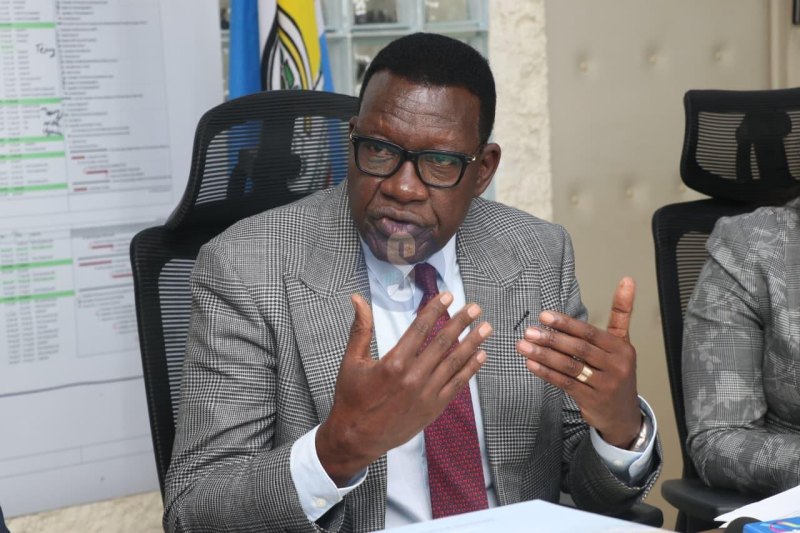
The concerns are reinforced by findings contained in the latest Controller of Budget report.
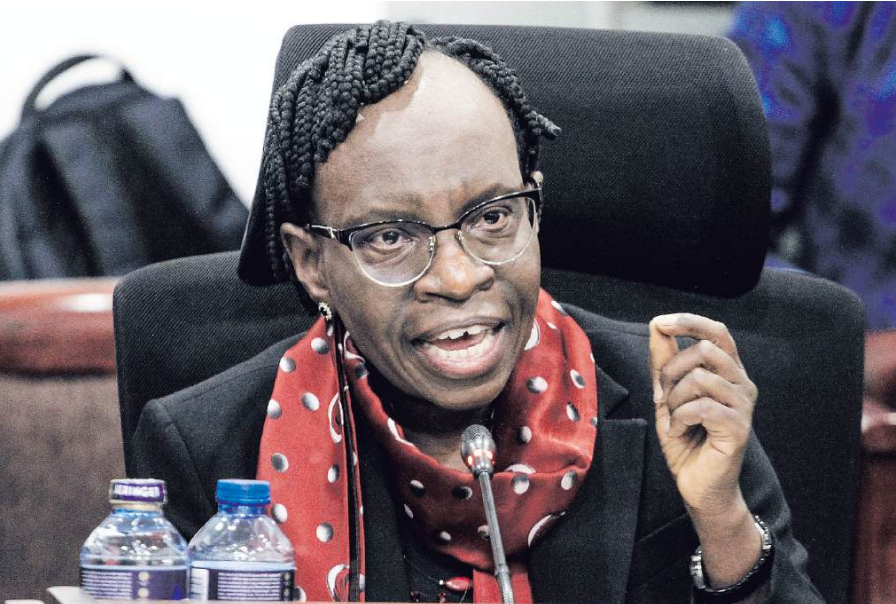
COB Margaret Nyakang’o, in her third-quarter budget implementation review report, raised red flags over the sharp increase in the use of supplementary estimates.
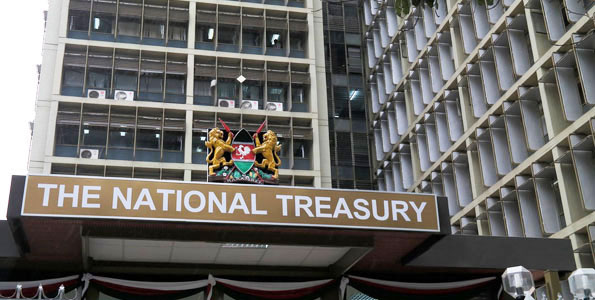
According to the report, Treasury approved Sh276.9 billion under Article 223 of the Constitution during the first nine months of the 2025-26 financial year.
Of the approved amount, the Controller of Budget authorised releases amounting to Sh206.81 billion, of which Sh187.34 billion were for recurrent expenditure.
Nyakang’o said some of the requests submitted under Article 223 appeared to be funding routine government operations rather than unforeseen emergencies.
“Some were routine in nature, intended to support day-to-day office operations,” the report read, with Nyakang’o recommending tighter controls.