

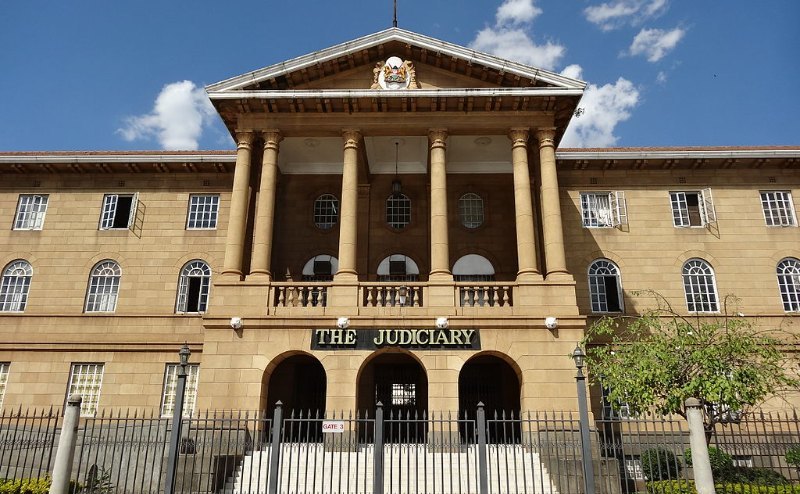
The Court of Appeal has lifted conservatory orders that had temporarily halted the government’s planned sale of a 15 per cent stake in Safaricom Plc to Vodacom.
In its ruling, the appellate court found that the government had met the legal threshold required for the grant of a stay and concluded that public interest considerations favoured lifting the suspension.
“Having fully and thoroughly considered this application, we come to the conclusion that it satisfies the two limbs of arguability and nugatory (meaningless), and that the public interest compellingly demands that the stay sought be granted. We accordingly grant it,” the judges ruled.
The decision lifts the High Court's conservatory orders that had temporarily suspended implementation of the proposed transaction.
The dispute arose after petitioners Tony Gachoka and Fredrick Ogola moved to court seeking to stop the government’s proposed disposal of part of its shareholding in Safaricom to Vodacom Group.
The transaction is estimated at more than Sh200 billion.
The challenge followed approval by the National Assembly of the partial sale of government shares in the telecommunications company.
Parliament adopted a joint report by the Departmental Committee on Finance and National Planning and the Public Debt and Privatisation Committee, clearing the government to offload the 15 per cent stake in a move expected to raise approximately Sh240 billion for infrastructure development.
However, the transaction was subsequently challenged in court.
In their petition, Gachoka and Ogola questioned the legality and transparency of the proposed sale, arguing that the proposed sale price undervalued the shares based on estimates they cited, placing their intrinsic value between Sh70 and Sh80 per share.
The petitioners also raised concerns over what they described as insufficient disclosure surrounding the transaction process.
According to the court filings, they argued there had been no indication of competitive bidding, clarity on valuation methods, or disclosure of advisers involved in determining the proposed sale price.
“The intended sale has been undertaken without meaningful public participation, contrary to the Constitution,” the petition states.
When the matter came before the High Court, a three-judge bench comprising Justices Francis Gikonyo, Roselyne Aburili and Tabitha Ouya issued conservatory orders suspending the transaction.
The judges cited unresolved constituFtional and public interest questions, including issues touching on data sovereignty, public participation, and other legal concerns raised in the petition.
The State later challenged those orders before the Court of Appeal.
Through the Attorney General, the government argued that the High Court erred in stopping the process, maintaining that the transaction had not been completed and that the petitioners had not demonstrated irreversible harm that would arise if the process continued pending hearing of the case.
Despite lifting the conservatory orders, the Court of Appeal did not determine whether the proposed transaction is lawful.
Instead, the judges held that the appeal raised arguable
issues and that maintaining the injunction was not justified at this stage.