Kanu has emerged as one of the country's richest political parties after an audit report revealed it holds land and buildings valued at more than Sh10.15 billion.
However, Auditor General Nancy Gathungu questioned the ownership records supporting the vast property portfolio.
The report for the financial year ended June 30, 2025, shows the former ruling party's assets comprise Sh1.95 billion worth of land and Sh8.20 billion in land and buildings.
This places it far ahead of other political parties in terms of property holdings.
However, the audit casts doubt on the completeness and ownership of the assets after Kanu failed to provide ownership documents and valuation reports for verification.
"However, no ownership documents and valuation reports for the land and buildings were provided for audit review. Further, the buildings were not depreciated in the financial statements," the Auditor General states in the report.
"In the circumstances, the accuracy, completeness and ownership of the land and buildings totalling Sh10.15 billion could not be confirmed."
The findings suggest the party could have even more assets than those captured in its books, given the auditors' inability to independently verify ownership and valuation documents.
Kanu, which governed Kenya from independence in 1963 until it lost power in 2002, accumulated a vast property empire during its nearly four decades in office.
The party owns, or has laid claim to, prime properties in major towns across the country, including offices, branch premises, commercial buildings and parcels of land acquired over many years.
Over the years, various properties linked to Kanu have occasionally been the subject of ownership disputes, court battles and competing claims, although many remain under the party's control.
The party was led for 24 years by former President Daniel Moi (deceased), who succeeded founding President Jomo Kenyatta in 1978 and remained in power until 2002.
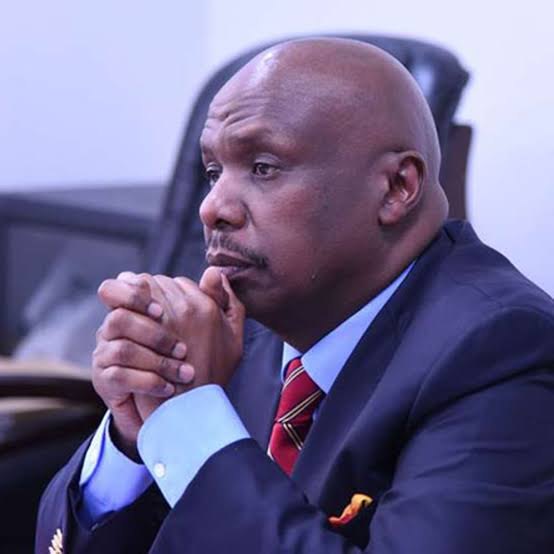
Today, Kanu is chaired by his son, Gideon Moi, although the party's political influence has significantly diminished despite its retaining substantial assets.
However, despite owning vast properties, Gathungu revealed the party has offices in only five counties.
It later submitted a list indicating branch offices in 24 counties.
However, auditors said no documentary evidence was provided to confirm the offices actually existed.
The Political Parties Act requires fully registered political parties to maintain branch offices in more than half of Kenya's 47 counties.
The Auditor General also identified several instances of non-compliance with procurement and financial management laws.
The report says Kanu failed to deduct and remit the mandatory Public Procurement Capacity Building Levy amounting to 0.03 per cent on office rent payments.
According to the audit, the party spent Sh11.62 million on administrative expenses, including Sh1.63 million paid in office rent, without withholding or remitting the statutory levy.
"This was contrary to Order 3(1) of the Public Procurement Capacity Building Levy Order, 2023," the report states, concluding that the management was in breach of the law.
Auditors also faulted the party for failing to establish a procurement function to oversee the acquisition of goods and services as required under the Public Procurement and Asset Disposal Act and its accompanying regulations.
The report notes the absence of a procurement unit denied the party the necessary procurement oversight and professional advice required under the law.
INSTANT ANALYSIS
Kanu's Sh10.15 billion property portfolio highlights the enduring financial influence of former ruling parties long after their political dominance has faded. However, the Auditor General's inability to verify ownership documents exposes weaknesses in asset management and governance. The findings raise questions about accountability, transparency and compliance with procurement laws within political parties that receive public funds. The audit is likely to intensify calls for stricter oversight of party assets to safeguard public confidence and ensure the proper management of politically acquired wealth.

 Kanu chairman Gideon Moi/FILE