Kenya's
booming boda boda industry is quietly overwhelming hospitals, with rising crash
injuries, unpaid bills and bed shortages exposing an escalating public health
crisis.
A new study has found some
hospitals are increasingly being forced to discharge patients early to free up
beds for boda boda crash victims, while mounting unpaid medical bills continue
to strain already stretched healthcare facilities.
The analysis, published in the Pan
African Medical Journal, reviewed motorcycle crash injuries treated at Maua
Methodist Hospital in Meru county between September 2023 and May 2024.
During the nine-month period, the
hospital treated 225 motorcycle crash victims through 290 patient visits but
was left with more than Sh1.75 million
in unrecovered medical bills after many patients failed to pay for treatment.
Researchers said the findings reflect
a wider challenge facing hospitals across Kenya as motorcycle crashes continue
to rise.
The typical patient was 32 years
old, with men accounting for about two-thirds of cases.
The study also found pedestrians are increasingly becoming casualties, with nearly one in five
emergency patients having been struck while walking rather than riding on a
motorcycle.
"Multiple persons with
motorcycle injuries presented each week for care at this faith-based hospital,
incurring more than Sh1.75 million in unreimbursed charges over the nine
months," the report states.
Researchers noted most riders
and passengers lacked health insurance, leaving hospitals to shoulder the
financial burden. The median hospital bill for an admitted crash victim was
about Sh45,000—equivalent to two
to three months' income for many boda boda operators.
They argued that insurance coverage
should extend beyond riders to include passengers and pedestrians injured in
motorcycle crashes.
Beyond unpaid bills, the study found
that motorcycle injuries require prolonged hospitalisation, costly surgery and
specialised care, placing additional strain on facilities already operating
with limited resources.
Four patients died before or shortly
after arriving at the hospital, including two pedestrians.
More than 30 per
cent of casualties required transfer to larger hospitals because Maua Methodist
lacked a CT scanner needed to diagnose serious head injuries.
The median hospital stay was four
days, while more than half of all patients admitted had no insurance cover.
Surgery emerged as the biggest
driver of treatment costs.
Care for admitted patients generated more than Sh1.53 million in charges, but
insurance reimbursed only a small portion, leaving the hospital to absorb most
of the costs.
Emergency and outpatient care created a further Sh587,000 in unrecovered bills.
Researchers warned the true
burden is likely much higher because many motorcycle injuries are incorrectly
documented.
"It became apparent during the
study that clinicians usually coded the type of injury instead of the cause of
injury," the report said.
"Only 22 per cent of casualty department
encounters for motorcycle injuries had a motorcycle-specific injury code."
The findings came amid rising road
deaths nationwide.
According to the National Transport and Safety Authority
(NTSA), 2,150 people had died in
road crashes by mid-2026, an 11 per cent increase compared with the same period
last year.
Speaking during a TV interview in June, NTSA director general Nashon Kondiwa warned that, without
effective interventions, road traffic injuries could cost Kenya up to 10 per cent of its GDP by 2030.
The researchers called for broader
health insurance coverage for boda boda riders, passengers and pedestrians,
saying motorcycles have transformed transport and created livelihoods but also
created a growing public health and financial crisis that demands urgent
action.

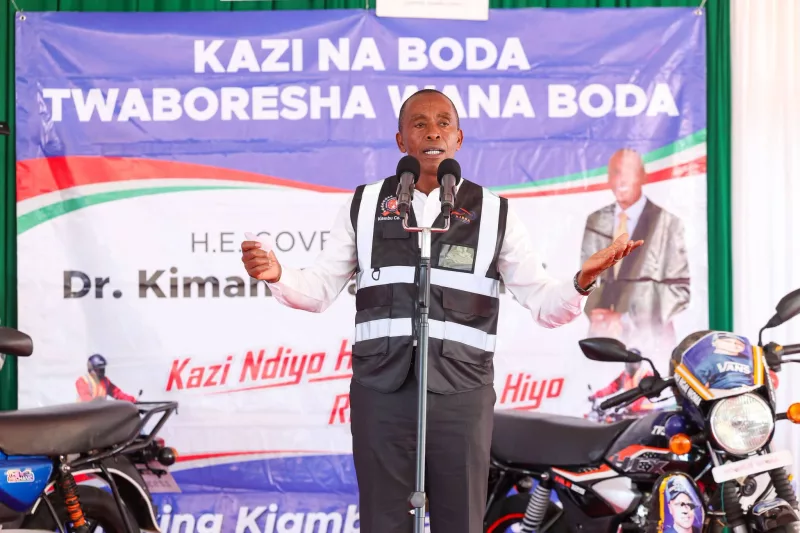
 Bodaboda accident.