In the regulations, the electoral commission has officially allowed spending limits running
into billions of shillings, in what critics say is giving the race to candidates with deep
pockets.
For instance, the race for governors in some areas could see
aspirants spending twice the amount they will actually earn in salaries over
the five years they will be in office.
Election experts now want a review of the proposal which
they note might disfranchise some aspirants.
Elections Observation Group (Elog) National Coordinator Mulle
Musau told the Star that the suggestions, if left unchanged, may unduly price out
majority of Kenyans keen on seeking elective positions.
“More importantly it can lead to disfranchisement of many
Kenyans who many want to participate in an election. We appreciate the fact that it is a proposal and being a
proposal it must be interrogated, it must be debated and we all agree,” Mulle told the Star.
While the commission says the proposed expenditure ceilings
are intended to regulate campaign financing rather than prescribe what
candidates must spend, critics argue the limits could entrench the dominance of
wealthy politicians.
The proposed Election Campaign Financing Regulations, seek
to operationalise the law by setting maximum campaign expenditure for
candidates and political parties based on the population and geographical size
of electoral areas.
Under the draft regulations, a presidential candidate would
be allowed to spend up to Sh4.4 billion during the election period.
The proposal also permits political parties to spend as much
as Sh17.7 billion on campaigns.
The proposed limits, contained in draft Election Campaign
Finance Regulations, will be subjected to public participation before being
forwarded to Parliament for approval.
Under the framework, the total spending limits across
elective positions include Sh5.63 billion for ward elections, Sh5.26 billion
for constituency elections and Sh2.39 billion for county elections.
Candidates contesting for county seats such as governors would have different spending
ceilings depending on the size and population of their counties.
Turkana, owing to its vast geographical area, would have the
highest limit at about Sh123 million, followed by Nairobi at Sh117 million.
The regulation caps spending at Sh114 million for Marsabit, Wajir (Sh103 million),
Garissa (Sh88.7 million), Nakuru (Sh72.2 million), Tana River (Sh68.4 million), Kajiado (Sh66 million) and Kilifi
(Sh61.9 million).
For the eight counties, aspirants who spend the upper limit
permitted may serve the entire one-term (60 months) without recouping back their
campaign money.
According to the current remuneration structure set by the Salaries
and Remuneration Commission (SRC), monthly gross salaries for a governor is Sh924,000,
Senator (Sh739,600) and Woman Representative (Sh739,600).
Musau said the proposal needs a relook as it may lead to
corruption once a candidate is elected.
“The figures incentivise corruption,” Musau noted.
For parliamentary contests, campaign expenditure would range
from approximately Sh11.15 million in smaller constituencies such as Tetu to
about Sh94 million in expansive constituencies like North Horr.
The spending is capped at Sh64.1 million for Wajir South constituency,
Turkana North (Sh54 million), Turkana West (Sh48.7 million), Turkana East (Sh45 million), Isiolo
North (Sh46.6 million), Bura (Sh39.7 million), IJara (Sh38.3 million) and Garsen (Sh38.2 million).
Although the commission based the ceilings on objective
factors such as population and the geographical size of electoral units, the
proposed figures have raised concerns that the cost of seeking elective office
remains far beyond the reach of ordinary Kenyans.
To determine the expenditure ceilings, IEBC classified electoral areas into
urban, sparsely populated and other categories.
It then applied a formula that assigns a 60 per cent weight to population
and 40 per cent to land area, in accordance with Section 18(4) of the Election
Campaign Finance Act.
The proposals acknowledge the higher costs associated with campaigning in
geographically expansive counties.
Election experts have long argued that campaign finance
regulation is critical in creating a level playing field by preventing the
influence of illicit money, reducing vote-buying and ensuring candidates
compete on the strength of their ideas rather than the size of their bank
accounts.
The IEBC also outlined the major areas where candidates and political
parties are expected to incur campaign costs.
For political parties, transportation accounts for the largest share of
projected campaign expenditure at Sh11.81 billion.
Advertising and media campaigns are estimated to consume Sh1.84 billion,
while the payment of election agents is projected at Sh1.52 billion.
Other significant expenditure items identified by the commission include
branding, campaign materials and logistical support.
The IEBC is mandated under the Election Campaign Financing
Act, 2013, to regulate campaign financing, monitor expenditure and promote
transparency in the sourcing and use of campaign funds.
The law was intended to shield elections from undue
influence by wealthy individuals, businesses and criminal networks seeking
political favours after elections.
However, attempts by the commission to operationalise the
law in the run up to the 2022 general election collapsed after Parliament rejected the
proposed Election Campaign Financing Regulations in 2021 on procedural grounds.
The regulations were subsequently withdrawn, leaving the
country without enforceable campaign expenditure limits.
INSTANT ANALYSIS
The IEBC is mandated under the Election Campaign Financing
Act, 2013, to regulate campaign financing, monitor expenditure and promote
transparency in the sourcing and use of campaign funds. The law was also
intended to shield elections from undue influence by wealthy individuals,
businesses and criminal networks seeking political favours after elections.

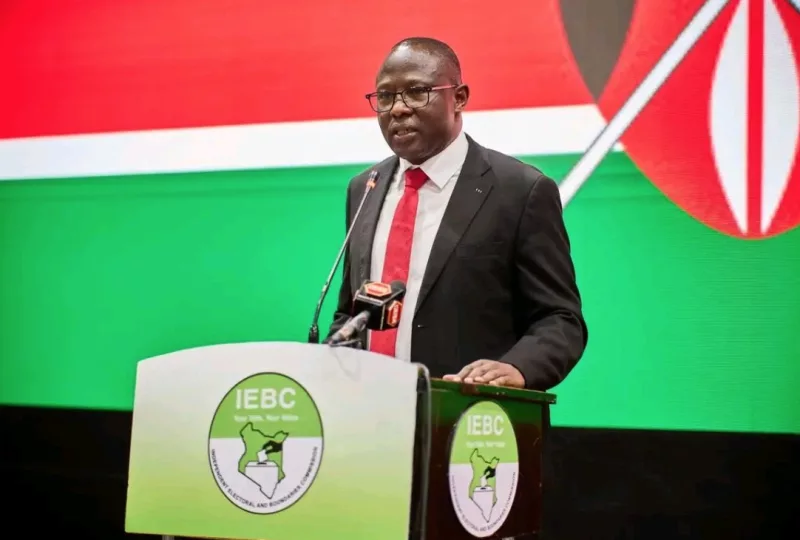
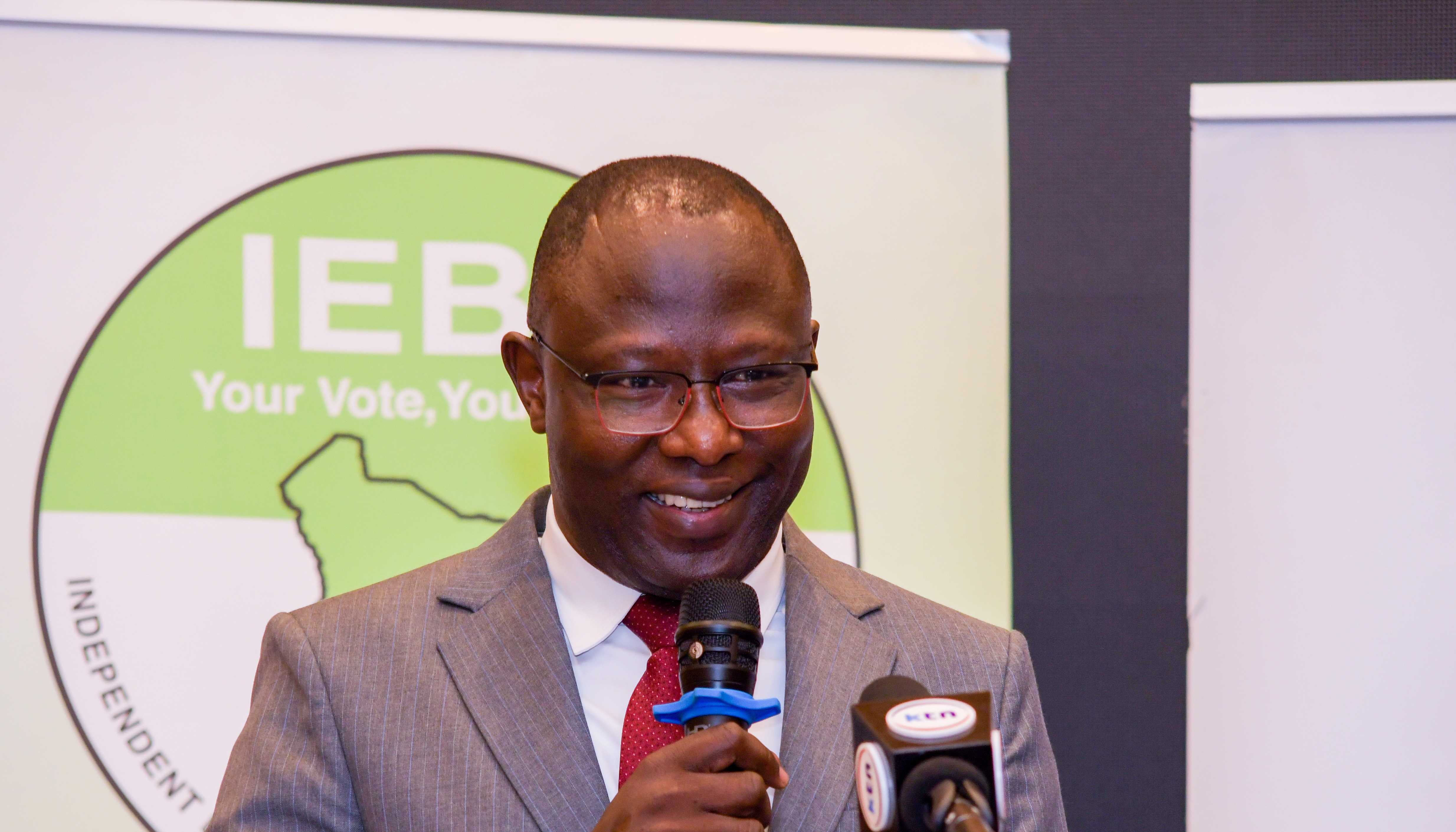
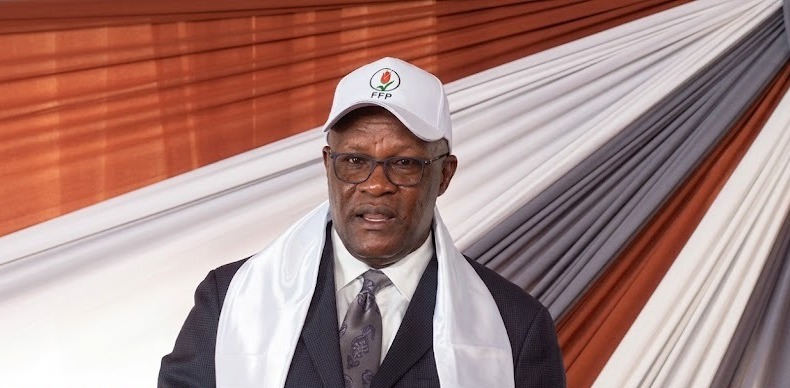
 IEBC chairman Erastus Edung Ethekon/FILE




![[PHOTOS] UHC staff protest contract renewal delays](https://cdn.radioafrica.digital/image/2026/07/24d38f7f-4dbd-42e5-8810-61f3c56490b3.webp)