

The shift
is forcing both government and opposition to rethink their coalition strategies
ahead of the 2027 General Election.
IEBC's
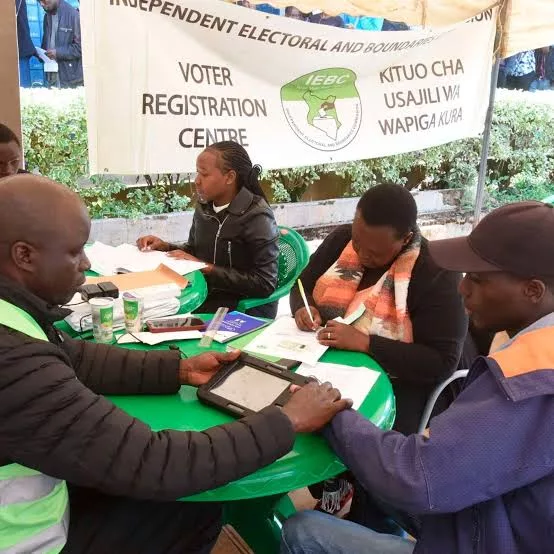
latest registration drive added 231,168 voters across Kakamega, Bungoma, Busia
and Vihiga, pushing the region's register to more than 2.45 million voters.
That leaves
Western among the country’s largest and most competitive voting blocs
politically.
It also
means no presidential candidate can comfortably win State House without getting
the region on board or cutting an opponent's advantage there.
Judging by
the political manoeuvres ahead of 2027, Western is once again emerging as the
battleground for the competing political formations.
Unlike some
regions that largely vote as a bloc, Western has historically split its support
among competing presidential candidates, making it a swing region.
Even so,
the numbers are impossible for any serious presidential contender to ignore.
Kakamega
alone registered 93,858 new voters during the Enhanced Continuous Voter
Registration drive, the fourth-highest figure nationally after Nairobi, Kiambu
and Nakuru.
Bungoma
followed with 73,599 new voters, while Busia added 39,311 and Vihiga 24,400.
Comparatively,
the region recorded a 10.4 per cent growth in registered voters compared to
2022, outpacing several traditional political strongholds.
Analysts
say many of the new registrants are young voters who will be casting their
ballots in a presidential election for the first time.
In the 2022
election, President William Ruto defeated Raila Odinga by about 230,000 votes.
Western
alone has now added more voters than the margin that separated the two
candidates.
Political
commentator Austin Omondi said the region could ultimately determine who wins
the presidency.
"The
reality is that Ruto will find it hard to beat a united opposition. The Western
Kenya vote will be the deciding factor in 2027. Murima (Mt Kenya) as we know it
is gone," he said.
For the
President, the region represents an opportunity to consolidate the political
investment he made before the last election when he brought Prime CS Musalia
Mudavadi and National Assembly Speaker Moses Wetang'ula into Kenya Kwanza.
Mudavadi
and Wetang'ula remain among Kenya Kwanza's most influential political figures
in Western and have consistently urged residents to support the government.
They have
rallied the region that remaining in government gives the Mulembe nation
greater influence over development and national decision-making.
"Their
coming together united the two major sub-tribes, which is Bukusu and Maragoli.
We remain united and will vote for President Ruto's re-election bid in
2027," Kakamega Deputy Governor Ayub Savula said when asked whether that
unity would hold.
Even so,
Kenya Kwanza's grip on the vote-rich region is far from assured.
The
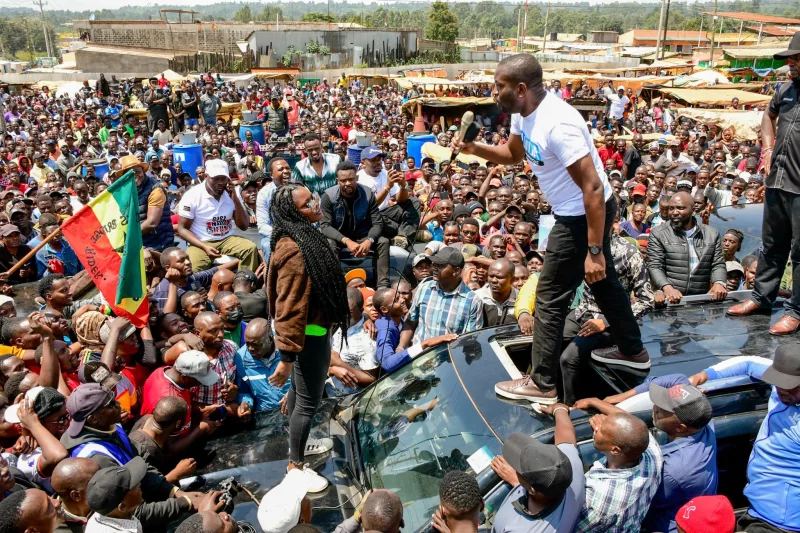
emergence of Nairobi Senator Edwin Sifuna has added another layer to Western
Kenya's political calculations.
Sifuna's
declaration that he is ready to run for President, coupled with former Deputy
President Rigathi Gachagua's public endorsement of his ambitions, has injected
fresh momentum into opposition coalition talks.
Coming from
Bungoma county, a political powerhouse, Sifuna's rise is shaking a political
order long dominated by Mudavadi, Wetang'ula and Eugene Wamalwa.
His
emergence also complicates coalition negotiations.
Political
formations have to seek a formula that balances regional interests and still
appeals to younger voters.
"If he
is picked as the United Opposition candidate or running mate, three quarters of
Western Kenya votes will shift with Sifuna," Embakasi North MP James
Gakuya said recently.
Political
commentator Tony Gachoka added, "If the entire Western comes behind
Sifuna, there will be no election in 2027."
Political
analyst Samwel Wekesa, however, dismissed that assessment.
"Without
the support of Francis Atwoli, Musalia Mudavadi, Moses Wetang'ula and Wycliffe
Oparanya, you cannot get votes in Western," he said.
Interests
of political parties, influential leaders and local voting blocs would,
therefore, be a significant factor for those eyeing the region’s support.
Some
pundits hold that the new dynamic is that many of the newly registered voters
are under 35, hence not tied to traditional political kingpins.
For Kenya
Kwanza, the task will be convincing voters that having Mudavadi and Wetang'ula
at the heart of government has translated into tangible gains.
The
government’s performance on roads, healthcare, agriculture, sugar reforms, jobs
and other development projects matter.
Wetang'ula,
however, insists the region's best path lies in backing Ruto for a second term.
"The
region's long-term dream of producing a President can only be realised by first
delivering strong support for President William Ruto's 2027 re-election
bid," he said.
The
National Assembly Speaker says Ruto has not only honoured development
commitments made to the region but also ensured equitable distribution of
national resources.
"We
can deliver more than four million votes to President Ruto in the next
election,” Wetang’ula said.
With more
than 2.45 million voters, an expanding youth population and several luminaries
pulling in different directions, Western Kenya is emerging as the electoral
battleground that could determine the next occupant of State House.