But a new study suggests that while this may make you feel
more comfortable, it does not necessarily mean you will receive better care.
Instead, hospitals with staff drawn from many different
ethnic communities provide better services.
The researchers interviewed 182 healthcare workers,
including doctors, nurses, laboratory staff and administrators, at one unnamed
public referral hospital. They also interviewed 210 outpatients about the care
they received.
They measured ethnic diversity and compared departments with
a wide mix of ethnic groups with those that had fewer.
The results showed that more diverse teams performed better.
"Public healthcare facilities experience improved
service delivery results when they adopt ethnic diversity as a positive
factor," the researchers reported last week in the Health Science Reports
journal.
Staff in the ethnically diverse departments reported being
more creative, more adaptable and more satisfied with their jobs. Statistical
analysis showed that ethnic diversity explained nearly one-fifth of the
differences in staff performance.
The study was led by Collins Ogolla and colleagues from the
Jaramogi Oginga Odinga University of Science and Technology (JOOUST). They said
diversity should be viewed as a strength rather than a problem.
Patients also gave higher ratings to departments with more
ethnically diverse staff. They said workers were friendlier, communicated
better and showed greater understanding of people from different backgrounds.
Patients in highly diverse departments gave an average
satisfaction score of 4.36 out of five, compared with 3.98 in departments with
lower diversity.
The authors do not identify the hospital by name, referring
to it only as "a Kenyan tertiary hospital". However, the workforce
profile strongly suggests the study was carried out at a major hospital in the former Nyanza province, as nearly half (48.9 per cent) of the healthcare workers surveyed were
from one tribe, followed by another tribe (27.5 per cent) and another (14.3 per cent).
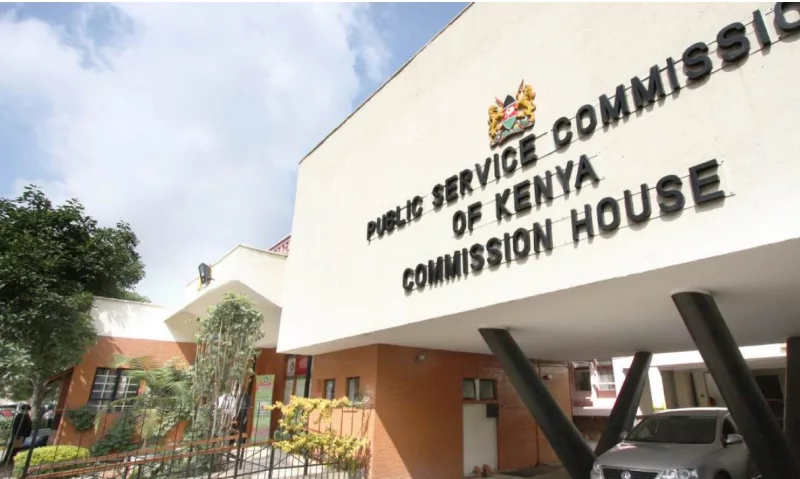
The study comes at a time when multiple reports from the
National Cohesion and Integration Commission (NCIC) have warned of growing
tribalism in public sector employment, especially in county governments.
Last year, the NCIC 2025 Ethnic and Diversity Audit showed
that five of Kenya's largest ethnic communities continue to dominate government
employment opportunities, accounting for more than 70 per cent of positions in
state corporations.
The report revealed that the Kikuyu, Kalenjin, Luo, Luhya
and Kamba communities hold the majority of senior government jobs, leaving
little room for representation among the other 38 ethnic groups.
NCIC commissioner Danvas Makori said public hospitals are
among the most affected.
“Moi Teaching and Refferal Hospital is absolutely
non-compliant by far...with 67 per cent,” Makori said.
NCIC chairperson Samuel Kobia said; “There has been a clear
demonstration that we don’t have equitable distribution of opportunities.”
According to the JOOUST study, having staff from different
communities brings fresh ideas and experiences that help solve problems.
"Ethnically diverse teams contribute to improved
adaptability, creativity and overall job effectiveness in healthcare
settings," the study says.
"The integration of diverse cultural perspectives and
experiential knowledge appears to enhance problem-solving capacity and
responsiveness to patient needs, which are critical in complex service
environments such as public hospitals."
The study is titled Influence of Ethnic Diversity on Service
Delivery Outcomes in Kenyan Public Healthcare. It was co-authored by Caroline
Sitienei and Josephine Opondo, both of JOOUST.
However, the researchers found that diversity also presents
challenges.
Departments with greater ethnic diversity reported higher
levels of creativity, but they also experienced more disagreements among staff.
Nearly one in four healthcare workers said ethnic bias or
favouritism sometimes affected teamwork or decision-making.
The researchers said this shows that diversity alone is not
enough.
They recommend that hospitals invest in inclusive
leadership, fair recruitment, effective communication and training in cultural
competence so that workers from different communities can work together
effectively.
Still, the authors cautioned against drawing broad
conclusions from the findings.
The research was conducted in only one public hospital,
meaning the results may not represent all hospitals in Kenya.
Because it was a cross-sectional study, it also cannot prove
that ethnic diversity directly causes better healthcare. It only shows an
association between the two.
The study also relied partly on staff reporting their own
performance, which may not always be completely accurate.
Temporary workers, interns and critically ill patients were
excluded, meaning some experiences may have been missed.
The researchers recommend larger studies involving many
hospitals across Kenya and using additional measures such as patient waiting
times, treatment outcomes and hospital records before drawing conclusions for
the country.
INSTANT ANALYSIS
A study by researchers from Jaramogi Oginga Odinga
University of Science and Technology found that ethnically diverse teams in a
Kenyan public referral hospital delivered better healthcare services than less
diverse teams. Patients rated diverse departments more highly for
communication, friendliness and understanding, while staff reported greater
creativity, adaptability and job satisfaction. However, the study also found
higher levels of workplace disagreements. Researchers recommend inclusive
leadership, fair recruitment and cultural competence training, while cautioning
that the findings are based on one hospital and cannot be generalised
nationwide.


 Currently, for every 5,000 Kenyans, there is only one doctor to see them.