Kenya may be forced to import maize to avert a food crisis after poor rainfall caused widespread crop failure and raised concerns over declining production in some of the country’s main maize-growing regions.
The government says the country recorded crop failure of up to 75 per cent following reduced rainfall during the planting season, with production projected to fall below 50 per cent even in traditionally productive areas of the Rift Valley and western Kenya.
Public Service and Special Programmes CS Geoffrey Ruku said the situation could leave the country facing a serious maize shortage, prompting the government to prepare emergency measures, including the possible purchase of maize.
Speaking on Citizen TV on Tuesday night, Ruku said the government could spend close to Sh10 billion on relief food supplies to cushion households in the worst-affected counties.
"When we say below 50 per cent, it is a very serious crisis because this nation depends on the productivity of our farms," Ruku said.
Maize shortage spreads beyond ASAL counties
Ruku said the situation had become particularly concerning because counties that have traditionally produced enough food are now also at risk of shortages.
He said the 23 arid and semi-arid land (ASAL) counties had traditionally depended on government relief supplies, but the current situation was spreading to counties such as Baringo, Trans Nzoia and Uasin Gishu, which have historically recorded better maize yields.
Other counties identified as being at risk include Embu, Meru, Nyeri, Laikipia, Makueni, Kitui, Tana River, Kilifi, Lamu, Mombasa, Kwale, Garissa, Wajir and Mandera.
In the Lake Basin, Ruku listed Kisumu, Busia, Siaya, Homa Bay and Migori, while Turkana, Baringo, West Pokot, Narok and Nairobi were also cited among areas facing food security concerns.
The government’s intervention is therefore expected to extend beyond the counties that have traditionally relied on relief food.
Ruku said the government was committed to ensuring that no person or livestock dies from starvation when the effects of the crop failure became more severe.
He said contingency measures had been put in place to purchase 414 tonnes of maize for July, August and September.
"We need huge amounts of money, we may end up spending close to Sh10 billion at the end of the entire process to cushion households from food crisis," Ruku said.
Why maize imports may become necessary
The prospect of importing maize comes as the government seeks to bridge a potential gap between available stocks and demand in a country where maize is a staple food.
Ruku acknowledged that raising the money required for emergency food purchases would be difficult because the intervention had not been included in the current financial year's budget.
However, he said the government could rely on contingency provisions under Article 223 of the constitution to finance the emergency response.
"But we have contingencies provided for by Article 223 of our constitution but all said and done, all monies which are going to cushion the country from having higher prices of food commodities is a negative thing to our economy," Ruku said.
The intervention could therefore come at a significant economic cost, with the government having to divert funds to food relief instead of planned development programmes.
The CS said the money would otherwise have been directed towards development projects, including construction of schools and other infrastructure.
"So, we are looking at a situation where this nation will not be experiencing food insecurity because of lack of rainfall," he said.
El Niño presents fresh food security risk
The food security situation could become more complicated in the coming months as Kenya prepares for potentially heavy El Niño rains.
The US Climate Prediction Centre has put the probability of a very strong El Niño during October-December 2026 at 81 per cent, with the event expected to rank among the strongest recorded since 1950.
The Kenya Meteorological Department have warned counties to activate preparedness measures ahead of the anticipated rains, which could bring flooding, landslides, crop damage and disruptions to transport.
For farmers, the government has urged early harvesting, proper drying and safe storage of crops before the heavy rains arrive.
Ruku said the government had established a high-level emergency team chaired by Deputy President Kithure Kindiki to coordinate preparations and interventions.
The team is expected to oversee measures aimed at preventing deaths and limiting the impact of flooding and other weather-related disasters.
"We don't want to lose even one single life. One life lost is so precious to a nation," Ruku said.
He said counties would also need to work closely with the national government to unclog drainage systems in major urban areas and reduce the risk of flooding.
The government is also mapping areas prone to landslides to facilitate early warning and evacuation measures where necessary.
Going into the second half of the year, the challenge facing the government is now twofold: cushioning households from the immediate effects of poor rainfall and crop failure while preparing for potentially destructive rains that could further disrupt food production, transport and markets.
The combination could leave the government with little choice but to spend heavily on relief food and, if domestic maize supplies prove insufficient, turn to imports to keep the country food secure.

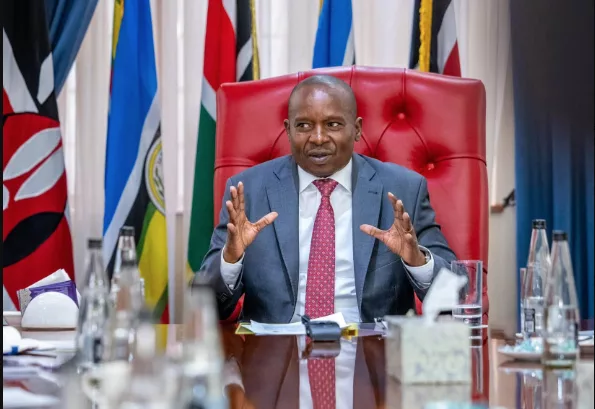
 Public Service Cabinet Secretary Geoffrey Ruku /HANDOUT