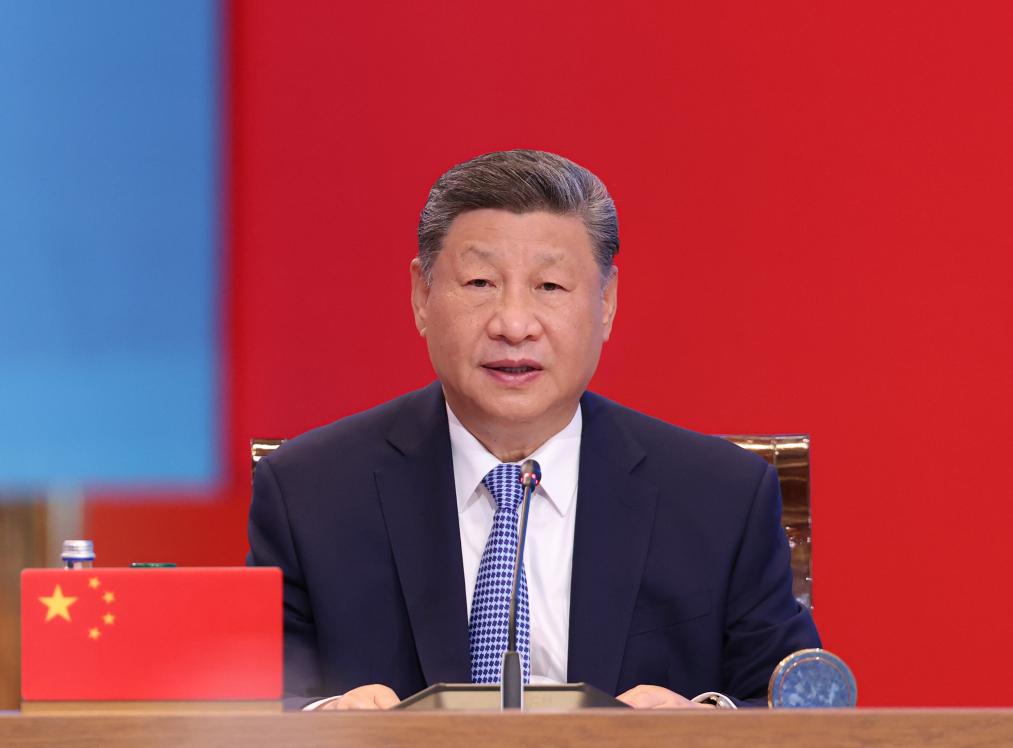


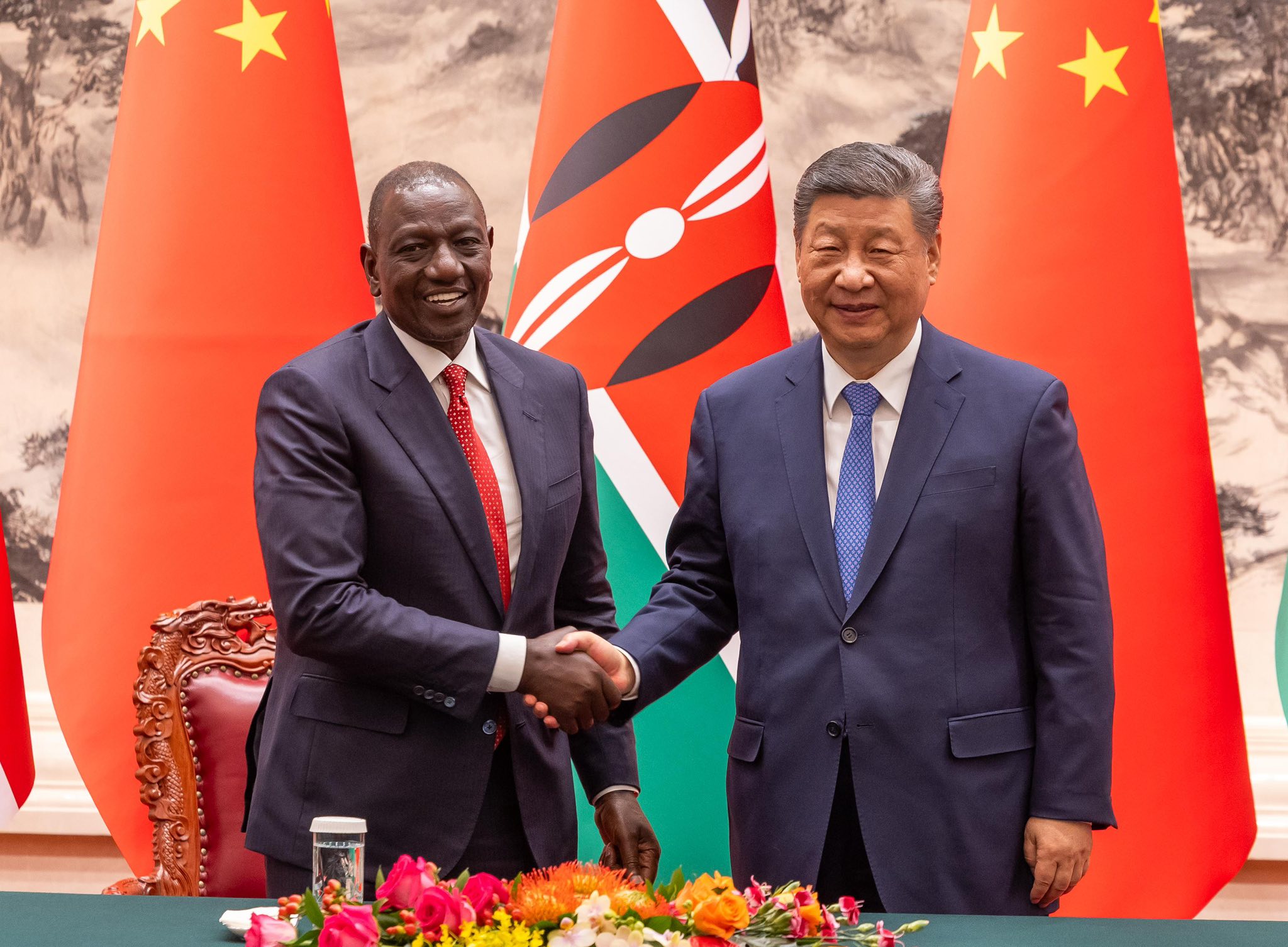
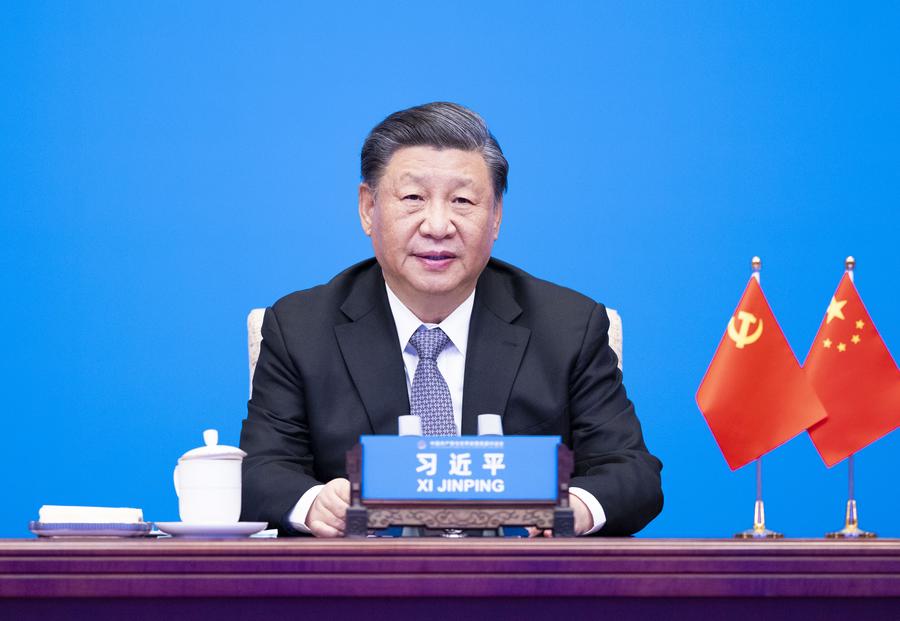
 Xi Jinping, general secretary of the Communist Party of China (CPC) Central Committee and Chinese president (Xinhua/Huang Jingwen)
The recent decision by China to zero-rate exports from 53 African countries has been hailed as a major step in boosting economies on the continent, including Kenya’s, and will greatly enhance ties with the Asian giant.
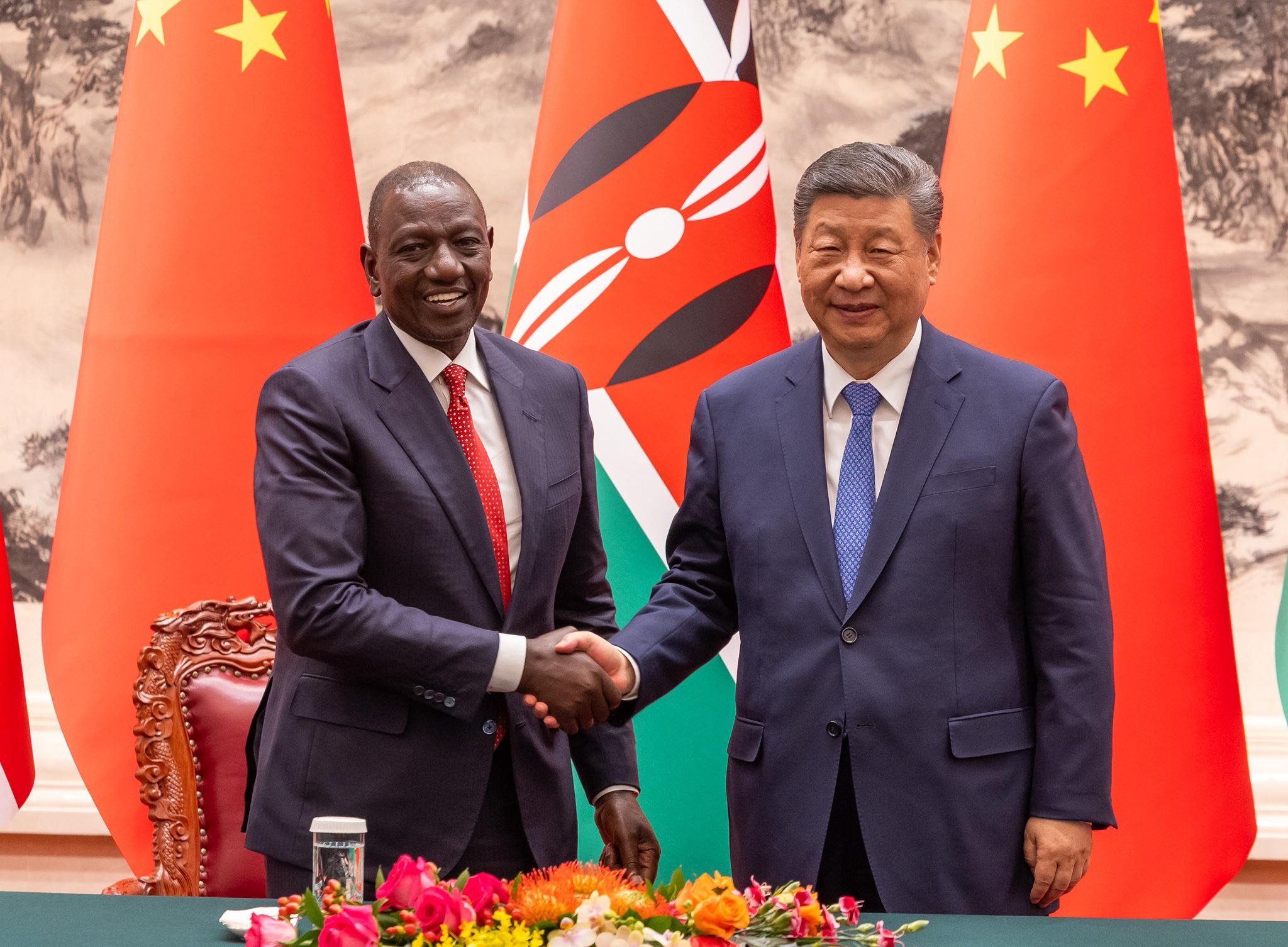
As Kenya’s Trade and Foreign Affairs dockets have recently noted, the move, which followed President Xi Jinping’s announcement in February on the occasion of the 39th African Union Summit, will benefit exporters from countries having diplomatic relations with China, starting from May 1. It will also serve to unite efforts across sectors in China and Kenya, and to better benefit the people of both countries.
Kenya and China officially signed an Early Harvest Arrangement of the Agreement on Economic Partnership for Shared Development in March.
During a symposium held last month, all parties agreed that the zero-tariff policy is a significant milestone in upgrading China-Kenya economic and trade cooperation.
As Kenya’s Foreign Affairs Principal Secretary, Korir Sing’oei noted, from a trade perspective, by reducing institutional costs, the zero-tariff policy has significantly enhanced the competitiveness of Kenyan products in the Chinese market, providing crucial opportunities for Kenya to expand its exports to China and optimise its trade structure.
At present, China has one of the largest and most dynamic consumer markets in the world. Its middle-income group continues to expand, and consumption upgrading is gaining momentum, with growing demand for high-quality and diversified products. As a key economy in Africa, Kenya is endowed with abundant agricultural resources and distinctive product advantages.
According to official data, approximately 98.2 per cent of Kenyan exports stand to benefit from the Kenya–China Early Harvest Agreement.
It is not in doubt that this marks a decisive new chapter for Kenya’s export growth and presents an immediate opportunity for Kenyan businesses to expand exports, increase earnings, and penetrate one of the world’s largest consumer markets.
According to the Ministry of Foreign Affairs, Kenya’s trade with China has grown significantly over the years, but remains in China’s favour.
It notes that in 2025, imports from China stood at $5.19 billion, while exports to China were approximately $130.68 million, resulting in a trade deficit exceeding $5.06 billion.
With the agreement in place, officials aver that Kenya has a clear pathway to narrow this imbalance, boost foreign exchange inflows, and support job creation across key sectors.
The agreement covers a wide range of products, including agriculture and horticulture, with priority being given to tea, coffee, avocados, macadamia nuts and fresh horticultural produce.
It also covers minerals and industrial inputs (titanium ores and concentrates; zirconium and related mineral ores; and manganese ores) as well as emerging and value-added products such as leather and hides; natural resins and gums; and processed agricultural products.
From a development perspective, the move was a practical action by China to support Africa's industrialisation, agricultural modernisation and regional integration, which will contribute to industrial development and employment growth, and enhance Kenya's capacity for self-development.
From a strategic perspective, analysts note that China is the first developing country and major economy to adopt such a policy, demonstrating its responsibility as a major power and many now expect her to lead Global South cooperation as well as international cooperation.
However, a lot still needs to be done, especially with regard to the improvement of supporting capabilities.
Some of this should involve addressing bottlenecks in port, inspection and quarantine, and customs clearance efficiency as well as on-tariff factors that restrict trade facilitation.
For instance, it has been pointed out that many Kenyan SMEs and farmers are unfamiliar with the operational procedure, and some enterprises still need to strengthen the stability of product quality, supply chain organisation capabilities, and brand building.
As a result, how to strengthen capacity building, improve infrastructure, and enhance customs clearance facilitation, has become a key focus of attention, as Sing’oei rightly put it during last month’s symposium.
As China and Africa mark the 70th anniversary of the establishment of diplomatic relations between them, many hope that China will continue to work with the continent to further unlock cooperation potential, deepen mutually beneficial collaboration, support African countries' development, and contribute to building an all-weather China-Africa community with a shared future for the new era.
However, as Chinese Ambassador to Kenya Guo Haiyan noted, to enhance the full potential of the opportunity offers by China’s zero-tariff policy, African businesses must also act decisively by scaling production for export markets, investing in value addition and processing, strengthening compliance with international standards, and establishing direct linkages with Chinese buyers.
According to relevant regulations, Kenyan food enterprises exporting to China must complete GACC registration with Chinese customs before they can export and enjoy related preferential policies.
GACC is China's national border agency, overseeing all imports and exports.
It is hoped that the Kenyan side will maintain close coordination with Chinese customs and enhance policy outreach for enterprises in Kenya, so as to help more eligible companies complete registration as soon as possible.
The Chinese market has high requirements for food safety, product quality, and traceability. Kenyan enterprises and industry associations are encouraged to strengthen their standards systems, follow internationally accepted rules and Chinese standards in production, continuously improve product quality and added value, including branding and enhance long-term competitiveness in the Chinese market.
Haiyan has, however, promised that the Embassy is also willing to promote exchanges and cooperation between the standards departments of the two countries.
China has extended its hand not with charity, but with opportunity.
The zero-tariff policy is more than a trade concession; it is a vote of confidence in Africa's ability to produce, add value, and compete.
For Kenya, the path is now clear: scale up production, meet international standards, register with Chinese customs, and move beyond raw exports into processing and branding.
The $5 billion trade deficit will not close by itself.
But the tools are finally within reach. As the Chinese proverb teaches, "Give a man a fish, and you feed him for a day; teach a man to fish, and you feed him for a lifetime." China is teaching Africa to fish – zero tariffs offer Kenya a once-in-a-generation chance to build, not just trade.
The question is no longer whether the door is open. It is whether Kenya will walk through it.
Ngugi Njoroge is a China Africa Affairs Analyst