


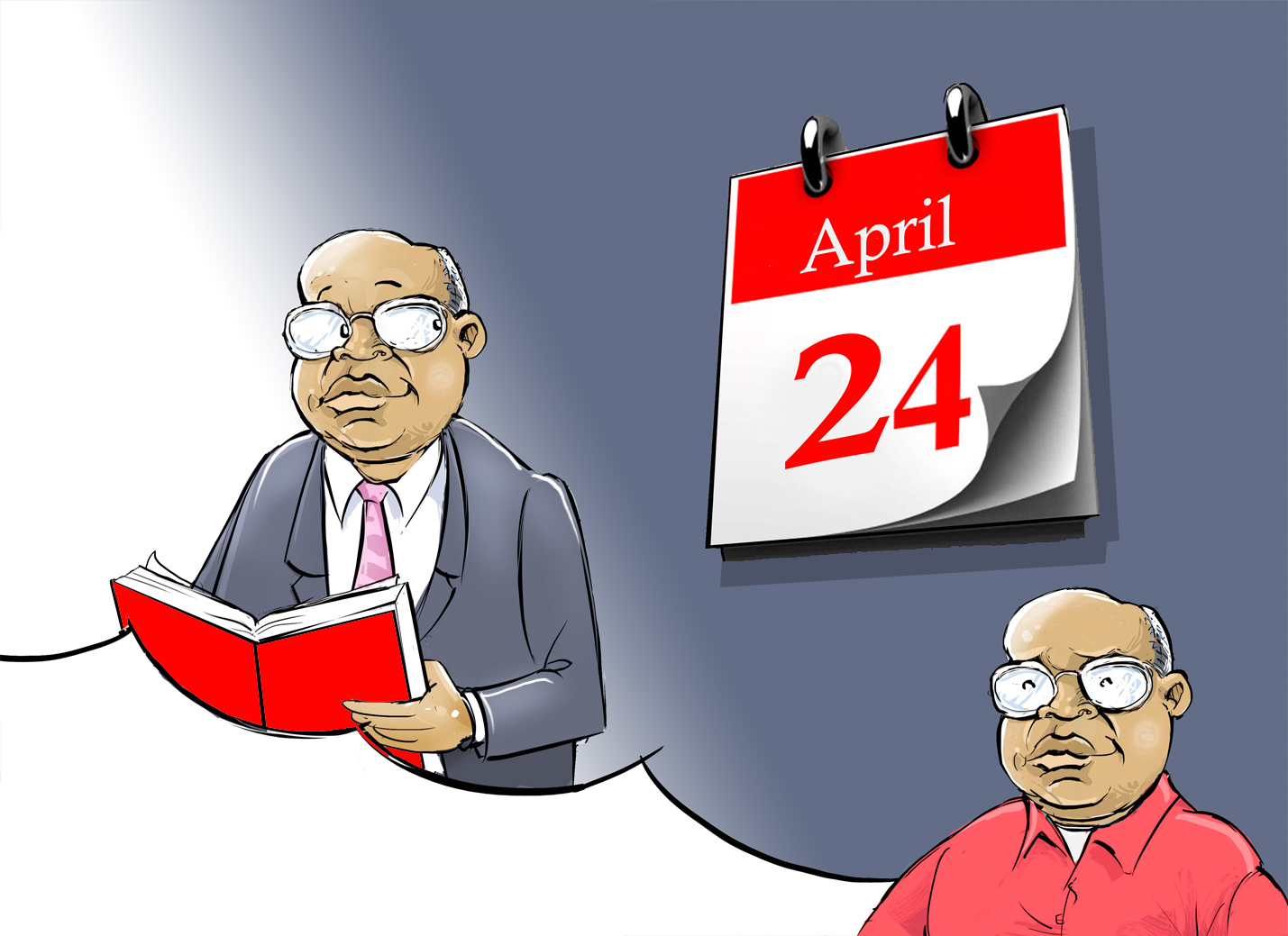
African history on April 24 is a day that manages to be both sobering and strangely eventful.
Let’s start in 1954, in colonial Kenya, where, during the Kenya Land and Freedom Army’s uprising (Mau Mau war), colonial forces launched Operation Anvil in Nairobi. This was a sweeping security crackdown that involved rounding up tens of thousands of Africans.
Between 25,000 and 30,000 people were arrested and screened for suspected ties to the rebellion. The idea was simple: If you detain enough people, surely the resistance will run out of people. History, of course, had other plans.
Fast-forward a year to April 1955, and the mood shifts slightly, from military crackdowns to diplomatic optimism.
In Bandung, Indonesia, 29 Asian and African nations gathered for what became known as the Bandung Conference. Running from April 18 to 24, the meeting was about big ideas: self-determination, non-interference and the shared desire to shake off colonial rule. It was, in many ways, the original ‘we need to talk’ moment between the Global South and the rest of the world.
Not long after, in 1957, the Suez Canal, one of the world’s
most important shipping routes, was finally reopened after the Suez Crisis.
Clearing it was no small feat, and its reopening restored a vital artery for
global trade. The canal’s importance then has echoes now in the situation in
the Persian Gulf.
Around this same date in 1961, Kenya’s latest BFF, France, decided that what the Sahara Desert really needed was nuclear testing. Despite widespread protests from African nations, the French carried out their fourth atmospheric test.
In 1964, a more constructive development emerged. Leaders Julius Nyerere of Tanganyika and Abeid Karume of Zanzibar announced the political union that would form Tanzania. While Union Day is officially celebrated on April 26, the agreement itself came together on April 24.
It was a rare moment in history when two nations looked at each other and said, “You know what? Let’s make this official,” and it actually worked.
April 24, 1970, saw The Gambia transition into a republic, after independence in 1965, with Sir Dawda Jawara becoming its first President. It marked another step in Africa’s broader post-Independence journey.
Fast-forward to April 24, 1993, and a deeply significant and sombre moment. Oliver Tambo, a towering figure in the anti-apartheid struggle and longtime President of the African National Congress, died in Johannesburg at the age of 75. His death came at a pivotal time, two weeks after the assassination of Chris Hani and a year ahead of South Africa’s first democratic elections. If history has timing, this was particularly dramatic.
April 25 brings its own mix of headlines. In 2003, Winnie Madikizela-Mandela was sentenced to prison on charges of fraud and theft, though her sentence was later reduced on appeal. Her complex legacy continues to spark debate, blending fierce activism with controversy.
Coincidentally, earlier this month, South African opposition party leader Julius Malema was sentenced to prison time for firing a rifle in the air at a party rally.
Malema and Madikizela-Mandela shared a close ‘mother-son’ relationship that spanned nearly two decades, built on mutual political admiration, mentorship and loyalty. She mentored Malema from his youth, defended him during his 2011 hate speech trial and supported his formation of the EFF after his expulsion from the African National Congress (ANC) in 2012.
On April 25, 2005, Ethiopia celebrated the return of a looted obelisk from Italy, taken during the 1937 occupation. After nearly 70 years abroad, the ancient monument finally made its way home. In April this year, following a 137-year absence, an iconic soapstone Zimbabwe Bird was repatriated from South Africa, closing a long chapter of colonial-era theft.
Back in the present, April 24 also carries lighter observances. It’s Administrative Professionals Day, originally launched as Secretary's Day in 1952 to appreciate office staff and address workforce shortages.
Finally, there’s Denim Day, inspired by a 1998 Italian court
ruling that overturned a rape conviction based on the victim’s clothing. The
backlash was swift, with women in Parliament wearing jeans in protest. It’s a
reminder that sometimes, progress comes from people collectively saying,
“Never, ever.”
All in all, April 24 and 25 are days when history refuses to be boring.