
G-SPOT: Bedsitter dream of building an empire
Idea of buying a town is powered by mobile loans and delusion
1mon agoMwangi GithahuLifestyle
Even during the 2004 fuel crisis, employers dismissed calls for a pay rise


Audio By Vocalize
I have lived long enough that talking points in the news
seem to be repeating themselves. For instance, recently, the issue of fuel
price increases has been front and centre.
As I read the stories, I couldn't help but feel, in the words of the song, that it was déjà vu all over again. This spurred me to visit my news story archives, such as they are, and sure enough, a news story I wrote in the Sunday Nation in August 2004 confirmed it.
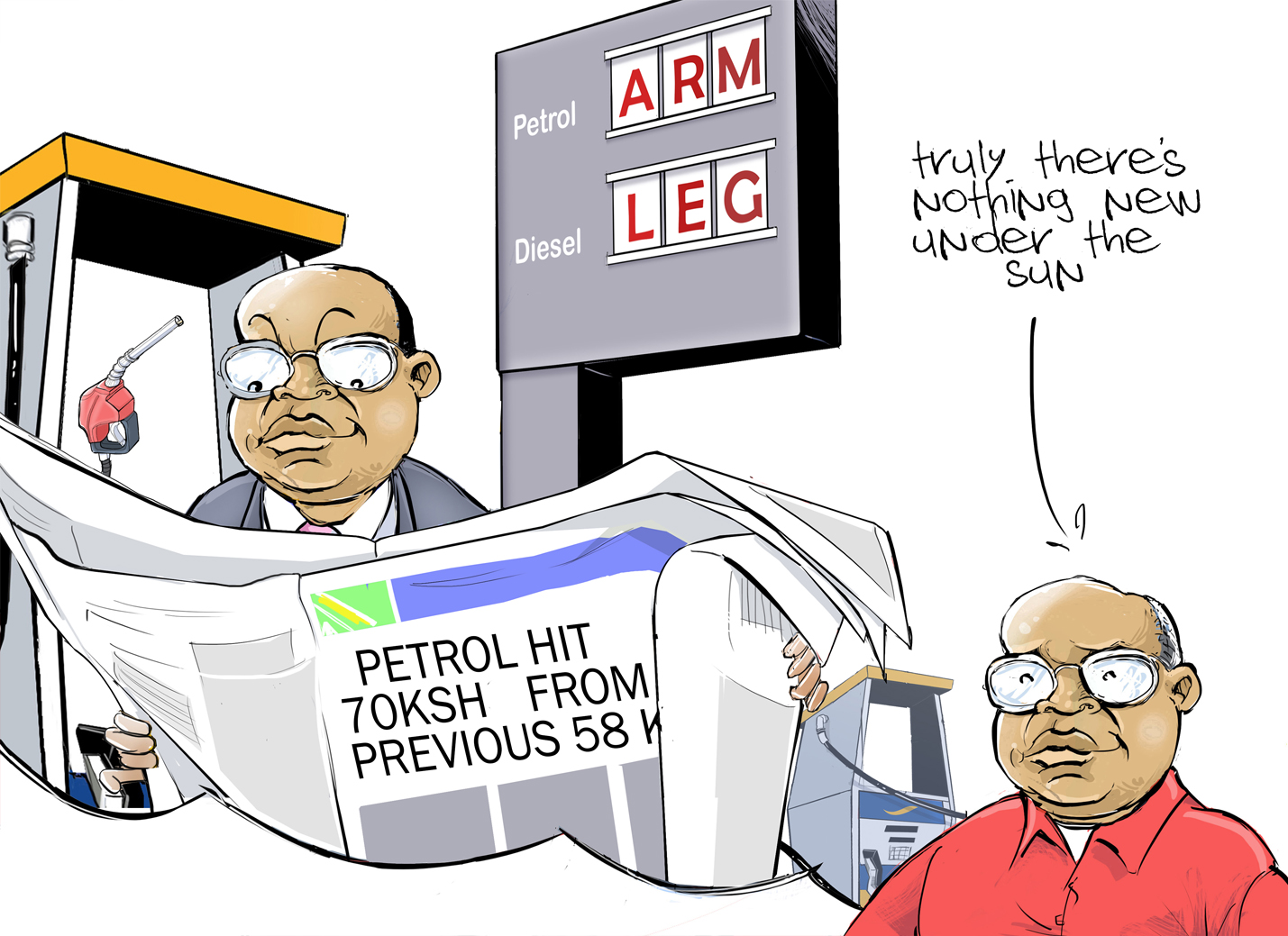
At that time, the cost of premium petrol hit Sh70, up from Sh58 the previous January. Kenyans were feeling the pressure in their pockets, and in my reporting, I spoke to various people for clarity on what was happening.
The Energy ministry’s petrol pricing expert told me that, in a liberalised economy, there was very little the government could do to get the industry to lower fuel prices. He said that petrol prices in Kenya and elsewhere were influenced by both external factors, such as the rising price of Brent crude oil. This had risen sharply from $41 to $45. He also pointed out the exchange rate of the shilling against the dollar, which had risen that week from Sh78 to Sh81.
As expected, the oil industry argued that, despite having bought current stocks at a lower price, they needed to raise pump prices to finance the purchase of new stocks at the higher price.
A government official said they sympathised with the consumer who had to pay more for petrol at the pump, and that the only thing the government could do was to refer the matter to the Monopolies and Prices Commission if they suspected a monopoly or cartel situation. The MPC could then get the Finance minister to step in and regulate the prices.
The MPC was the historical precursor to the Competition Authority of Kenya, allegedly the statutory body currently responsible for regulating market competition, preventing restrictive trade practices and protecting consumers in Kenya.
The August 2004 rise in petrol prices was a worldwide phenomenon, with crude prices hovering near record highs after unrest in Iraq halted production by early in the week of August 22. The price of US light crude rose to $44.99 a barrel, a 21-year record high.
Besides the situation in Iraq, there were also concerns in Russia about the large oil company Yukos. In the early 2000s, Yukos produced about one-fifth of Russia’s oil and around 2 per cent of the world’s oil supply. People feared the company might have to stop production due to a dispute with the Russian government over a multibillion-dollar tax bill.
Meanwhile, a just-concluded presidential referendum in Venezuela had been seen as a potential source of disruption for global supplies. Venezuela at that time was the world's fifth-largest producer, and political instability and anti-government strikes prompted a jump in oil prices there.
I also spoke to the Kenya Association of Manufacturers, whose then chief executive said the solution would be to advocate for the efficient use of fuel to reduce demand. Remember what Uganda’s President Museveni said about not driving anywhere?
The CEO also said that alternative sources of renewable energy, such as wind and solar, should be explored and encouraged.
Unsurprisingly, the Federation of Kenya Employers said that, despite the fact that increased fuel prices would definitely raise the cost of living, production, food and travel, they saw no reason to adjust wages. No surprises there then?
The Consumer Information Network claimed that the sharp increase in pump prices in Kenya was due to a lack of real competition among local oil companies. CIN also claimed that they had evidence that, in Uganda, fuel prices were comparatively lower, yet it still arrived via Kenya. It still is.
Meanwhile, a senior executive at the National Oil Corporation of Kenya substantiated the obvious: for every rise in petrol prices at the pump, prices of other commodities, goods, and services would rise automatically. He had predicted a rise in inflation would be driven by higher transport costs.
Truly, there is nothing new under the sun.
Idea of buying a town is powered by mobile loans and delusion

WhatsApp groups are abuzz with warnings without evidence