Every election cycle has been
dominated by promises to resolve historical land injustices, settle squatters,
address absentee landlord ownership and issue title deeds to thousands of
families living in uncertainty.
The issue has shaped voting patterns,
influenced political alliances and often determined the fortunes of candidates
seeking elective office in the region.
Yet as Kenya moves closer to the 2027
general election, there are growing signs that the Coast land question may no
longer hold the same political influence it once did.
The reason lies in the approach
adopted by President William Ruto's administration.
Unlike many governments before it,
the current administration has sought to move beyond promises and place land
reform at the centre of its development agenda for the Coast region.
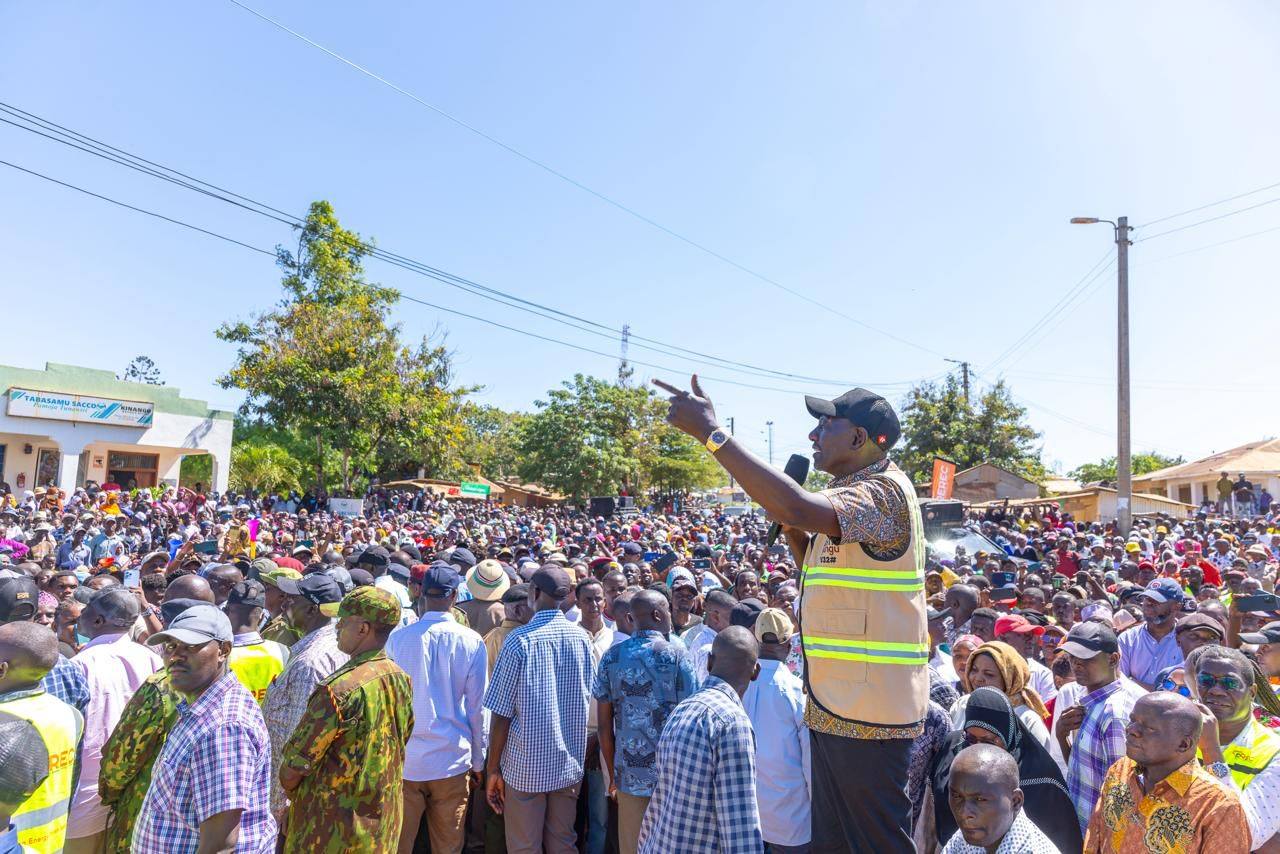
When the President presided over the issuance
of more than 33,000 title deeds at Mama Ngina Waterfront in Mombasa recently, the
significance of the event extended far beyond the documents being handed over
It represented a broader strategy
aimed at addressing the structural causes of one of the region's oldest and
most persistent challenges.
During the 2022 election campaign, Ruto
repeatedly promised that a Kenya Kwanza administration would actively purchase
land from absentee landlords and settle landless families across the Coast.
The pledge was ambitious because the
issue has remained unresolved through successive governments despite decades of
political attention.
What makes the current effort
noteworthy is that the commitment did not end after the election.
The government allocated resources
through the Settlement Fund Trustees (SFT) to facilitate the acquisition of
land from absentee landlords for the settlement of squatters.
At the same time, it initiated
negotiations with landowners and began identifying strategic parcels suitable
for settlement programmes.The results are now becoming visible.
According to the President, the
government has already acquired or secured land in several parts of Mombasa,
Kilifi, Kwale, Lamu and other Coast counties, benefiting tens of thousands of
families.
Areas such as Kwa Punda in Changamwe,
Junda in Kisauni, Gazi and Gombato in Kwale, Shambani in Msabaha, Ganda and
Takaungu in Kilifi, have already been included in settlement programmes.
Additional acquisitions and
negotiations are ongoing in locations including Mashamasha (Lamu), Migingo
(Malindi), Kagaa and Kiwandani (Kilifi), Machungwani (Taita Taveta), Parbat and
Waa (Kwale), Kitangale and Kibusu in Tana River.
He also said the government has
finalised negotiations to acquire additional land in Mashamasha (Lamu),
benefiting 2,000 families; Migingo in Malindi (4,000); and three separate locations in
Likoni (Mombasa) benefiting 356 families.
Closer home in Mombasa, Likoni,
Utange, Bombo, Zumzum, Thathini, Allidina and Kwa Bulo (Mombasa), among others.
Collectively, these interventions
represent one of the most comprehensive attempts in decades to address the
Coast's land challenge through direct government action.
Perhaps the most important aspect of
the strategy is the shift from prolonged legal battles to negotiated
settlements.
For years, land disputes involving
absentee landlords have dragged through courts, often taking decades without
producing meaningful solutions for affected communities.
The current Kenya Kwanza administration has instead chosen
dialogue, negotiation and compensation as the preferred route to resolving
these disputes.
This approach reflects a practical
understanding of the complexity of the Coast land question.
While litigation may establish legal
rights, it rarely delivers timely solutions to families that have occupied land
for generations without ownership documents.
Equally significant is the revival of
the SFT model. It was originally established to purchase land, subdivide it and settle
landless Kenyans.
Although it played an important role
in post-independence settlement programmes, its influence gradually diminished
over the years.
For a long time, Coast leaders argued
that revitalising the fund offered one of the most practical solutions to
absentee landlord disputes.
President Ruto's administration
appears to have embraced that thinking by directing resources towards land
acquisition and settlement schemes.
The second pillar of the strategy is
large-scale title deed issuance.
Historically, the absence of title
deeds has been at the heart of political grievances at the Coast.
Families without ownership documents
have struggled to access credit, secure investments, transfer property or
protect themselves from eviction.
Successive politicians built
campaigns around promises to address this problem because it touched the daily
lives of ordinary residents.
The government says it has issued about 381,000 title deeds at the Coast over
the past three years as part of a national programme that has delivered more
than 1.5 million title deeds countrywide.
More importantly, another 200,000
title deeds are reportedly being processed and could be issued in the coming
months.
If achieved, this would significantly
reduce the number of residents living without formal proof of ownership.
For many families, receiving a title
deed carries greater political significance than listening to another campaign
speech.
It provides security, dignity and an
opportunity to build wealth through legally recognised ownership.
The political implications are
substantial.
For decades, opposition politicians
and local leaders successfully mobilised voters around the argument that
governments had failed to address historical land injustices.
The message resonated because many
communities remained trapped in the same challenges year after year.
However, if title deed issuance
continues, absentee landlord disputes are reduced and settlement programmes
expand, the effectiveness of land as a political mobilisation tool may decline.
Voters who secure ownership documents
are likely to shift their focus to a different set of questions.
They may begin asking which leaders
can create jobs, attract investment, support agriculture, grow tourism and
improve economic opportunities.
In other words, the political
conversation could gradually move from ownership to productivity.
That does not mean the Coast land
problem has been completely resolved.
Many disputes remain complex and
involve overlapping claims, inheritance conflicts and unresolved historical
grievances.
Thousands of families are still
awaiting titles, while several negotiations remain incomplete.
Ultimately, the success of the
government's strategy will depend on implementation rather than announcements.
If land acquisition slows, settlement
schemes stall or promised title deeds fail to reach beneficiaries, the issue
could quickly regain its traditional political significance.
The writer is a Mombasa businessman and politician