When I first discovered ChatGPT, I was genuinely amazed by
what it could do with minimal instruction.
This was around the beginning of
2025, and I remember being unable to get over the fact that even when fed
gibberish, it could somehow produce a response that aligned with the direction
I wanted. It felt almost unnatural. Then it became smarter and I became
worried.
In just a few months, many of the tasks people spent years
mastering suddenly appeared replicable by Artificial Intelligence (AI) tools.
Writing, analysis, presentations, research, coding, summarising information,
even creative work; all of it could now be generated in seconds.
Even more
unsettling was how quickly these systems kept improving, with every update seemingly
closing the gap between machine capability and human expertise.
To be honest, I initially feared what this meant for the
human workforce. I wondered what would become of careers that billions of
people had invested years studying, refining, building and practicing. Would
expertise still matter? Would judgment still matter? Would people still matter?
But over time, my perspective has evolved. While there was
certainly cause for concern, I no longer believe AI’s impact on humanity will
be as absolute or devastating as many initially imagined.
Like most
transformative technologies before it, AI will undoubtedly disrupt industries
and reshape the way we work. But history also suggests that disruption rarely
signals the end of human relevance. More often, it forces adaptation.
The dotcom era in the early 2000s triggered a similar wave
of uncertainty. The Internet threatened to move almost every service online,
and for a moment, it felt as though entire industries would disappear
overnight.
In some cases, they did. Postal services were heavily disrupted and
film rental businesses vanished. Traditional media models were also
fundamentally altered by digital platforms and streaming services.
At the time, millions rushed online searching for a fallback
plan in case everything collapsed, and websites became the new gold rush. Then
the bubble burst, bringing the excitement to an end as the world recalibrated.
Businesses and consumers had to find ways to coexist with the technology rather
than being replaced by it.
I observe a similar pattern with AI today. Right now, we are
in the height of the excitement cycle, and everyone suddenly believes they are
a writer, strategist, analyst, risk advisor, philosopher, designer or animator
simply because they have access to AI tools.
And while these technologies are
undeniably impressive, there are already signs that the novelty is beginning to
wear off. AI-generated content has become so widespread that audiences are
increasingly able to recognise it instantly. In many cases, it now feels
repetitive and hollow.
Ironically, the more AI-generated content floods the market,
the more people seem to value the human perspective and human authenticity.
That’s why, if there is one position I hold firmly, it is that while AI will
simplify many tasks and significantly improve efficiency, it will not replace
human authority in most fields.
In fact, I suspect the AI era may ultimately increase the
value of distinctly human capabilities, including critical thinking, emotional
intelligence, relationship management, ethical judgement, context, trust and so
on.
These are qualities that matter profoundly in insurance and risk advisory,
and they are qualities clients will continue to seek long after the excitement
around AI settles.
At Minet Kenya, we see immense value in technology that
helps us serve clients faster as this allows us to make better-informed
decisions and improve the customer experience.
That’s why we appreciate AI, as
it can analyse enormous amounts of data in seconds to identify patterns and
improve operational efficiency in ways the industry should absolutely embrace.
However, data alone cannot replace judgment. When a client
is dealing with a medical crisis or a business interruption, they are most
likely looking for reassurance and the perspective of someone who understands
the weight of the decision in front of them, and can guide them through
uncertainty with clarity and accountability. That human element cannot simply
be automated away.
Against this backdrop, I am convinced the future belongs to
people and organisations that understand how to combine technological
capability with human insight.
AI will undoubtedly change the way we work, but
I do not believe it will replace the human role at the centre of
decision-making, particularly in industries built on relationships and trust.
And perhaps that is the important distinction.
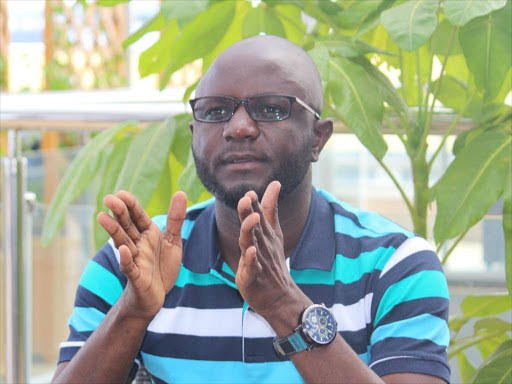
The writer is the
General Manager- Marketing at Minet Kenya