There
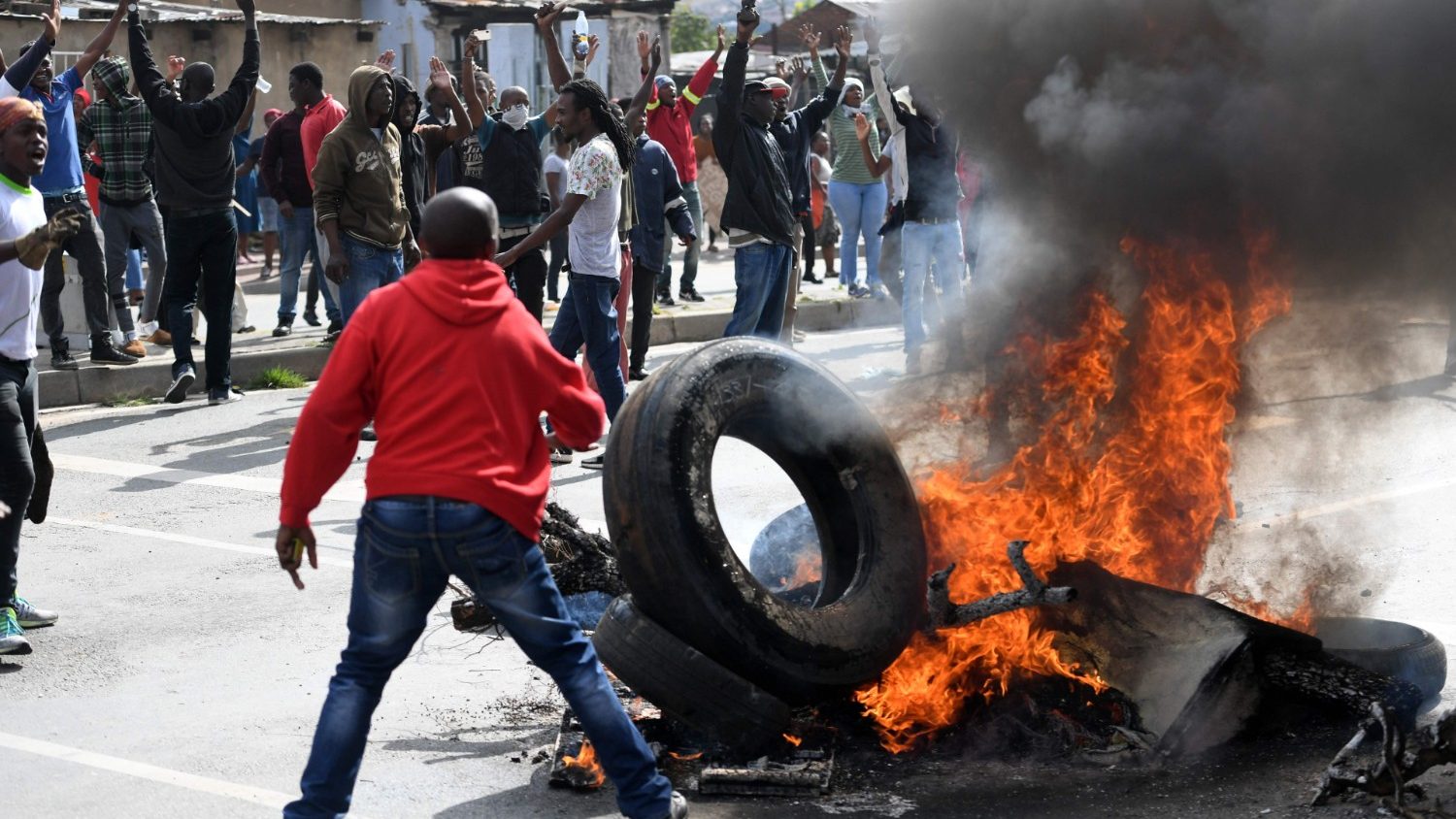
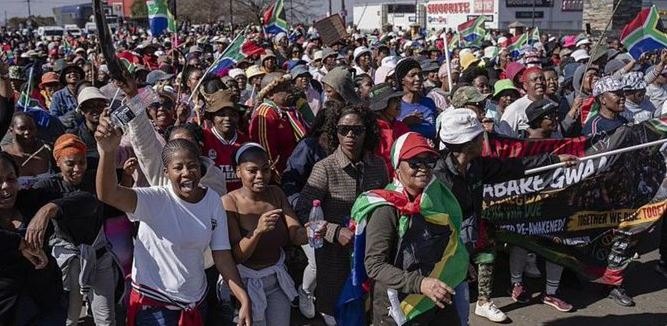
is something profoundly disturbing about an African being chased through an African
street by another African while being told to "go back home." One
cannot help but ask: Where exactly is home? Nowhere is this contradiction more
painfully visible than in South Africa's recurring xenophobic attacks.
The
victims are not strangers from distant continents. They are fellow Africans
whose greatest offence is crossing an artificial border in search of
opportunity. Once there, they acquire a label that has become painfully
familiar—makwerekwere. A word that does far more than identify a foreigner. It
strips fellow Africans of dignity, belonging and, in the worst cases, their
very right to live.
The
explanation offered for these attacks is almost always the same. Foreigners are
taking jobs. Foreigners are responsible for crime. Foreigners are overwhelming
public services. Foreigners are making life unbearable for ordinary South
Africans.
It
is an argument that sounds convincing until one pauses to ask a simple
question.
If
every foreign African left South Africa tomorrow morning, would unemployment
disappear by sunset? Would electricity suddenly become reliable? Would
corruption evaporate? Would inequality vanish? Would hospitals function
efficiently? Would the economy miraculously begin growing again?
The
answer is obvious.
South
Africa's challenges did not arrive carrying foreign passports.
The
country has wrestled for decades with structural unemployment, weak economic
growth, staggering inequality, corruption, failing public institutions and
policy uncertainty. These are deep-rooted problems that neither began with
migration nor can be solved by attacking migrants. Yet difficult problems
demand difficult solutions, while blaming foreigners offers an easy emotional
release.
History
has a name for that. It is called scapegoating.
Whenever
societies become anxious, they search for someone visible to blame. The target
changes with time, but the psychology remains remarkably constant. Yesterday it
was religion. Another era blamed race. Today, in parts of South Africa, the
convenient enemy is simply the African who happened to be born on the wrong
side of a colonial border.
There
is a painful irony here that should make every South African pause.
During
apartheid, the rest of Africa did not ask whether South Africa's suffering was
its responsibility. They welcomed exiles into their communities. They trained
liberation fighters. They offered scholarships to South African students.
They mobilised
diplomatic pressure against the apartheid regime and, in many cases, paid a
heavy economic and military price for doing so. In 1976, 28 African nations
boycotted the Montreal Olympics in solidarity with South Africa.
They
understood something that appears to be fading from our collective memory: that
the freedom of one African nation depended upon the solidarity of all African
nations.
That
history matters because nations, like individuals, are judged not only by what
they remember but also by what they choose to forget. The tragedy unfolding
today is therefore not merely one of xenophobia. It is one of historical
amnesia.
None
of this suggests that immigration should be unmanaged. Every sovereign state
has a legitimate right to secure its borders, regulate migration and deport
those who violate immigration laws through due process. That is the
responsibility of government.
But
there is an enormous moral and legal distance between enforcing immigration law
and burning another person's shop.
There is an equally vast difference between
protecting borders and unleashing mobs against people whose only crime is
speaking with a different accent. Violence is not border control. Arson is not
public policy. Murder is not patriotism.
Perhaps
what is most troubling is how quickly economic frustration can erase historical
gratitude. The same continent that once mobilised to isolate apartheid South
Africa now watches fellow Africans being isolated within democratic South
Africa. The nation whose liberation inspired the world risks diminishing that
legacy every time an African is attacked.
Even
more troubling is the illusion that xenophobia solves anything. It creates no
jobs. It builds no factories. It repairs no schools. It fixes no hospitals. It
restores no electricity. It reduces neither corruption nor inequality.
What it
does exceptionally well is redirect public anger away from those entrusted with
governing and towards vulnerable people who possess neither the power to create
national problems nor the authority to solve them.
The
real contest is therefore not between South Africans and migrants. It is
between truth and convenience. Truth demands that governments confront
unemployment with economic reform, corruption with accountability, failing
institutions with competent leadership and inequality with inclusive growth.
Convenience merely asks citizens to blame those who speak differently.
One
path builds nations. The other burns them.
The
lesson is clear. Nations do not become stronger by turning the powerless into
scapegoats. They become stronger when citizens demand accountability from those
with the power to govern.
As Kenya deepens its commitment to regional
integration through the East African Community and the African Continental Free
Trade Area, our pan-African ideals will be tested not by speeches delivered at
summits but by how we treat every African who seeks dignity within our borders.
The
word makwerekwere should therefore serve as a warning to the entire continent.
It reminds us how easily fear can erase history, how quickly hardship can
silence humanity and how fragile African solidarity becomes when politics
divides those whom history united.