

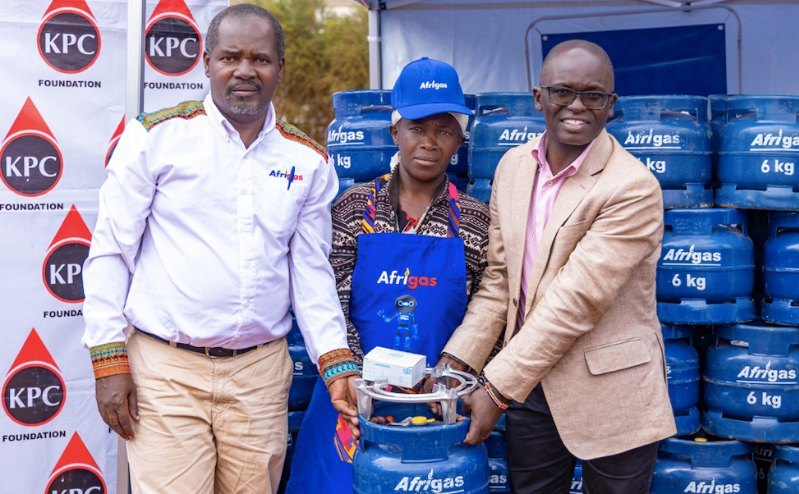
 Vivo Energy Kenya LPG operations manager Michael Omolo , Jacinta Wayua, a beneficiary of the Clean Energy Transition Programme and acting manager Kenya Pipeline Company Pius Mwendwa during the second phase of the programme at Mukuru Viwandani, Nairobi /HANDOUT
An additional 100 vulnerable households in Nairobi's
Mukuru Viwandani settlement will benefit from clean cooking solutions
under an expanded national clean energy programme.
The initiative marks the second phase of a clean cooking programme that previously reached 90 households in Jomvu Kuu, Mombasa, bringing the total number of beneficiary households to 190.
Under the programme, vulnerable families are being supported to transition to clean, safe and efficient cooking solutions, advancing Kenya's clean energy agenda while improving household wellbeing, environmental conservation and community safety.
The KPC Foundation, the corporate social investment arm of Kenya Pipeline Company, launched the second phase of its Clean Energy Transition Programme in Mukuru Viwandani on Friday in partnership with Vivo Energy Kenya.
Each beneficiary household will receive a complete 6kg LPG starter kit comprising a gas cylinder, burner, grill and an initial gas refill, enabling an immediate shift from traditional cooking fuels to cleaner energy sources.
The programme is anchored in the KPC Foundation Strategic Plan 2025–2028, which prioritises scalable and integrated solutions that address environmental sustainability, community wellbeing and resilience.
KPC managing director and foundation chairperson Pius Mwendwa said the initiative demonstrates the foundation's commitment to delivering practical solutions that improve lives while protecting the environment.
“This initiative is a clear demonstration of how we are turning strategy into real impact. We cannot ask communities to protect the environment while they still rely on unsafe and unsustainable energy sources. Through this programme, we are providing practical solutions that improve daily life while advancing environmental conservation,” Mwendwa said.
“Our goal is to scale this model across communities near KPC operations nationwide, ensuring more families access clean energy, safer homes and a better quality of life. This is how we deliver impact at scale.”
Beyond clean cooking, the initiative seeks to address the persistent risk of fire outbreaks in informal settlements.
A total of 105 residents of Mukuru Viwandani will undergo specialised firefighting training at the Morendat Institute of Oil and Gas, equipping them with skills to serve as community fire marshals and first responders during emergencies.
KPC Foundation manager Rachel Gathoni said the programme goes beyond energy access by addressing broader community challenges.
“This programme is about more than changing how people cook. It is about protecting families from harmful smoke, reducing fire risks and improving the overall quality of life. When communities are given practical alternatives, real and lasting change becomes possible,” she said.
The Clean Energy Transition Programme supports the KPC Foundation's environmental, social and governance commitments by promoting clean energy adoption and reducing reliance on charcoal and firewood.
It is also expected to improve public health by reducing exposure to indoor air pollution, curb environmental degradation and deforestation, and strengthen community resilience and safety systems.
The initiative contributes to Kenya's broader climate action agenda and sustainable development goals.
The programme is being implemented in partnership with Vivo Energy Kenya, the distributor and marketer of Shell-branded fuels and Afrigas LPG, highlighting the role of public-private partnerships in addressing social and environmental challenges.
KPC Foundation plans to expand the programme to communities neighbouring KPC operations in Nairobi, Mombasa, Nakuru, Eldoret and Kisumu.
By integrating clean energy access, safety preparedness and community empowerment, the foundation aims to help communities move from vulnerability to resilience, from risk to safety and from basic survival to improved dignity and quality of life.
Studies show that about 26,000 Kenyans die every year from illnesses linked to air pollution, underscoring the importance of transitioning households to cleaner energy sources.
The initiative comes amid growing global support for clean electrification. A recent survey of business executives across 18 countries found strong backing for a rapid transition to economies powered predominantly by renewable electricity.
According to the report, Powering Up: Business Perspectives on Electrification, 98 per cent of business leaders in Kenya believe electrifying their operations would help their businesses grow.
Reliable access to clean and affordable electricity is viewed as a key driver of business growth through lower operating costs, improved productivity and expanded access to export markets.
Business leaders, however, stressed the need for government grants and subsidies to help offset the upfront costs of transitioning to electric equipment.
Kenya's National Energy Policy (2025–2034) aims to connect all Kenyans to the national grid within the next eight years, with the additional electricity expected to come from renewable energy sources.
The policy is anchored on the belief that electrification can accelerate economic development, create jobs, particularly for young people, and enhance the country's industrial competitiveness.
INSTANT ANALYSIS
The expansion of the clean cooking programme highlights the growing recognition that energy poverty is not only an environmental issue but also a public health and safety concern. By providing LPG kits and firefighting training, the initiative addresses multiple challenges facing informal settlements, including indoor air pollution and frequent fire outbreaks. The programme also aligns with Kenya's broader clean energy and climate goals while demonstrating how public-private partnerships can deliver practical solutions at the community level. However, long-term success will depend on sustained affordability of LPG refills and continued investment in clean energy infrastructure to ensure vulnerable households do not revert to traditional fuels.