THE roar of the crowd, the thrill of the game, the national pride— football in Kenya has always been more than
just a sport. It’s a cultural heartbeat, a unifying force, a
source of dreams.
But in recent years, the local football terrain has
been battered and marred by mismanagement, neglect
and a sense of disillusionment.
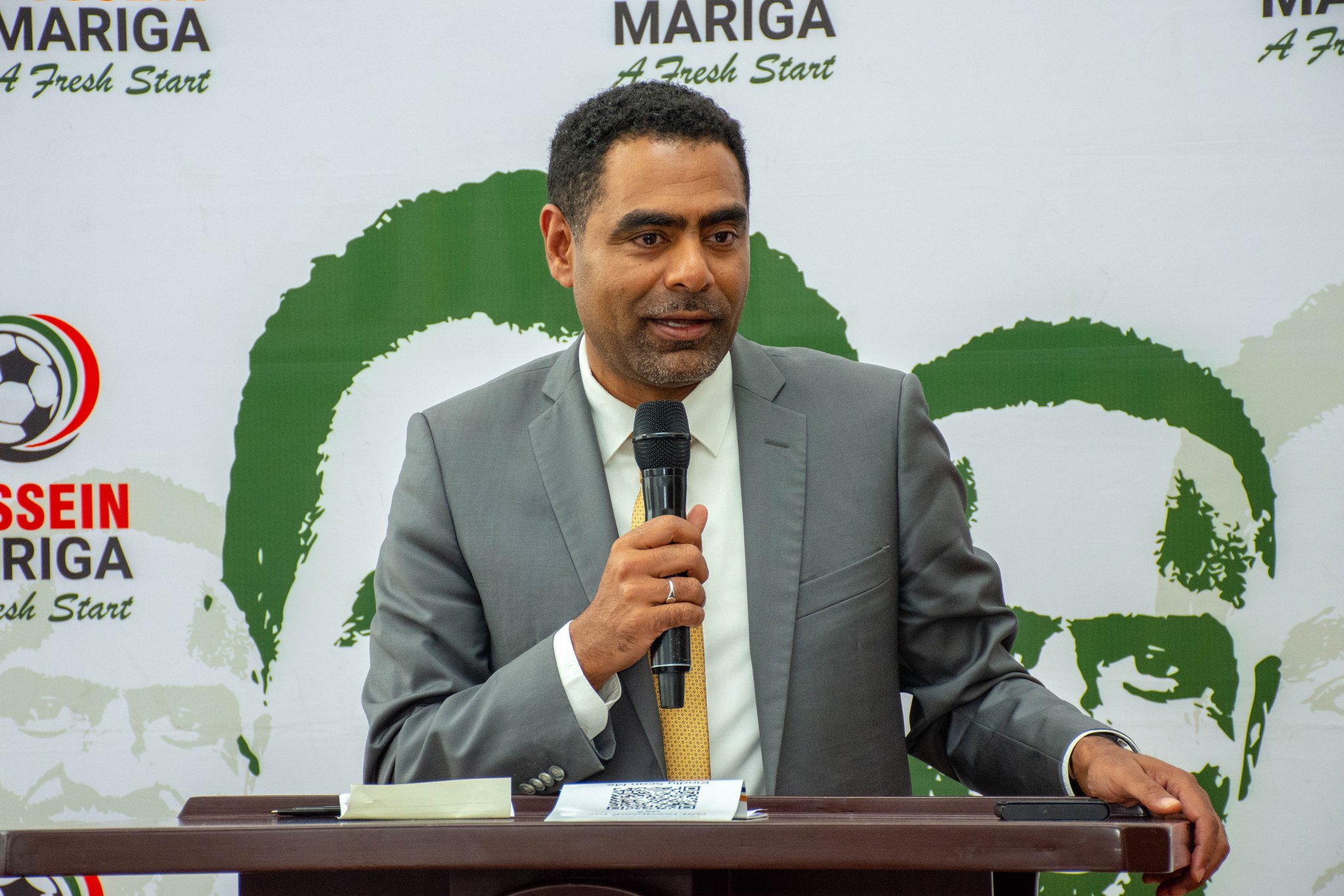
Enter Hussein Mohammed, a man whose journey
from Nairobi’s bustling streets to the Football Kenya
Federation (FKF) helm promises a new dawn for the
sport.
Hussein’s story, a testament to the transformative power of football, heralds a potential turning
point in this narrative.
His upbringing in Nairobi’s bustling yet difficult
neighbourhoods, such as Mathare and Kibera, gave
him a modest start that influenced his perception of
the socio-economic struggles many Kenyans face.
As an old boy of Dagoretti High School, he recognises the importance of giving back to the communities that nurtured him.
His life experiences instilled in him a passion for football that
transcends mere professional ambition; it is
deeply personal.
As a seasoned entrepreneur and sports administrator, Hussein brings
a wealth of experience
and a profound commitment to grassroots football development.
His foray into football administration began over a decade
ago, driven by a realisation that the
management of football in Kenya was
fraught with challenges. He recognised
a significant management gap within
Kenyan football.
"Around 10 years ago, I realised
there was a big problem
in the management of
football in this country.
I decided to organise
a grassroots activity
that would engage the
youth, keeping them
off vices such as drug abuse and crime by
doing what they love most—playing football,” he reflected.
“My vision has always been bottom-up. I believe that true success in
football can’t be achieved without
nurturing talent from the grassroots level,” he added.
This epiphany led him to
organise grassroots activities
aimed at engaging the youth
and steering them away from
societal vices such as drug
abuse and crime through the
sport they love most—football.
This commitment culminated in the establishment of
the Super 8 tournament, a platform that has positively impacted
thousands of young lives across
Nairobi.
The tournament serves as
a launching pad for aspiring footballers, providing them with opportunities to showcase their talent and
potentially secure spots in higher leagues.
“My past successes with the Super 8
tournament illustrate the potential of such initiatives, with many players now competing in the
Kenyan Premier League after being nurtured in the
tournament,” he said.
He sees football as a tool to empower young Kenyans, providing them with a path to a brighter future.
Hussein’s vision is the wind beneath his wings, pushing
him towards a life where football isn’t just a hobby but a
pathway to self-sufficiency; a tapestry woven with threads
of hope, opportunity and community.
This isn’t just about
individual success, it’s about building a community.
By providing opportunities for young athletes to earn a
living, Hussein creates a ripple effect. He empowers them
to become role models, to inspire others, and to break the
cycle of negativity that often plagues their communities.
His vision is a beacon of hope and a reminder that
football—the beautiful game—can be a catalyst for a
beautiful life.
He understands that football can be a vehicle for social
change, offering youth opportunities to earn a living and engage in positive activities.
“A lot of people focused on the national team, Harambee Stars and the top-tier league, but my approach has
always been bottom-up,” he states.
This philosophy is
crucial for building a sustainable football ecosystem that
benefits the entire nation. One of the critical areas Hussein has identified for the revival of Kenyan football is
infrastructure development.
Recognising that talent alone is insufficient without
proper facilities, FKF have placed a significant emphasis on improving football infrastructure throughout the
counties. Upgrading training and match-day environments is paramount to ensuring that players have access
to the resources they need to hone their skills.
The federation’s commitment to infrastructure improvement reflects an understanding that a well-maintained environment fosters not only player development
but also enhances the overall spectator experience.
“It is
almost impossible to commercialise football without infrastructure,” he asserts.
“The lack of adequate facilities has hindered the
growth of the sport, forcing teams to play in substandard
conditions and limiting revenue generation opportunities.
I envision a future where each county in Kenya boasts
well-equipped stadiums, with capacities ranging from
3,000 to 10,000,” he said.
“These facilities would not only serve as venues for
local competitions but also attract national and international events,” he said.
The government and private sponsors play a crucial
role in this vision. Hussein emphasises the need for transparency and accountability in financial dealings to regain
the trust of stakeholders.
“How can the government and sponsors trust you if
you can’t account for funds you have been given?” he
asks.
"The establishment of a clear financial framework
and the eradication of corruption within the FKF are essential steps toward realsing this vision.”
At the core of Hussein’s strategy is a firm commitment
to youth empowerment. He believes investing in young
talent is not just a moral obligation but a strategic necessity for the future of Kenyan football.
“We need to have coaches and scouts who are wellpaid to identify, tap and work on these talents. The establishment of structured pathways for young players to
transition from grass roots leagues to professional football is paramount,” he emphasizes.
Hussein’s election as FKF president comes at a time
when the federation is grappling with significant financial
mismanagement and corruption.
He strongly believes the challenges facing Kenyan football are not solely rooted in infrastructure or youth development but also lies in governance and accountability.
An investigation revealed that the FKF operates multiple bank accounts with unclear purposes and is burdened
with nearly Sh400 million in outstanding liabilities. Hussein acknowledges the need for comprehensive reforms
within the federation.
“We must build the infrastructure and support organisers. We must also get the right people in leadership positions in the federation,” he asserts.
His commitment to transparency and accountability is
evident in his plans to conduct a thorough forensic audit
of the federation’s finances.
“The first priority, of course, is to restructure our federation and make sure that we have good governance structures,” he emphasises. The establishment of a merit-based
promotion system for referees and a standardized salary
grading system for employees are also part of his comprehensive strategy to restore integrity to Kenyan football.”
As Kenya prepares to co-host the African Nations
Championship (CHAN) in 2025, Hussein’s leadership
will be put to the test. His plans for the national team,
Harambee Stars, reflect a desire not just to participate but
to compete effectively on the continental stage.
“We should be able to put up a good show for Kenyans,
the region and the entire continent. This ambition is underpinned by a commitment to hiring a competent technical bench and ensuring the team receives the necessary
resources for preparation,” he stated.
Furthermore, Hussein’s collaboration with Fifa and
other stakeholders signals a new era for Kenyan football.
His discussions with Fifa President Gianni Infantino
highlight the international support for his vision, particularly regarding infrastructure development and governance reforms.
“We talked about areas of mutual development programmes, particularly the infrastructure and governance
issues that are necessary if we are to successfully commercialize the sport,” he says.
As he embarks on this journey, the challenges are significant, but so too are the opportunities. By fostering
a culture of accountability and investing in the youth,
Hussein aims to build a sustainable football ecosystem
that not only nurtures talent but also restores the pride
of a “By restructuring these leagues, the federation aims
to create a platform where young athletes can showcase
their skills and develop their potential in a supportive and
competitive setting,” he added.
This programme supports the federation’s overall objective of building a strong talent pipeline that will eventually help the national team and raise Kenyan football’s
profile internationally.
The urgent problem of hooliganism, which has hampered Kenyan football and discouraged prospective supporters from attending games, is something Hussein is
eager to address.
“To combat this challenge, the FKF proposed the implementation of efficient spectator control measures. To
improve match control and security, each branch will
be required to submit a list of match-day stewards who
will receive training. The ultimate goal of this proactive
strategy is to foster a lively football culture by making the
atmosphere safer and more pleasurable for supporters.”
FKF has also unveiled an ambitious initiative to reward
the best-performing FKF branch at the end of each season.
“With a substantial prize of one million shillings at
stake, the initiative seeks to motivate county branches
and create a comprehensive support system that nurtures
talent and fosters a love for the game.
“By recognizing and rewarding excellence, the FKF
aims to foster a culture of accountability and continuous
improvement among its branches,” he said.
Moreover, Hussein disclosed plans to introduce a new
county-based league, wherein each county will organize
structured competitions.
“The initial prize for the winners of these contests will
be Sh100,000, giving counties a real reason to fund their
football initiatives. This tournament will culminate in an
inter-county match, with the National Counties Champion title going to the overall winner,” Hussein said.