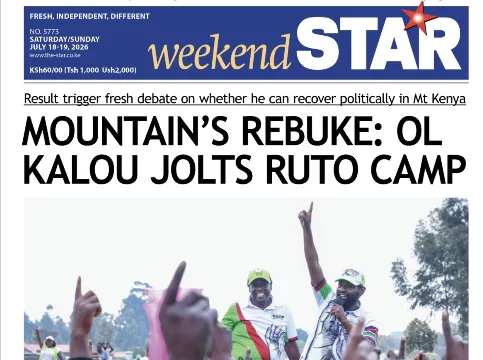
While by-elections are often influenced by local issues and
personalities, the scale of the loss is likely to be read politically across
the country.
The outcome could be viewed, especially within the
broad-based government ranks, as a sign
that the President's grip on the region has weakened.
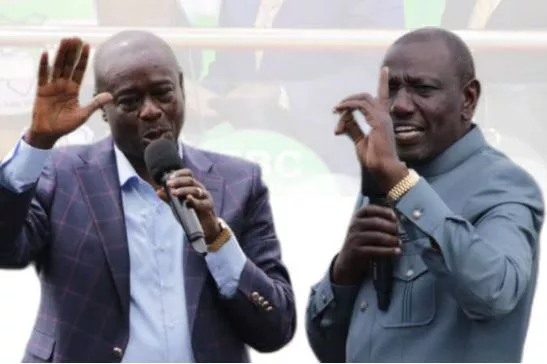
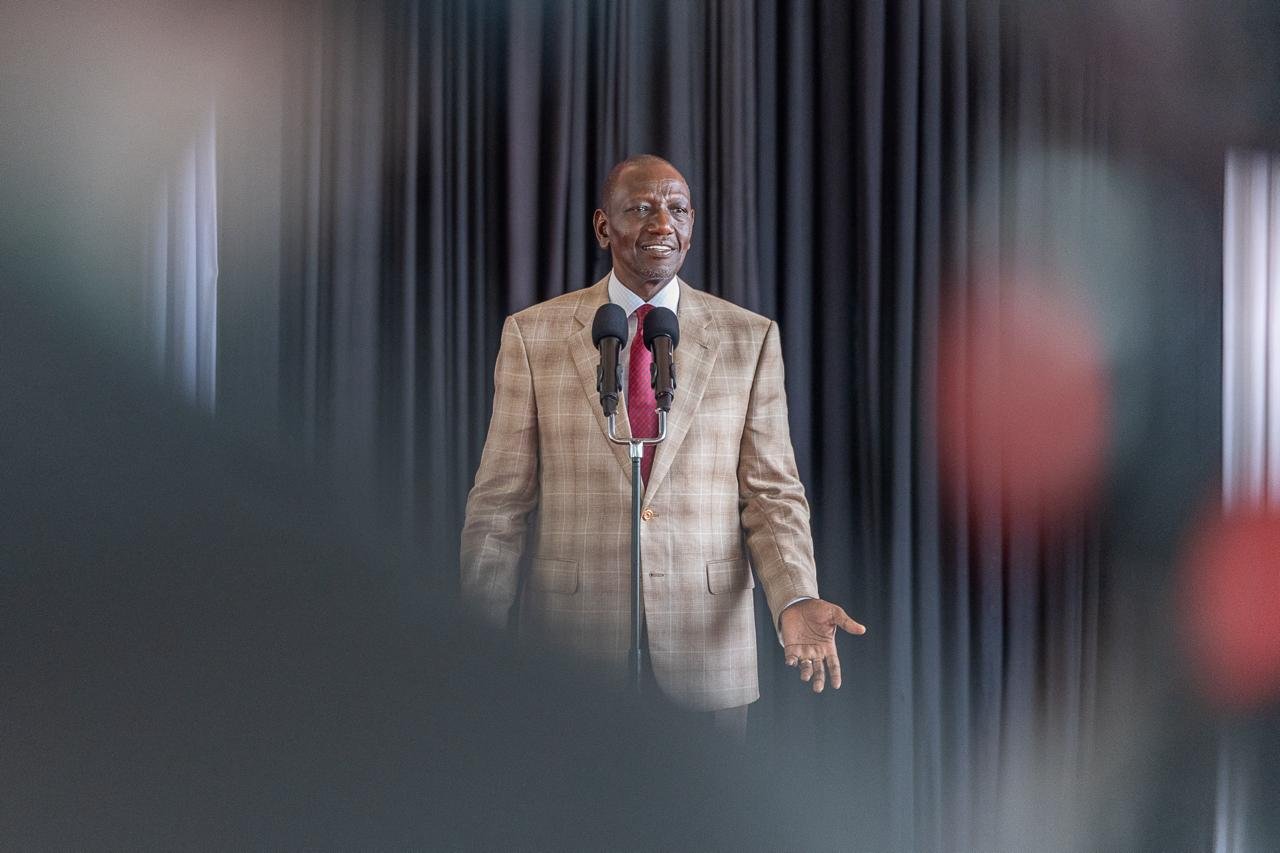
The result has also revived debate about whether Ruto has
any chance to undo the devastating effects of his dramatic fallout with former
Deputy President Rigathi Gachagua.
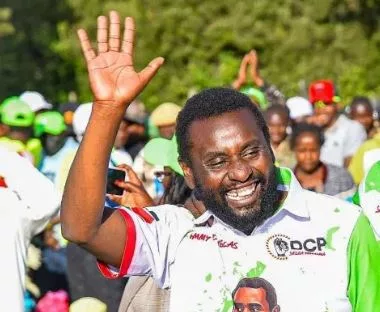
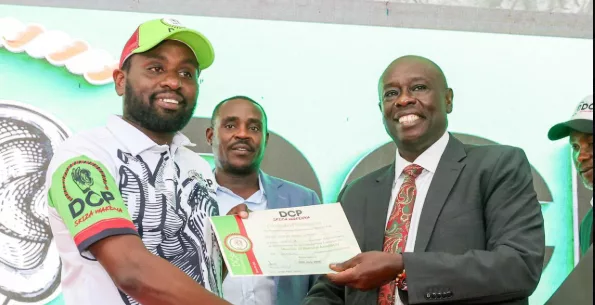
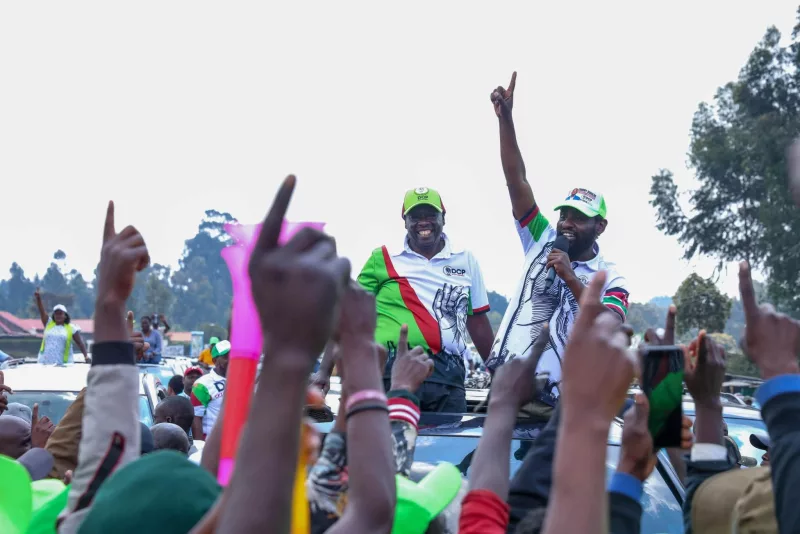
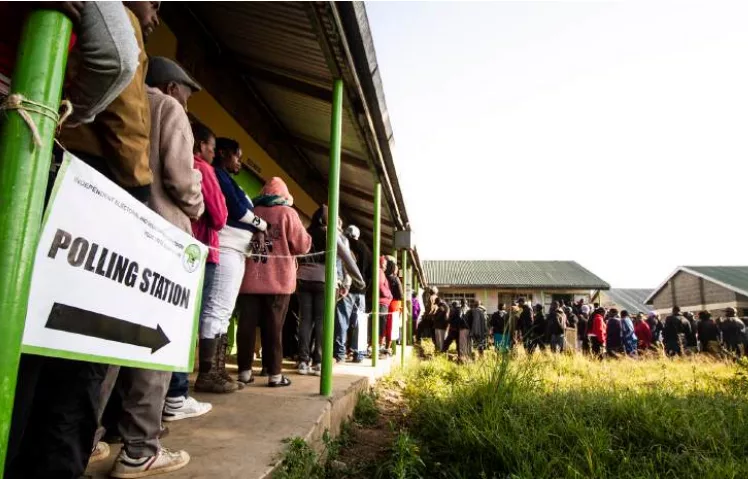
IEBC declared Democracy for Citizens Party candidate Sammy
Ngotho the winner after he garnered 35,440 votes, representing about 85 per
cent of the total votes cast.
UDA candidate Samuel Muchina managed only 5,450 votes,
equivalent to about 13 per cent of the vote.
The huge margin immediately sent political shockwaves
through government circles, and many top guns conceded defeat even before the
official results were declared.
For a region that voted overwhelmingly for Ruto in 2022, the
outcome raised fresh questions about whether the political equation that
brought him to power is beginning to change.
Many political observers believe the significance of Ol
Kalou lies not in the loss of a single constituency seat but in the message it
sends about voter sentiment in Mt Kenya.
For months, State House has mounted an aggressive campaign
to rebuild support in the region.
President Ruto has made numerous visits to Mt Kenya,
launching projects, inspecting roads, opening markets and promising more
development.
Deputy President Kithure Kindiki has also spent months
traversing villages and towns in the region, positioning himself as the
government's point man in the mountain.
Senior government officials and Cabinet Secretaries have
accompanied the President during many of the visits.
During the Ol Kalou campaigns, Kirinyaga Governor Anne
Waiguru and former Trade Cabinet Secretary Moses Kuria led campaigns for the
UDA candidate.
Despite the heavy political investment, the government still
suffered one of its worst electoral defeats in the region since 2022.
The outcome has now triggered fresh debate on whether Ruto
can recover politically in Mt Kenya without Gachagua.
It has also reopened discussions on the work cut out for
Kindiki to fill the political vacuum created by his predecessor's departure from government.
Numbers in the IEBC voter data make Mt Kenya too important
for any presidential candidate to ignore.
The seven core Mt Kenya counties account for approximately
4.8 million registered voters, making the region one of Kenya's largest voting
blocs.
It was this support that played a major role in Ruto's
victory in the last election, where Uhuru Kenyatta, then President and also a son of Mt Kenya, backed
Raila Odinga [deceased].
Kindiki's political strength lies mainly in Meru, Embu and
Tharaka Nithi counties, which together command about 1.4 million voters.
Political analysts argue that the numbers can barely offset
losses in Kiambu, Nyeri, Murang'a, Nyandarua and Kirinyaga - which add to 4.1 million votes, factoring the 85 per cent win by DCP.
The Ol Kalou result has therefore fuelled speculation over
whether Ruto may eventually be forced to rethink his 2027 electoral strategy if
support in Mt Kenya continues to decline.
Political analyst Mutahi Ngunyi said the President may have
exhausted his efforts to win back Kikuyu voters.
"Dear Ruto, you have tried. They have rejected you. Ol
Kalou is the testament. Turn to the Luo nation and Mulembe nation," Ngunyi
said.
His remarks have added to growing political talk that Ruto
could eventually seek to strengthen his position in Western and Nyanza if
the Mountain vote slips away.
Senior Counsel Ahmednasir Abdullahi also argued that the Ol
Kalou result presents the President with difficult political choices.
According to him, Ruto must decide whether to continue with
the current political arrangement or seek new alliances capable of compensating
for potential losses in Mt Kenya.
The biggest political winner from the by-election appears to
be Gachagua.
The former deputy president has repeatedly claimed that he
remains the region's political kingpin despite his exit from government.
The Ol Kalou result is likely to reinforce that argument.
"It
marks the death of UDA in this region," Gachagua said while celebrating
the victory. "It is finished. It is over Mr President. The people
are resolute that they will not vote for this administration again."
The poor performance by other parties also appeared to
support claims that the political contest in Mt Kenya is increasingly becoming
a battle between Ruto and Gachagua.
Jubilee Party candidate Wilson Kigwa garnered only 198
votes, highlighting the diminished influence of former President Uhuru
Kenyatta's party in the region.
The outcome is also expected to embolden leaders allied to
Gachagua and possibly encourage defections from UDA in the coming months.
Embakasi Central MP Benjamin Gathiru, popularly known as
Mejjadonk, said the result proved that money and state influence do not always
determine electoral outcomes.
"It is proof that nobody is undefeatable and money
isn't a factor. Again, it shows that nobody can steal votes when voters are
determined," he told the Star.
Siaya Governor James Orengo described the result as evidence
that political winds are changing.
"It is a clear signal that the ground has shifted and
President Ruto should prepare for a single term," Orengo said.
Wiper leader Kalonzo Musyoka said the victory was bigger
than a constituency election.
"This is not just a parliamentary seat won. This is a
message sent to Mr Ruto, to his regime, to Kenya and indeed to the world:
WANTAM," Kalonzo said.
However, allies of the President have dismissed suggestions
that the Ol Kalou result reflects the national political mood.
Homa Bay Town MP Peter Kaluma argued that UDA had won
several by-elections elsewhere and that the opposition was exaggerating the
significance of one defeat.
"Gachagua has won one election at home in Ol Kalou
after losing many others across Kenya and they are making noise like they have
won the World Cup," Kaluma said.
Health Cabinet Secretary Aden Duale also sought to downplay
the result.
He noted that UDA had won six of the ten by-elections held
across the country, while UDA and ODM parties within the broad-based government
arrangement had secured nine of the ten seats contested.
"The results reaffirm UDA's position as the country's
leading political party and demonstrate sustained public confidence in its
leadership and development agenda," Duale said.
President Ruto himself adopted a conciliatory tone following
the by-election outcome.
"Elections are not a matter of life and death. There
will be Kenya after the election and we must live together as brothers and
sisters of one nation," he said.
Political analyst Herman Manyora said the lesson from Ol
Kalou was straightforward.
"The mountain is not okay. He must now look at the
people who have been lying to him. He must realise that it is time to go back
to the drawing board," Manyora said.
Constitutional scholar Makau Mutua perhaps summed up the
uncertainty surrounding the by-election best.
"The grand question is not how loudly the people of Ol
Kalou have spoken," he said. "But what have they really said? Only
time will tell."
The question hanging over State House after the Ol Kalou
vote could be: Was it simply a local protest shaped by constituency politics?
Or was it the first clear sign that the political mountain
that carried Ruto to State House is slowly moving away from him?
The answer to that question could determine not only who
carries the Kenya Kwanza ticket in 2027, but also who stands beside the
President on it.






![[PHOTOS] Ruto hosts Bungoma delegation at State House](https://cdn.radioafrica.digital/image/2026/07/38c18064-4bd7-4a52-9171-4dcce631a74b.webp)